
Digital Twin for Urban Planning and Infrastructure: Cut Project Risks by 50%
Urban infrastructure fails due to untested assumptions, fragmented governance, and climate risk. Digital twins change this by simulating costs, schedules, assets, and policies before construction. Cities use them to predict failures, align stakeholders, test scenarios, and cut project risk by up to fifty percent with platforms like Digital Blue Foam. · January 22, 2026

Urban infrastructure projects fail in private long before they fail in public.
Overruns in cost, schedule misses, regulatory complexities and climate exposure all emerge years before the project is completed. All of these issues have one thing in common – they were a part of early assumptions that were never tested against reality.
For municipal authorities and urban planners, this is the challenge of modern infrastructure delivery. How can you reduce uncertainty in projects that span years, have millions in capital and see through multiple political cycles?
Digital Twins is the answer.
Digital Twins are no longer an experimental tool but a pivotal risk-management instrument that is used by municipalities to simulate outcomes. It plays a very important role in stress-test assumptions, reducing risks by as much as 50%.
This article examines how digital twins for urban planning and infrastructure are imperative for decision-making while reducing risks. It also sheds light on modern-day solutions like Digital Blue Foam (DBF) and how their capabilities are perfectly in line to tackle this.
Why Urban Infrastructure Projects Carry Inherent Risk
Urban infrastructure projects, be it utilities, bridges, housing systems, or transit corridors, operate under very high uncertainty. This is mainly due to:
Budget Volatility
Infrastructure projects very frequently exceed original estimates. This could be attributed to late-stage redesigns, a change of scope, unforeseen site conditions, among other reasons. Once construction begins, flexibility to change collapses and costs shoot up.
Schedule Fragility
Delays often have a domino effect. A permitting delay spills over to procurement. A procurement delay stalls construction. A construction delay inflates labour and financing costs.
Climate Exposure
At the design stage, flooding, heat stress, subsidence and other weather conditions are not given enough precedence. These are often considered once the designs are finalised.
Fragmented Governance
Different planning agencies, utilities, transport departments, and private developers all work individually. This leads to misaligned priorities and conflicting decisions.
Reactive Asset Management
Most planning cycles still manage infrastructure reactively, where they respond to failures rather than anticipating them. This cascades towards a long-term operational risk.
What a Digital Twin Really Means in Urban Infrastructure
A digital twin by no means is just a 3D model. For cities, a digital twin is a living, data-connected representation of infrastructure systems and their behaviour over time.
A functional urban digital twin for infrastructure risk brings together:
- GIS and geospatial data
- Engineering and asset metadata
- Climate and environmental variables
- Usage and demand patterns
- Maintenance schedules and lifecycle data
The value of a digital twin lies in simulation, not visualisation.
Digital twins help planners and decision-makers to ask pertinent questions like:
- What happens if rainfall intensity increases by 20%?
- How does deferred maintenance affect the possibility of failure?
- Where do cost and risk accumulate over time?
- Which interventions can help effectively reduce lifecycle risk?
These questions and the vision to answer them form the foundation of simulation-driven risk reduction for cities.
How Digital Twins Cut Project Risks in Infrastructure Planning
Predictive Maintenance and Lifecycle Risk Modelling
Infrastructure projects don’t fail all of a sudden. It is a gradual process. With the help of a digital twin model, degradation can be predicted across time, helping cities:
- Anticipate any maintenance needs.
- Avoid catastrophic failures
- Prioritise capital allocation
- Extend asset lifespan
This helps shift planning from a repair-led mindset to a data-driven infrastructure lifecycle management one.
Risk Simulation Before Construction Begins
Before the foundation begins, digital twins help cities simulate critical data. This includes:
- Constructability risks
- Regulatory compliance conflicts
- Environmental exposure
- Long-term operational costs
This helps mitigate one of the biggest reasons for cost overruns – the late discovery of constraints.
Real-Time Data Integration Across Systems
With an integrated IoT feed, GIS layer and historical performance data, digital twins can help provide:
- Real-time asset visibility
- Early warning indicators
- Operational risk dashboards
For municipal authorities, this replaces the fragmented reports that are not updated regularly.
Scenario Testing for Climate and Policy Resilience
Digital twins enable cities to test out multiple features. This includes:
- Climate stress scenarios
- Demand trajectories
- Zoning or policy changes
- Funding or phasing options
With Digital Twins, cities can reduce costly delays that are caused by different environmental or regulatory shifts.
Cross-Stakeholder Infrastructure Modelling
Digital Twins create a shared decision environment. One that brings planners, engineers and policy makers on the same page for them to take a shared decision. This dramatically reduces coordination risk.
Applications of Digital Twins in Infrastructure Risk Mitigation
Transportation Infrastructure
Cities can use digital twins to model traffic flows, emissions and construction phasing. This helps reduce disruption and risks while carrying out transit upgrades.
York (UK) uses simulation to test traffic and emissions impacts. This is done before implementing any road interventions, helping lower public backlash and regulatory friction.
Utilities and Energy Systems
Utilities like energy and water networks greatly benefit from digital twins. The solution helps them simulate demand spikes, maintenance schedules and outage scenarios, helping municipal bodies be prepared for any situation.
Helsinki uses digital twins to optimize its energy systems. This reduces operational risk while helping improve resilience.
Disaster Preparedness and Climate Adaptation
Flood and other natural disaster simulations can help cities visualise and prioritise investments before disasters strike.
Singapore and Rotterdam use digital twins to check their flood defence systems, drainage capacity and land-use strategy under extreme climate scenarios.
Permitting and Regulatory Alignment
Digital twins help accelerate regulatory approvals by making compliance impacts visible early.
Cities like Tallinn and Des Moines have used data-driven planning to reduce uncertainties around infrastructure coordination.
How DBF Cuts Infrastructure Project Risks by 50%
Digital Blue Foam (DBF) brings the concept of digital twin to life through a cloud-native program that is designed primarily for urban infrastructure planning.
Instead of looking at digital twins as a research experiment, DBF embeds them directly in its planning workflow.
Infrastructure Risk Simulation from Day One
DBF helps cities simulate different infrastructure outcomes early. When simulations are carried out before capital is deployed, it reduces exposure to design reworks, helping save time and money.
Predictive Dashboards for Lifecycle Cost and Downtime
DBF helps authorities visualise asset performance and maintenance trajectories. This helps all the decision-makers understand long-term risks and not just the expected cost.
Climate, Zoning, and Policy Scenario Modelling
DBF acts as a single platform that simulates both regulatory and environmental constraints. This helps reduce approval risk and possible policy misalignment.
Real-Time Collaboration Across Stakeholders
DBF enables multiple external partners and departments to work within the same model. This helps reduce any friction in coordination, eliminating conflicting assumptions.
Quantifiable Risk Reduction
DBF helps identify delays, conflicts and failure modes early. This helps cut project risks by up to 50%. All of this is backed by data.
Global Cities Using Digital Twins to Reduce Risk
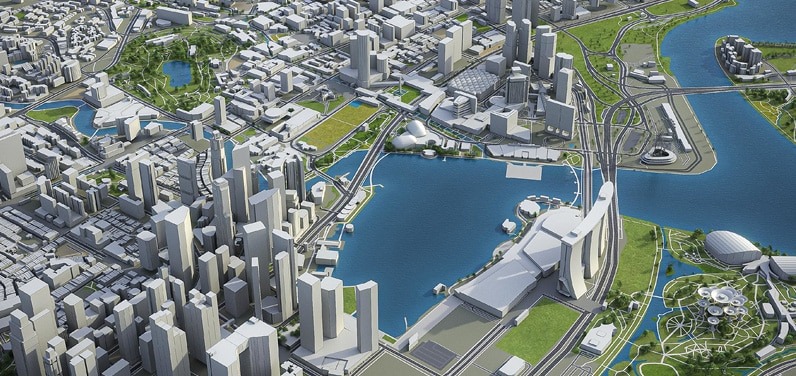
Singapore
Singapore uses a national-scale digital twin that helps bring together climate, transport and land-use systems. This helps the city with long-term resilience planning.
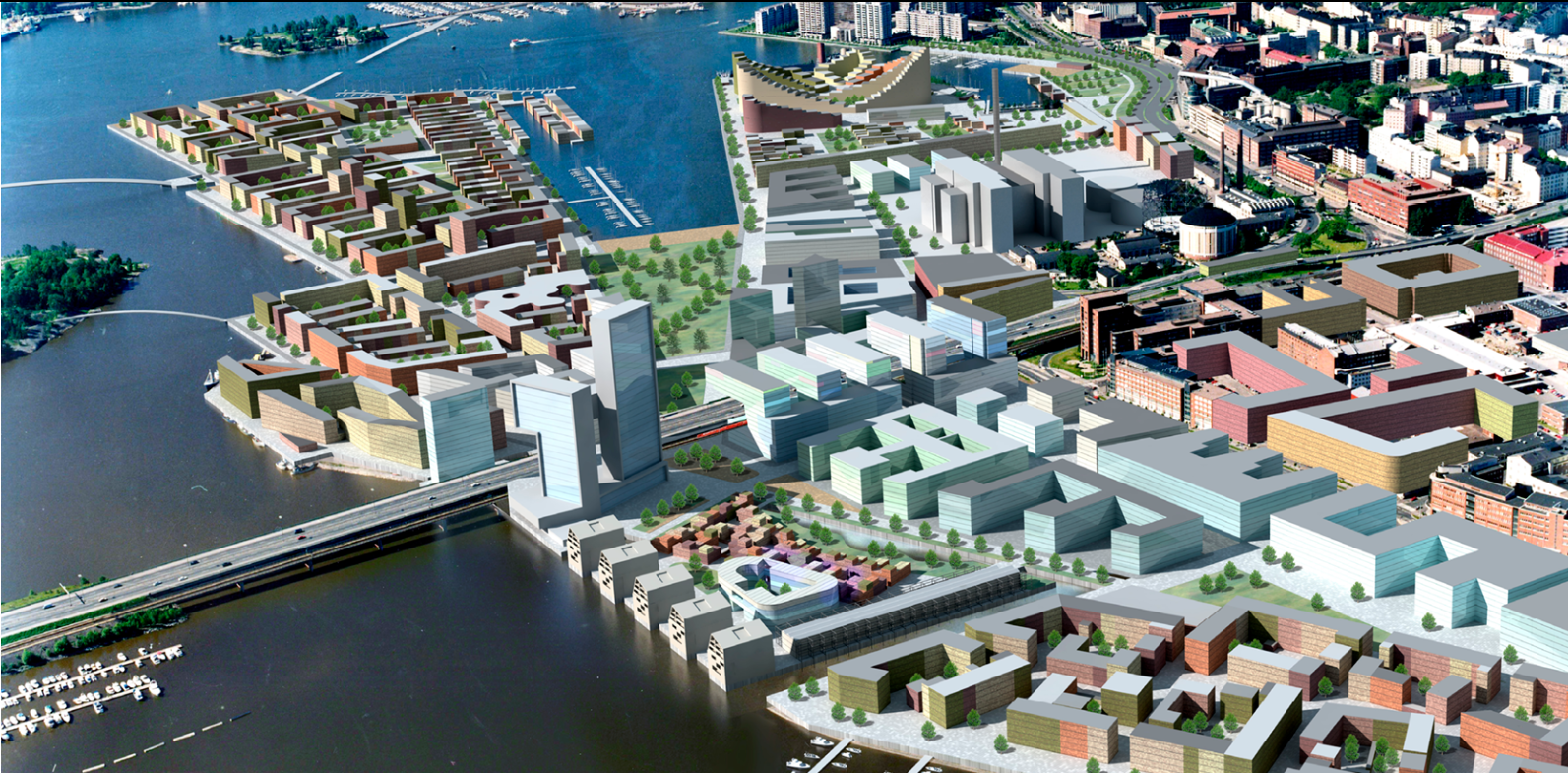
Helsinki
Helsinki makes use of energy-focused digital twins to help support predictive maintenance and emissions reduction.
Des Moines
Des Moines uses risk-informed urban planning with the help of data-driven simulations to guide infrastructure investment.

York (UK)
York uses digital twin-based emissions and traffic modelling to reduce the risk of any new implementations.
Conclusion: Risk Reduction Is the New Measure of Success
Urban infrastructure planning cannot solely depend on delivery. It demands certainty. Digital Twins help cities anticipate failure, test policy impacts, align stakeholders, protect public capital and build resilience into different infrastructure systems.
With platforms like DBF, municipal authorities can make this feasible, actionable and scalable. If you are looking for a digital twin platform that can help simulate, de-risk and future-proof urban infrastructure, the product developers at DBF can help build custom solutions that cut project risks by up to 50%.
FAQs
How do digital twins reduce risks in infrastructure projects?
Digital twins mitigate risk by helping with predictive modelling, scenario testing and early identification of hindrances. This helps immensely in protecting capital before construction commences.
What types of risks can be simulated using DBF?
DBF helps planners and municipal authorities simulate any possible cost overruns, delays, and climate exposure, among other things. The solution can also map out regulatory conflicts, asset degradation and potential coordination risks.
How does DBF improve ROI for infrastructure projects?
DBF improves ROI by bringing down design iterations, downtime, and failure costs that could be incurred during the project lifecycle.
Which infrastructure assets benefit most from digital twins?
With digital twins, utilities, transportation networks, energy infrastructure and large-scale urban development see the maximum benefit.