
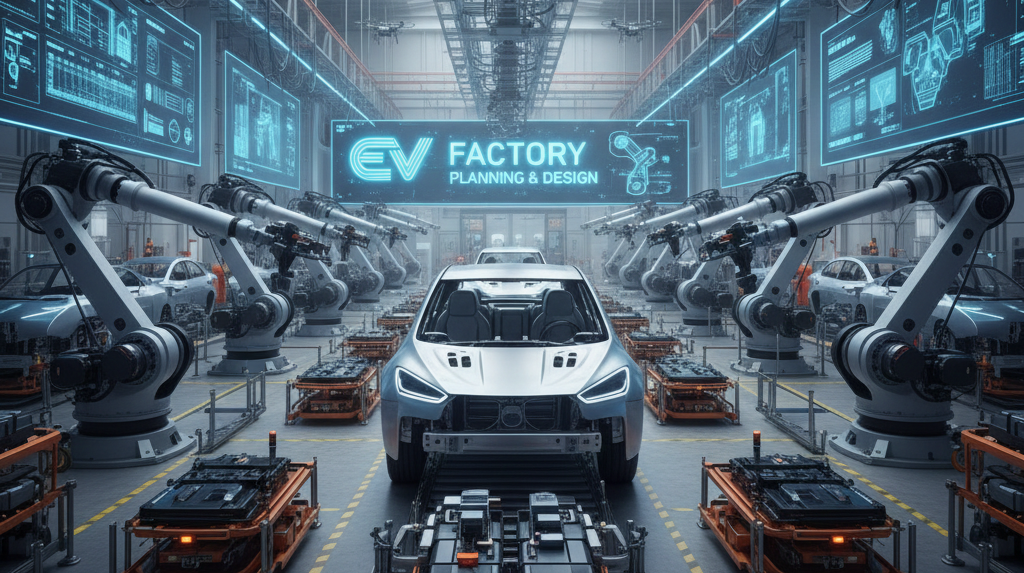

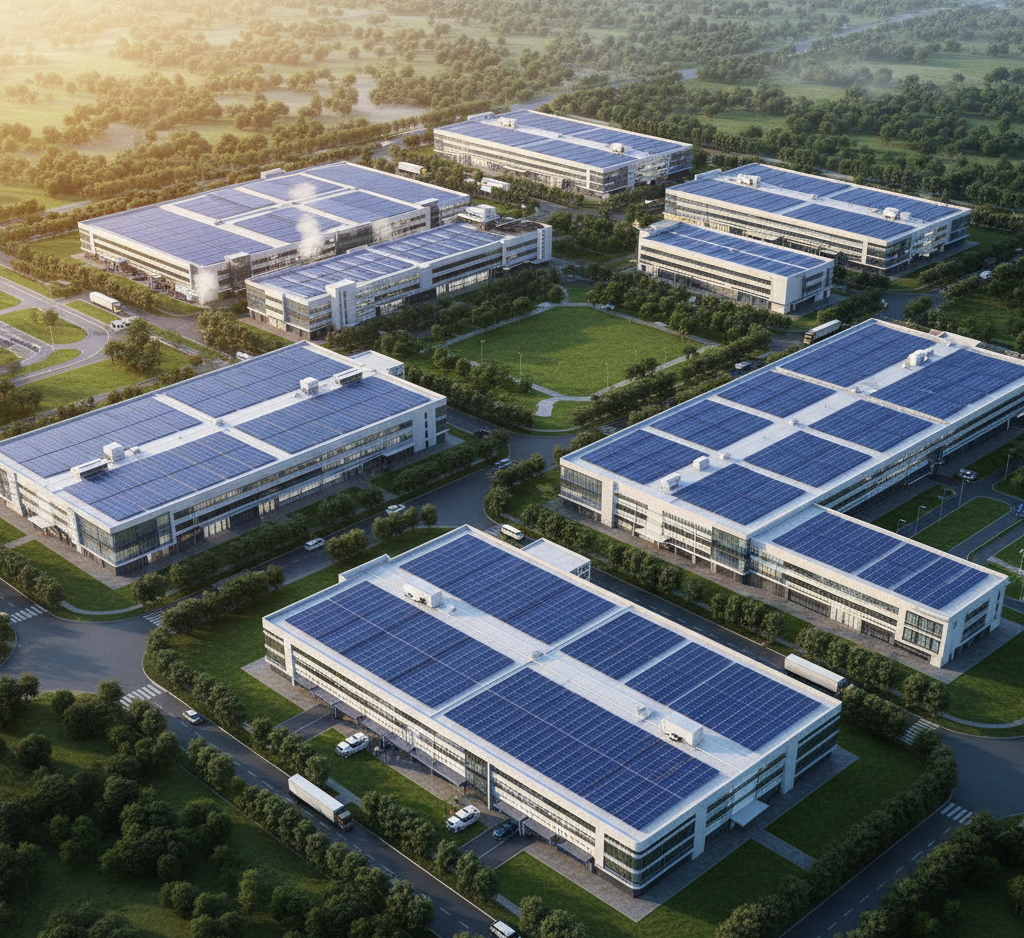
Validate EV production layouts, battery assembly adjacencies, and infrastructure demands for gigafactories — before construction commits capital.
EV gigafactory planning errors — misaligned battery production adjacencies, undersized power infrastructure, or inflexible assembly line configurations — are extraordinarily expensive to correct post-construction. A production flow conflict discovered after steel is erected can cost months of schedule and hundreds of millions to resolve.
| Without DBF | With DBF |
|---|---|
Battery and assembly production flows coordinated across disconnected tools |
AI generates gigafactory layouts with integrated production flow validation |
High-voltage and specialist infrastructure sized by estimation |
Infrastructure demands modelled from process data before construction |
Safety and hazardous material zones checked late in design |
Regulatory and safety zone compliance validated at feasibility |
Future production flexibility assumed |
Scalability scenarios tested for technology and volume upgrades |
Upload production flow requirements, site constraints, and operational targets. DBF maps process data to spatial parameters.
The AI generates factory layout configurations scored against production flow, efficiency, and brief compliance.
Every production adjacency and process relationship validated before design begins. Conflicts surface at feasibility with impact scores.
Specialist utilities, high-voltage, and MEP infrastructure demands modelled from process and production data — not estimated.
Safety zoning, hazardous material areas, and regulatory requirements validated at feasibility stage, not detailed design.
Validated factory layouts, process flows, and infrastructure data export directly to BIM, eliminating manual re-entry.
Every DBF capability is designed for the specific demands of EV factory planning — where battery production, assembly adjacency, and specialist infrastructure interact at gigafactory scale.
Validate gigafactory production layouts, battery assembly adjacencies, and specialist infrastructure requirements before committing to construction programmes.
Test EV manufacturing facility configurations against production volume targets, supply chain adjacencies, and long-term platform flexibility requirements.
Validate battery cell and pack production facility layouts against process flow requirements, safety zoning, and high-voltage infrastructure demands.
Deliver faster, more evidence-based gigafactory feasibility studies with validated production flow, infrastructure sizing, and BIM-ready outputs.
As EV adoption accelerates and gigafactory investment scales globally, the complexity of EV production facility planning will intensify. Technology platforms will evolve, production volumes will increase, and the infrastructure demands of battery manufacturing will grow. DBF enables faster, smarter feasibility for the manufacturing facilities powering the energy transition — giving project teams the spatial evidence to commit earlier and build better.