

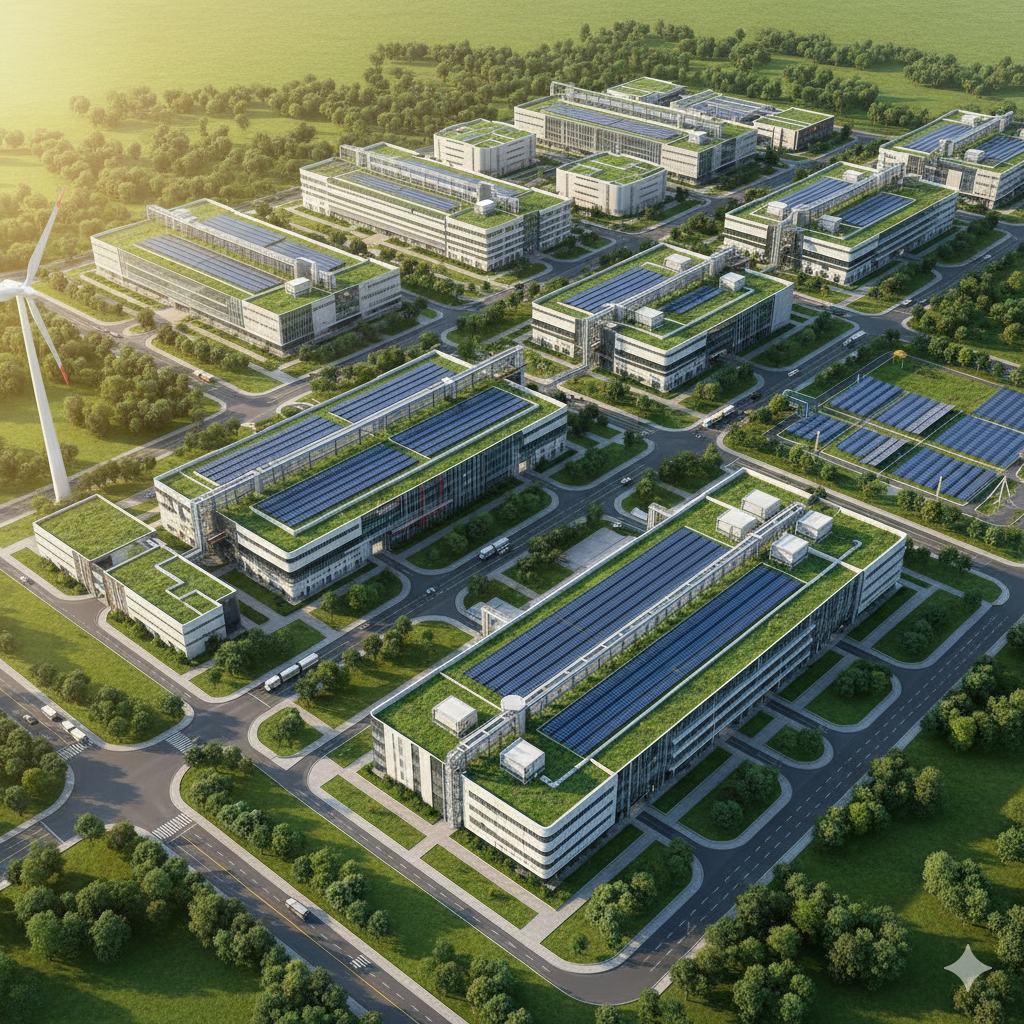
AI-driven complex factory planning: enable lean layouts, streamline workflows, support modular design, optimize space, and enhance ergonomic productivity.

DBF offers flexible usage-based pricing, allowing you to pay for our services based on your actual usage. This means you'll be charged according to the specific features, resources, or services you utilize.
Yes, DBF provides custom development services tailored to your unique needs. Whether you require specialized integrations, customized features, or specific solutions, our expert team collaborates closely with you to develop and implement these services effectively.
You can use any reasonable laptop and will be able to create your own design in minutes. Digital Blue Foam is currently optimized for the chrome browser. For large scale urban projects, we recommend using a desktop computer.
Absolutely! We work with several large organizations to make customized versions of our software to optimize customer relations and project deliverables. With our clients we also work on custom data from their past projects or simply on specific typologies and efficiencies.
Yes we do not discriminate or delay other platforms. As long as you use Chrome you can use our online service. We are working to optimize Digital Blue Foam for IPad and other tablet devices to take advantage of the stylus and touch screen.
By designing the best user experience, you can get started with Digital Blue Foam in minutes. To learn about our advanced features, we have created a fully-loaded resource center, and video tutorials.
Regardless of your account type there is no limit on how many projects you can save at a given time.
We typically start with an interview style meeting from where both parties learn to scope out the pilot project and deliverables. During the pilot project there will be weekly meetings on requirements and progress. During the pilot project we will create multiple prototypes. We sometimes do a competition with everyone in the organisation to try the tool and come up with a design. A pilot project typically runs for 2-3 months and during the last phase we make proposals with our customers for the enterprise account.
We prioritise custom development using agile methodology to maximize value we deliver to the organizations we work with in a transparent manner.
Please contact us directly if there is anything you are not happy with and we will do our best to address your concerns. If you are still not happy we will give you a full refund.
We have a dedicated team, working on the product and believe in what we do. Sign-up for our early access program to see for yourself. We believe in hiring great talent and a sustainable business. By charging our customers fairly we can create more value and continue our mission to accelerate the world's transition to better cities.
Digital Blue Foam is web-based. This means you do not need to fuss about installations or updates to get started. Our interface runs best on Chrome.
Learn how to get started with DBF
Using multi-objective optimization, our tool is designed to meet multiple targets efficiently and effectively. However, there are instances where trade-offs or conflicting objectives arise. For example, you might specify a low maximum height for a building while also requiring an extremely high total floor area.
In such cases, our user interface will gently alert you to the conflict. The system then provides a trade-off solution, balancing the conflicting requirements as best as possible. This ensures you are informed about the trade-offs and can make decisions based on a clear understanding of the design limitations and possibilities.
We provide extensive project contextual data, encompassing maps, satellite imagery, 3D terrain models, building information, road networks, land use, social media data, and local weather station-based wind and solar data. Additionally, we offer flexibility to integrate proprietary data into your solution, either on-premises or via a hybrid configuration, seamlessly integrated with our spatial analytics.
Learn more about our data sources
Small? Medium? Large? Extra-Large? Digital Blue Foam does it all. To find out more, check out our user-achievements.
A recent survey of our current customers shows savings of at least 1 week on a 2-3 week project duration. This is a typical feasibility study for the majority of customers, more gains can be made in terms of saving time by creating a range of options. Downloading data such as complete excel sheets and IFC files is assisting our customers further to save time and allow them to focus more on the design to create quality.
The generate button takes in large amounts of data and from there starts to create options on the location you have selected using our tool. We assist you to produce building designs based on your input and create a range of options that you can easily compare using our compare overview page. The generate function takes into account your targets and design guidelines, and generates solutions using our proprietary algorithms.
We provide, precise and up-to-date, wind analysis and solar studies for any given site location and time period.
Solar studies involve shadow and radiation analysis, and dynamic daylight metrics like Daylight Autonomy (DA) and Spatial Daylight Autonomy (sDA). You can focus on comparing sustainability of different design options and creating value for your clients, without worrying about any setup requirements.
We have developed a covid space planner tool and we currently are working with clients on specific projects. If you have any inquiries and like to get in touch to learn more we would be happy to assist you further.
All our data is geolocated and relates directly to your site and building or urban district. We overlay a range of different data sets so our customers don’t need to worry about bringing in data such as climate and context, everything is available right at your fingertips. We also highlight the source of our data in the asset manager. If you wish to work with your own datasets, drag and drop them into the tool easily.
Learn more about our data sources
We employ a variety of Machine Learning techniques within our platform. For example, we have trained Machine Learning Models to compute daylight autonomy for a design. To find out more, check out our medium page. Our team frequently, posts and shares about our current research and development.
Digital Blue Foam is developed by architects for architects. We know how much time it can take to create the context and gather all information for a site, let alone draw a few massing studies and create excel sheets for each of them.
We assist our customers to efficiently and effectively start and communicate early stage project development within their team and with their clients. (Think Jarvis for architects).
Absolutely, Digital Blue Foam exists for its customers so we welcome all feedback and ideas. You can drop us a line via the form below and we will get back to you.
You can also check our DBF Community, to give feedback and request features. We do our best to respond to all feedback and requests through frequent updates.
Sign up for our webinar here.
DBF supports greenfield station planning and upgrade projects, importing existing infrastructure data to test feasibility of modifications and expansions.
Yes. DBF tests platform capacity scenarios for current and projected future service frequencies, ensuring infrastructure is right-sized for long-term demand.
DBF simulates peak demand across platform, concourse, and interchange configurations, identifying bottlenecks and optimizing layout for passenger safety and efficiency.
Software that generates and validates railway station layouts, platform configurations, passenger flow, interchange access, and retail programming, before detailed infrastructure design.
DBF supports specialist medical facilities including oncology centers, diagnostic imaging hubs, surgical centers, and integrated health campuses.
Yes. DBF simulates patient appointment flows, waiting times, and circulation patterns across multiple medical center configurations.
DBF uses clinical relationship matrices to test all departmental and specialty adjacency requirements, generating compliant layout options.
Software that generates and validates medical facility layouts, clinical programs, patient flow, adjacencies, and medical infrastructure, before detailed BIM design begins.
DBF is designed for complex, mission-critical campus developments including large technology headquarters with R&D, office, and amenity programs.
Yes. DBF models multi-phase campus development, testing how each new building or facility addition affects overall campus flow and program balance.
DBF models adjacency relationships between all workplace and amenity types, testing flow, access, and operational efficiency across multiple campus configurations.
Software that generates and validates technology campus layouts, workplace programs, amenity provision, and infrastructure, before detailed BIM design begins.
DBF supports greenfield terminal planning and capacity expansion projects, importing existing airport layouts to test feasibility of additions and modifications.
Yes. DBF models phased airport expansion scenarios, testing how infrastructure additions affect operational flow and capacity at each growth stage.
DBF simulates peak demand across multiple terminal configurations, identifying processing bottlenecks and optimizing gate, security, and immigration layouts.
Software that generates and validates airport terminal layouts, gate configurations, and passenger flow scenarios before detailed engineering design and investment commitment.
DBF is designed for the most complex manufacturing typologies, including precision engineering, semiconductor fab, aerospace, and advanced chemicals facilities.
Yes. DBF models specialist infrastructure demands, cleanroom requirements, hazardous material handling, industrial utilities, in early planning.
DBF simulates multi-stage production flow across layout scenarios, testing process adjacencies, throughput, logistics routing, and safety zone compliance.
Software that generates and validates complex manufacturing facility layouts, production flow, process adjacencies, specialist infrastructure, and safety zoning, before BIM design begins.
DBF is designed for large, complex, mission-critical manufacturing facilities including gigafactories and multi-process EV assembly plants.
Yes. DBF tests scalability scenarios for production volume growth and designs flexible layouts that accommodate future EV model changeovers.
DBF simulates production flow across multiple factory configurations, validating process adjacencies, throughput capacity, and logistics routing simultaneously.
Software that generates and validates EV manufacturing facility layouts, production flow, process adjacencies, and infrastructure, before detailed engineering design begins.
DBF incorporates regulatory and safety requirements as planning constraints, ensuring generated layouts are compliant before BIM design begins.
Yes. DBF manages complex buildings with multiple lab types, validating adjacency, containment, infrastructure, and operational flow across all zones.
DBF models MEP demand from program inputs, sizing services distribution, fume exhaust, containment systems, and utility connections in early planning.
DBF supports wet labs, dry labs, cleanrooms, industrial testing labs, clinical diagnostics, quality control, and university science facilities.
DBF handles complex mixed research environments, combining wet labs, dry labs, cleanrooms, and collaborative spaces, with full adjacency and infrastructure validation.
Yes. DBF tests flexible structural grids and service distribution configurations that enable research spaces to be reprogrammed with minimal disruption.
DBF models containment zones, isolation requirements, and controlled access configurations against research program specifications and regulatory standards.
Software that generates and validates research laboratory layouts, adjacency requirements, containment zoning, and infrastructure provisions, before detailed BIM design begins.
Yes. DBF can model on-site generation and storage alongside grid connection demand, optimizing the energy supply mix for depot electrification.
Yes. DBF models phased electrification from pilot fleets to full conversion, testing infrastructure scalability at every stage.
DBF models simultaneous charging demand peaks across all vehicle types, scheduling patterns, and shift structures to accurately size grid connections.
Software that generates and validates depot electrification scenarios, charging infrastructure, grid demand, and layout, before infrastructure investment is committed.
DBF handles single-facility and multi-shed campus configurations, testing operational flow and logistics routing across complex fulfillment hub designs.
Yes. DBF designs scalable automation zones and validates spatial requirements for AS/RS, robotic picking, and conveyor systems in early planning.
DBF models operational flow across multiple layout configurations, identifying bottlenecks and optimizing dock, bay, and automation zone sizing for target throughput.
Software that generates and validates warehouse and fulfillment center layouts, including automation zones, dock configurations, and flow corridors, before BIM design begins.
DBF supports vertiport integration with existing airport terminals, validating airside/landside adjacency and passenger connectivity requirements.
Yes. DBF runs multi-site feasibility comparison for vertiport networks, scoring candidate sites against operational, access, and airspace criteria.
DBF's parametric constraints can be updated as UAM regulatory standards develop, ensuring validated layouts remain compliant with current requirements.
Software that generates and validates vertiport layout scenarios, landing pads, taxiways, passenger processing, and airspace constraints, for UAM infrastructure projects.
DBF produces spatial analysis and comparison outputs formatted for planning authority review, supporting complex mixed-use planning applications.
Yes. DBF integrates GFA-based financial viability analysis into program scenario testing, enabling developers to find the optimal mix for returns.
DBF tests vertical use stacking configurations against structural, servicing, acoustic, and access requirements, flagging conflicts between uses.
Software that generates and validates mixed-use program scenarios, combining residential, commercial, retail, and civic uses, against viability, circulation, and operational KPIs.
DBF supports brownfield, infill, and air rights compact city scenarios, importing existing context to test development feasibility within tight constraints.
Yes. DBF models mixed-tenure programs, combining market, affordable, commercial, and civic uses, and validates financial and spatial viability.
DBF tests hundreds of density and program combinations simultaneously, scoring each against liveability metrics including green space, amenity access, and active travel provision.
Software that generates and validates high-density, mixed-use urban development scenarios against liveability, sustainability, and infrastructure KPIs.
DBF supports both new-build and brownfield/refurbishment hospital planning, importing existing building data to test feasibility of clinical upgrades.
Yes. DBF validates infection control zone configurations, clean and dirty corridor separation, and isolation requirements against clinical standards.
DBF uses clinical relationship matrices to test all departmental adjacency requirements, flagging conflicts and generating alternative configurations.
Software that validates hospital layouts, departmental adjacencies, patient flow, infection control zoning, and infrastructure, before detailed clinical BIM design begins.
DBF is designed for complex, mission-critical industrial facilities including multi-shed regional distribution hubs and automated fulfillment centers.
Yes. DBF tests automation zone configurations and validates spatial requirements for AS/RS, conveyor, and robotic picking systems in early planning.
DBF simulates operational flow across multiple layout configurations, identifying bottlenecks and optimizing dock, bay, and corridor sizing for target throughput.
Software that generates and validates logistics facility layouts, including dock configurations, flow corridors, and automation zones, before detailed BIM design begins.
DBF is used by government agencies and municipal planners for smart city feasibility, masterplanning, and infrastructure investment validation.
Yes. DBF models interactions between transport, energy, social infrastructure, and land use, validating smart city scenarios against cross-system performance targets.
DBF adds AI scenario generation and multi-system KPI validation on top of spatial data, going beyond mapping to generate and compare actionable planning options.
Software that integrates urban data systems and validates smart city scenarios, including transport, energy, accessibility, and sustainability, before infrastructure investment.
Yes. DBF designs scalable layouts that accommodate future charger technology upgrades and capacity increases with minimal infrastructure change.
DBF integrates catchment and mobility data to model utilization projections, enabling right-sized site capacity planning across any location.
Yes. DBF runs parallel feasibility analysis across multiple candidate sites, scoring each against grid, access, demand, and planning criteria.
Software that validates EV charging site feasibility, grid capacity, layout options, demand modeling, and planning constraints, before investment is committed.
DBF generates KPI reports, scenario comparisons, and spatial analysis documents formatted for stakeholder and planning authority review.
Yes. DBF models phasing scenarios, testing infrastructure demand, land use sequencing, and financial viability across all phases.
DBF generates multiple validated scenarios in parallel rather than designing one at a time, dramatically reducing feasibility time and improving decision quality.
AI masterplanning software generates multiple feasible land use and density scenarios from project requirements, validates them against KPIs, and enables rapid comparison.
Yes. DBF validates mixed-use programs, integrating retail, F&B, and amenity footfall alongside transit passenger flow requirements.
DBF imports GIS and mobility network data to validate site accessibility, catchment analysis, and intermodal connection efficiency.
Yes. DBF simulates peak demand, identifies circulation bottlenecks, and tests multiple layout configurations to find optimal flow solutions.
Software that generates and validates interchange layouts, passenger flow scenarios, and capacity configurations for multimodal transport facilities.
DBF is designed for complex facility types including life science, technology, and R&D campuses with specialist infrastructure requirements.
Yes. DBF tests scalability and phasing scenarios, ensuring early-stage infrastructure and spatial decisions support future building or tenant expansion.
DBF validates adjacency relationships between all program types, flagging conflicts and generating alternative configurations that satisfy all constraints).
Software that generates and validates program layouts for mixed-use innovation facilities, including labs, offices, and collaborative spaces (before BIM design begins.
DBF supports analysis at multiple scales, from individual sites to city-wide and regional land use frameworks.
Yes. DBF scores parcels by development potential, factoring in zoning, access, infrastructure capacity, and market demand projections.
DBF's predictions are based on multi-source validated datasets and scenario modeling, producing probabilistic range outputs that improve as more data is integrated.
Software that models how land use across a region will change over time, based on demographic, economic, and infrastructure inputs.
DBF is designed for mission-critical, large-scale facilities including hyperscale and colocation data centers with complex operational requirements.
Yes. DBF produces BIM-ready validated layouts that connect directly to Revit and ArchiCAD for detailed data center design.
DBF creates multiple capacity scenarios from power and cooling inputs, validates them against KPIs, and compares performance across all options simultaneously.
Software that generates and validates data center floor plans, capacity scenarios, and infrastructure layouts before detailed BIM design begins.
DBF supports container terminals, bulk cargo ports, ferry terminals, mixed-use waterfronts, and legacy dock repurposing projects of any scale.
DBF integrates GIS environmental data including flood zones, tidal ranges, and setback requirements into all layout scenarios.
Yes. DBF models legacy dock sites and generates mixed-use or logistics repurposing scenarios, validated against operational and spatial KPIs.
Software that validates port layouts, berth configurations, logistics flows, and waterfront access before detailed engineering design begins.
DBF supports both greenfield and brownfield analysis, importing existing urban context data to benchmark against 15-minute city targets.
Yes. DBF generates and scores multiple development scenarios against 15-minute city KPIs simultaneously, enabling direct comparison.
DBF runs isochrone network analysis, proximity scoring, and amenity gap analysis across multi-source spatial datasets for any site.
Software that validates walkability, amenity proximity, and mobility coverage for developments targeting 15-minute city benchmarks.
DBF is developed for pre-design use — from initial site identification through program validation and early massing, before BIM modeling begins.
Yes. DBF integrates multi-source GIS and geospatial data into a unified feasibility workflow alongside BIM and CAD outputs.
DBF generates multiple city development scenarios from requirements data, validates KPIs spatially, and produces traceable outputs for stakeholder decisions.

"Our mission is to improve cities through insights, analytics, and generative planning, spanning facilities, urban spaces, and services"
Camiel Weijenberg & Sayjel Vijay Patel | Founders
GET STARTEDGET STARTED