
Logistics & Distribution

Logistic Centers

Validate logistics hub layouts, throughput flow, and site feasibility — ensuring operational targets are met from day one.

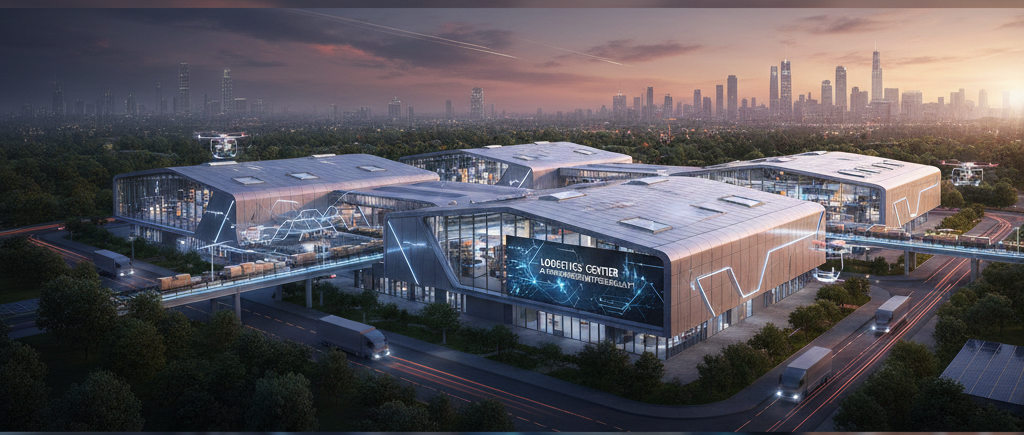
Aerial view of a large logistics centre hub with multiple dock bays and vehicle routing infrastructure
Trusted by
TAKENAKA Jacobs EMAAR McKinsey Dubai Municipality egis
The Problem

A suboptimal dock layout affects throughput for the life of the building

A suboptimal dock layout or automation zone configuration in a logistics centre affects throughput efficiency for the operational life of the building and is rarely reversible without major capital expenditure. In a sector where margins are driven by operational efficiency, planning errors are a permanent competitive disadvantage.

Without DBF With DBF
Dock, bay, and flow layouts validated against throughput targets manually
AI generates logistics centre layouts scored against operational KPIs
Site coverage, access, and routing optimised in separate workstreams
Integrated site feasibility with access, routing, and coverage in one model
Automation zones planned without spatial scalability testing
Automation zone configurations tested for current and future technology
Sustainability targets addressed late
Embodied carbon and sustainability metrics integrated from feasibility
Process

How It Works

01
Site Brief Upload

Upload site constraints, throughput targets, and operational requirements. DBF maps logistics brief data to spatial parameters.

02
Layout Generation

AI generates logistics facility configurations scored against throughput, efficiency, and operational KPIs simultaneously.

03
Flow Optimisation

Every dock, bay, aisle, and vehicle routing scenario validated against throughput targets before design begins.

04
Automation Zone Testing

Automation zone configurations tested for current and next-generation technology — sizing for the operation, not the design.

05
Multi-site Comparison

Candidate sites tested simultaneously against the same operational brief, with comparable outputs for investment decisions.

06
Planning Outputs

BIM-ready programme data, sustainability metrics, and planning authority report outputs delivered from feasibility.

Platform

Built for logistics operational complexity

Every DBF capability is designed for the specific demands of logistics centre planning — where dock configuration, throughput flow, and automation readiness interact to determine operational performance from day one.

  • AI logistics centre layout generation
  • Throughput and operational flow analysis
  • Dock, bay, and aisle configuration optimisation
  • Vehicle routing and access analysis
  • Automation zone scalability testing
  • BIM handoff exports
Who Uses DBF

Use Cases

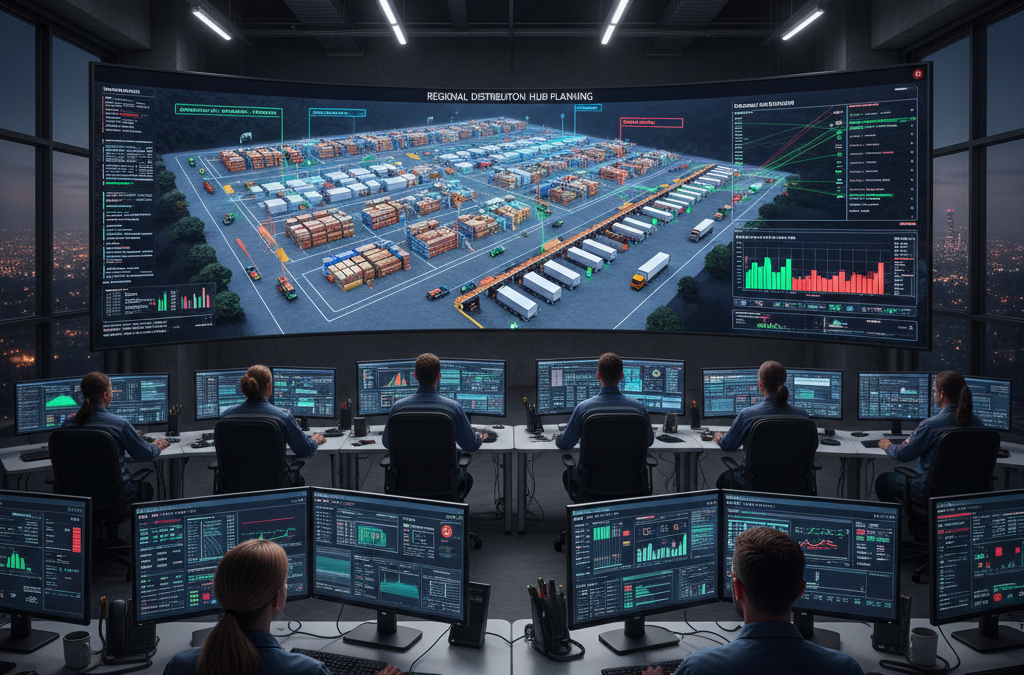
Logistics planning team reviewing dock configuration, throughput flow, and automation zone scenarios
01
Logistics & 3PL
Network Planner

Validate logistics centre layouts against throughput targets, dock configurations, and automation zone requirements across multiple candidate sites simultaneously.

02
E-Commerce
Fulfilment Director

Test large-footprint logistics hub configurations against order throughput, automation integration, and operational KPIs before committing to development.

03
Retail Operators
Supply Chain Director

Assess logistics centre development scenarios against supply chain throughput requirements, network coverage, and infrastructure investment constraints.

04
Industrial Developers
Development Director

Validate logistics development proposals against occupier operational requirements, site coverage, and infrastructure demands before design is committed.

Day 1
KPI Validation
Operational from opening
Multi-site
Parallel Feasibility
Candidate sites compared
Future-proof
Automation Ready
Tested for next-gen tech
Future Vision

Planning the hubs of modern supply chains

With e-commerce growth, automation adoption, and nearshoring trends reshaping logistics networks, demand for well-planned, adaptable logistics centres will intensify. Throughput requirements will increase, automation will evolve, and the infrastructure demands of logistics hubs will grow. DBF enables faster, smarter feasibility for the hubs underpinning modern supply chains — giving developers and operators the operational evidence to invest with confidence.

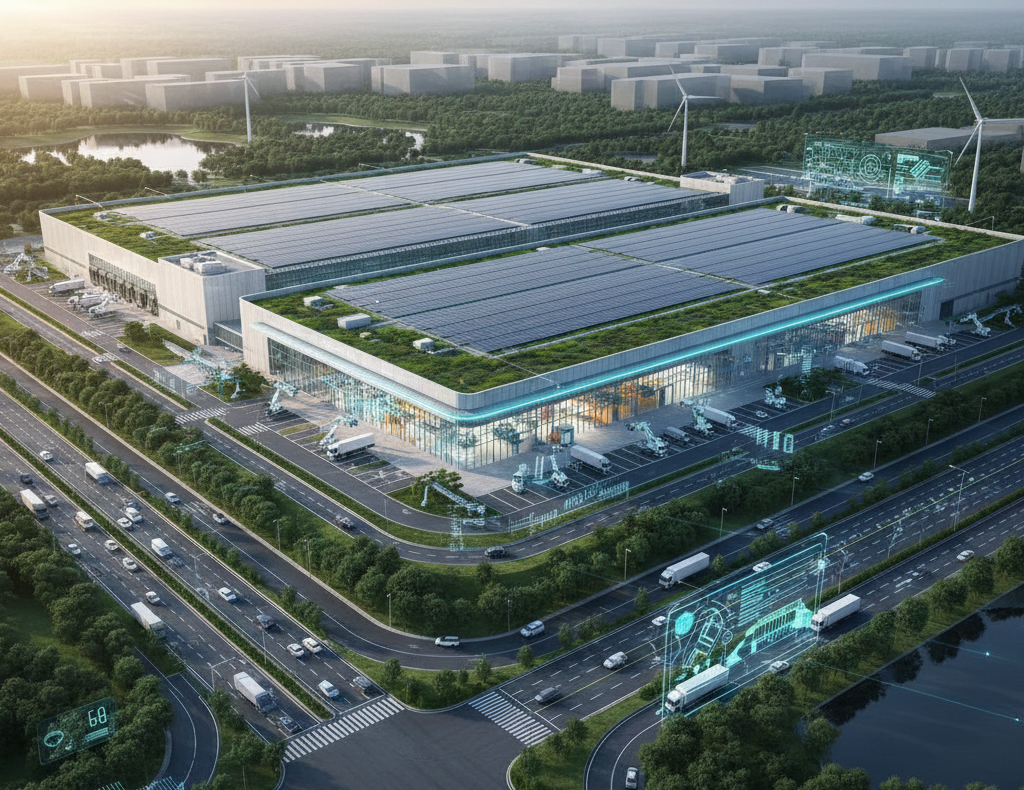
Future vision of a next-generation logistics hub with integrated automation and sustainable infrastructure