
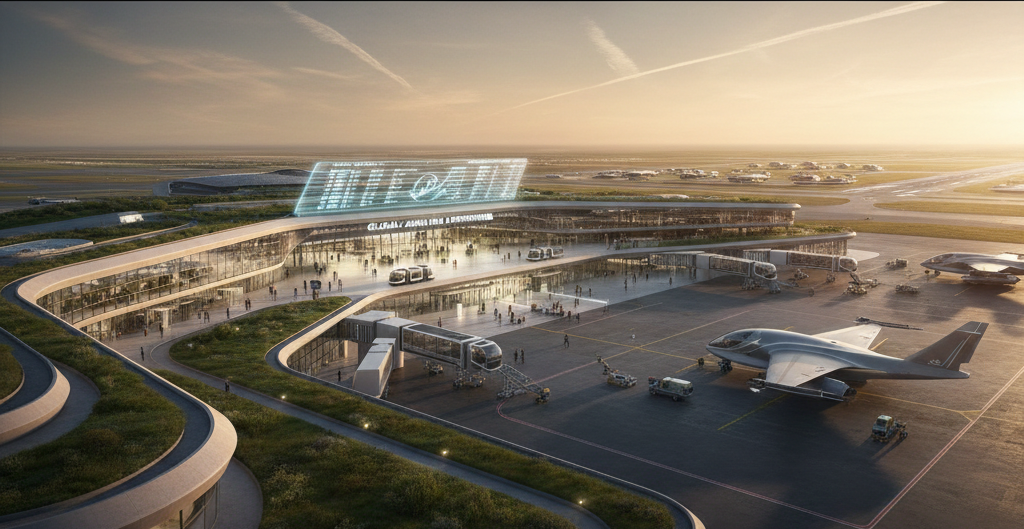

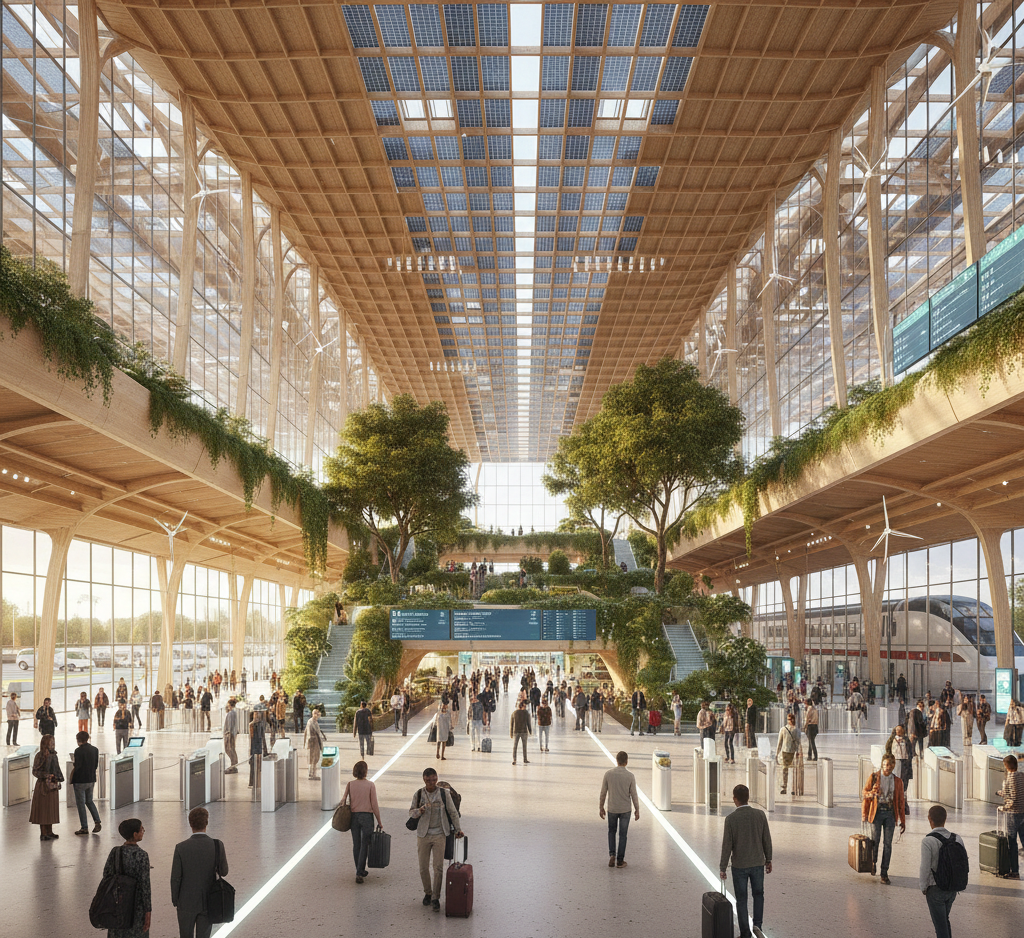
Validate terminal capacity, passenger flow, and airside-landside programme for airports — before billion-pound construction decisions are made.
Airport planning errors — terminal capacity shortfalls, misaligned pier configurations, or poor landside interchange — create congestion and service failures that affect millions of passengers. At the scale of airport construction, planning errors are measured in billions to correct and can set back an airport's competitiveness for a generation.
| Without DBF | With DBF |
|---|---|
Terminal capacity and passenger flow validated across disconnected planning tools |
AI generates terminal layout scenarios with integrated passenger flow validation |
Airside, pier, and landside programme balanced by experience |
Programme mix validated against IATA and ICAO standards simultaneously |
Peak demand and capacity bottlenecks found after BIM is committed |
Peak demand stress-tested and bottlenecks identified at feasibility |
Retail and commercial programme balanced intuitively |
Retail and commercial programme validated against footfall projections |
Upload passenger demand data, peak flow projections, and site constraints. DBF models transport demand against spatial parameters.
AI generates facility layout configurations scored against passenger flow, capacity, and operational KPIs simultaneously.
Multi-modal passenger flow is simulated across all facility zones. Bottlenecks and congestion points identified before design begins.
Peak demand scenarios stress-tested against facility capacity. Every constraint identified and scored at feasibility — not after construction.
Regulatory, accessibility, and operational compliance requirements validated from the first generated layout — not detailed design.
Validated facility layouts, flow data, and infrastructure sizing exported directly to BIM workflow, eliminating manual re-entry.
Every DBF capability is designed for the specific demands of airport planning — where terminal capacity, passenger flow, airside operations, and commercial programme interact at the scale of billion-pound infrastructure investment.
Validate terminal expansion and new-build configurations against passenger flow projections, IATA and ICAO compliance, and peak capacity requirements.
Deliver faster, more evidence-based airport feasibility studies with validated passenger flow analysis, capacity modelling, and planning-authority-ready outputs.
Assess airport development scenarios against national aviation demand forecasts, infrastructure investment requirements, and planning policy constraints.
Validate terminal design options against passenger flow simulation, peak capacity modelling, and commercial programme KPIs before BIM investment is committed.
As global air travel demand recovers and grows, airport capacity investment will intensify. Terminal configurations will need to be more flexible, passenger experience will become a competitive differentiator, and the cost of planning errors will scale with asset values. DBF enables aviation planning teams to validate more terminal options earlier — with greater passenger experience evidence and regulatory confidence than traditional workflows allow.