

Industrial & Manufacturing

Manufacturing Facilities

Validate production layouts, infrastructure demands, and operational flow for manufacturing facilities of all scales — reducing programme risk before construction begins.

Also in Industrial & Manufacturing EV Factories Complex Factories EV Sites
Advanced manufacturing facility with multi-stage production flow and specialist infrastructure
Trusted by
TAKENAKA Jacobs EMAAR McKinsey Dubai Municipality egis
The Problem

Manufacturing planning errors compound over a building's lifetime

Manufacturing facility planning errors discovered after construction begins — misaligned production flows, undersized utilities, or inflexible layouts — generate operational and capital costs that compound over the building's lifetime. Every year of suboptimal production represents lost capacity that cannot be recovered without major capital reinvestment.

Without DBF With DBF
Production flows and space ratios validated in spreadsheets
AI generates facility layouts with integrated production flow and KPI scoring
Utilities and infrastructure sized by estimation
Demands modelled from operational data before construction
Compliance and safety zones checked in detailed design
Regulatory requirements validated at feasibility
Future capacity assumed
Scalability and retooling scenarios tested against spatial and infrastructure limits
Process

How It Works

01
Process Mapping

Upload production flow requirements, site constraints, and operational targets. DBF maps process data to spatial parameters.

02
Layout Generation

The AI generates factory layout configurations scored against production flow, efficiency, and brief compliance.

03
Flow Validation

Every production adjacency and process relationship validated before design begins. Conflicts surface at feasibility with impact scores.

04
Infrastructure Sizing

Specialist utilities, high-voltage, and MEP infrastructure demands modelled from process and production data — not estimated.

05
Compliance Checking

Safety zoning, hazardous material areas, and regulatory requirements validated at feasibility stage, not detailed design.

06
BIM Handoff

Validated factory layouts, process flows, and infrastructure data export directly to BIM, eliminating manual re-entry.

Platform

Built for manufacturing planning at every scale

Every DBF capability is designed for the specific demands of manufacturing facility planning — where production flow, utilities demand, and long-term scalability interact across facilities of all types and scales.

  • AI manufacturing facility layout generation
  • Production flow and adjacency analysis
  • Utilities and infrastructure demand modelling
  • Safety zone and compliance validation
  • Scalability scenario testing
  • BIM handoff exports
Who Uses DBF

Use Cases

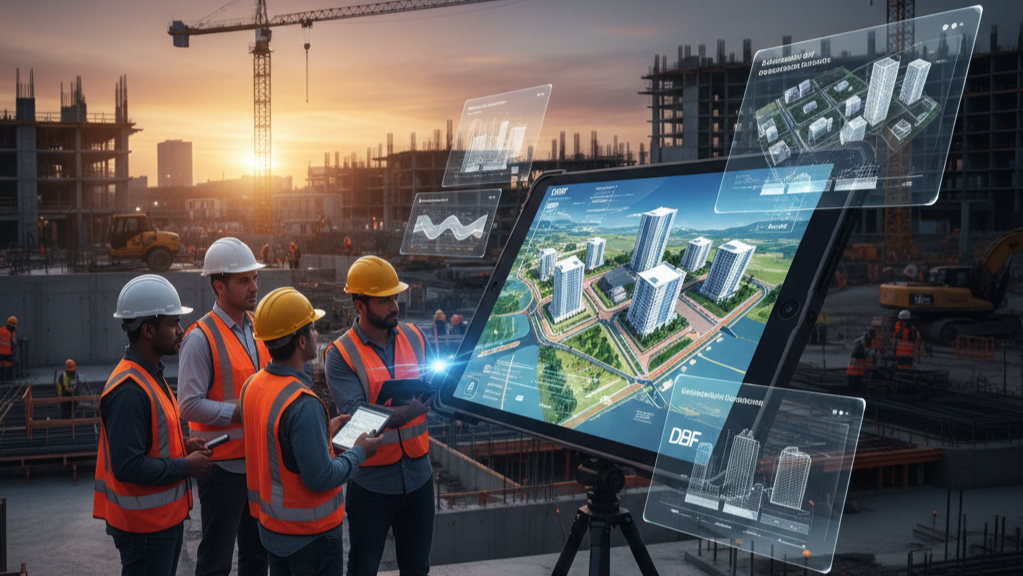
Manufacturing planning team reviewing facility layout, production flow, and infrastructure configurations
01
Industrial Developers
Development Director

Validate manufacturing facility developments against occupier production flow requirements, infrastructure demands, and long-term flexibility before committing to design.

02
Manufacturing Operators
Operations Lead

Test new-build and expansion facility configurations against production flow targets, operational KPIs, and infrastructure requirements before construction.

03
Engineering Firms
Project Director

Deliver faster, more evidence-based manufacturing facility feasibility studies with validated production flow, infrastructure sizing, and BIM-ready outputs.

04
Investment Funds
Asset Manager

Assess manufacturing facility development scenarios against operational performance, infrastructure investment, and long-term adaptability before committing capital.

Multi-stage
Flow Validated
Before construction begins
Pre-build
Infrastructure Sizing
From operational data
BIM-ready
Handoff Quality
Zero manual re-entry
Future Vision

Planning adaptable facilities for reshoring and industrial growth

As reshoring trends and industrial policy accelerate manufacturing investment globally, the demand for well-planned, adaptable facilities will intensify. Production technologies will evolve, workforce requirements will change, and the infrastructure demands of manufacturing will grow. DBF enables teams to validate more options earlier with greater operational confidence — delivering manufacturing facilities that perform from day one and adapt for the decades ahead.

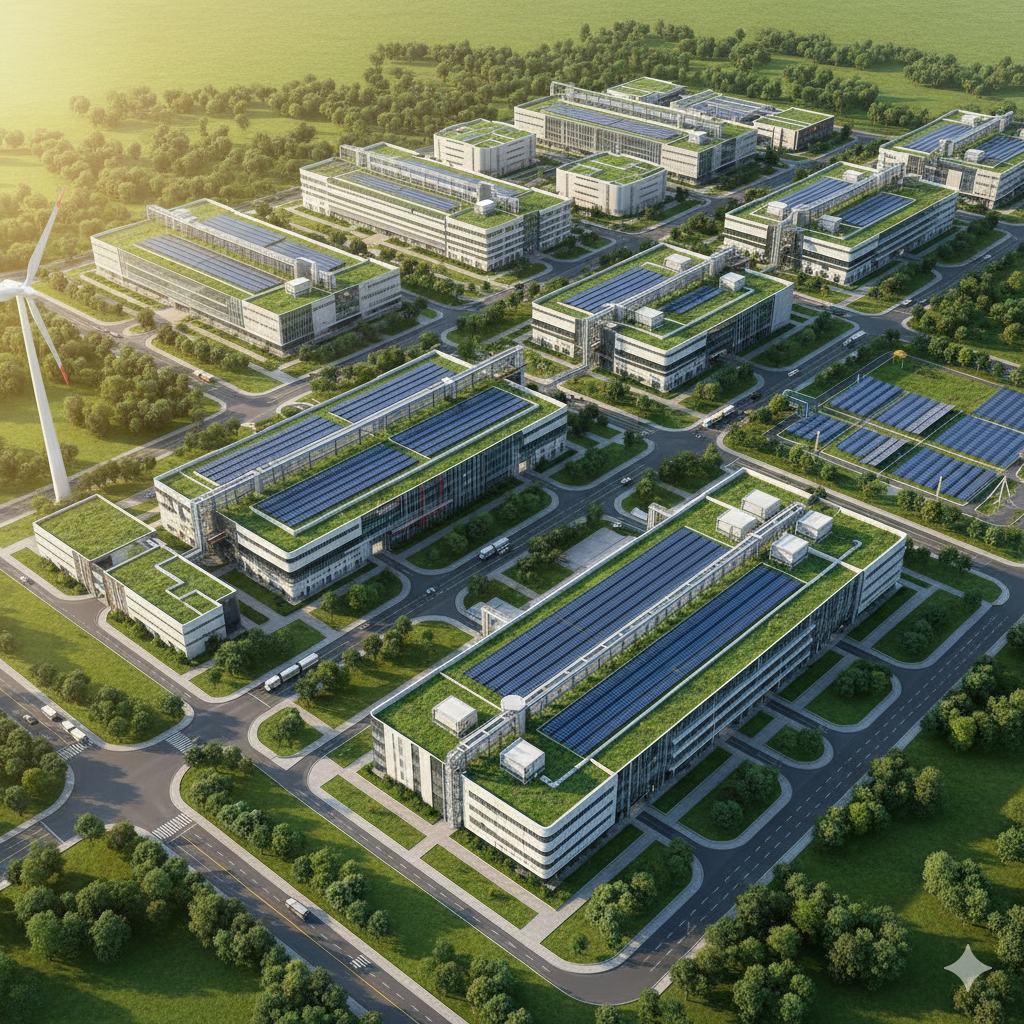
Future vision of a modern manufacturing campus with adaptable production and logistics infrastructure