
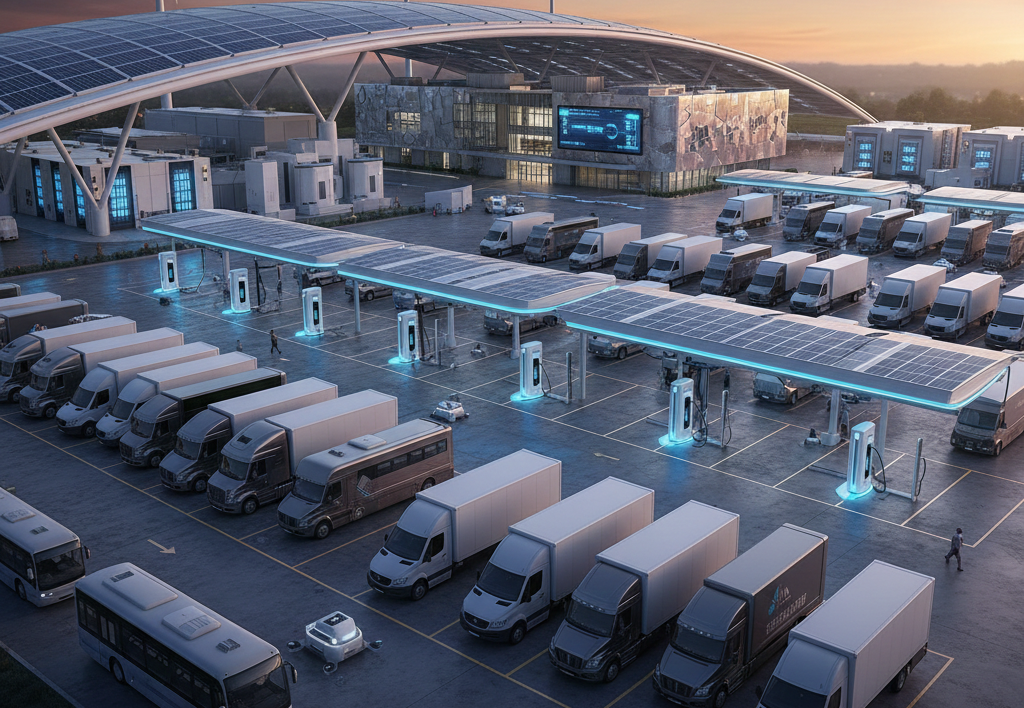

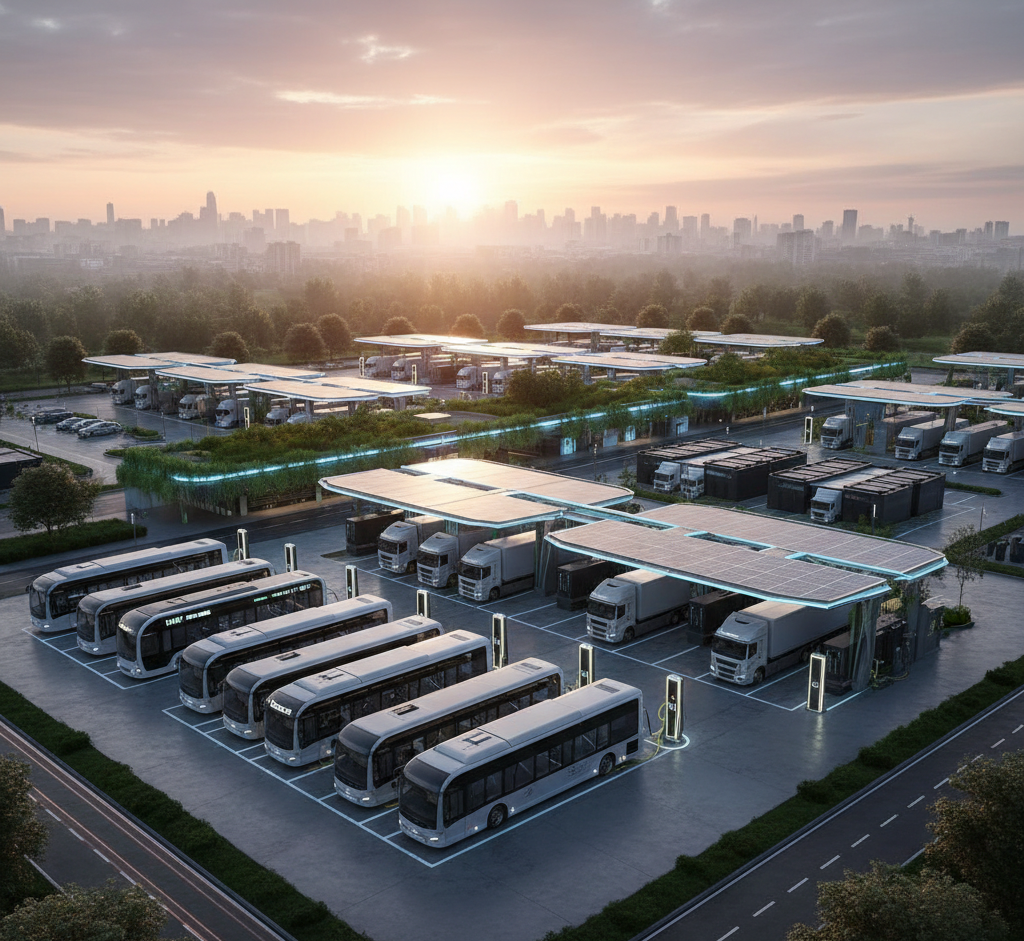
Validate fleet depot electrification layouts, grid connection demands, and charging infrastructure — enabling faster, evidence-based investment decisions for transport decarbonisation.
Fleet depot electrification planning errors — undersized grid connections, suboptimal charger placement, or inflexible depot layouts — delay decarbonisation programmes and create infrastructure costs that are expensive to reverse. In a sector driven by zero-emission mandates and tight capital budgets, these are planning mistakes operators cannot afford to make.
| Without DBF | With DBF |
|---|---|
Charger counts and grid demands estimated across depot layouts |
AI generates electrification configurations scored against operational and grid KPIs |
Grid connection applications submitted without validated demand data |
Power demand modelled from fleet and charging schedules before grid applications |
Depot layouts adapted for electrification without spatial testing |
Multiple depot layout scenarios tested simultaneously for charger integration |
Future fleet growth assumed |
Scalability scenarios tested for fleet size and technology upgrades |
Upload passenger demand data, peak flow projections, and site constraints. DBF models transport demand against spatial parameters.
AI generates facility layout configurations scored against passenger flow, capacity, and operational KPIs simultaneously.
Multi-modal passenger flow is simulated across all facility zones. Bottlenecks and congestion points identified before design begins.
Peak demand scenarios stress-tested against facility capacity. Every constraint identified and scored at feasibility — not after construction.
Regulatory, accessibility, and operational compliance requirements validated from the first generated layout — not detailed design.
Validated facility layouts, flow data, and infrastructure sizing exported directly to BIM workflow, eliminating manual re-entry.
Every DBF capability is designed for the specific demands of depot electrification planning — where charger placement, grid demand, and depot layout interact to determine the success of transport decarbonisation programmes.
Validate depot electrification layouts, charger configurations, and grid connection demands across multiple depots before committing to electrification investment.
Test train depot electrification configurations against fleet charging requirements, grid connection capacity, and operational scheduling constraints.
Assess public transport fleet electrification scenarios against grid capacity, infrastructure investment, and decarbonisation programme targets simultaneously.
Validate commercial vehicle depot electrification configurations against fleet charging demand, operational scheduling, and future fleet growth scenarios.
As zero-emission fleet mandates accelerate globally, the demand for data-driven depot electrification planning will intensify. Grid constraints will tighten, charging technology will evolve, and the capital requirements of electrification programmes will grow. DBF enables transport operators to plan faster, smarter electrification programmes with greater grid and operational confidence — delivering the infrastructure evidence that zero-emission mandates demand.