
Education & Innovation

AI-Powered Planning for Tech Campuses

Design tech campuses that attract top talent, enable collaboration, and adapt to rapid organisational change — using DBF's generative planning engine.

Also in Education & Innovation Educational Campus Innovation Centers Data Centers
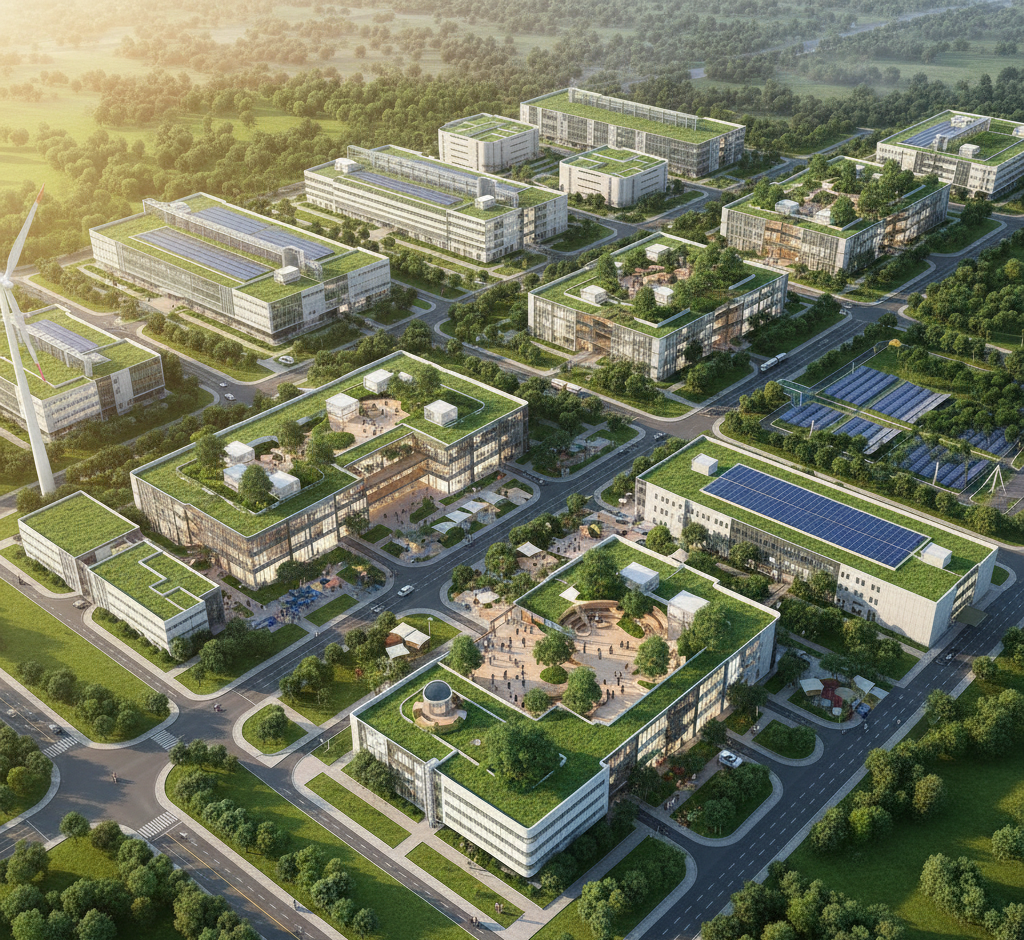
Tech campus aerial view
Trusted by
TAKENAKA Jacobs EMAAR McKinsey Dubai Municipality egis
The Problem

Tech campus planning fails at the speed of innovation

Traditional master-planning cycles run 18–36 months. By the time a tech campus layout is approved, the organisation has already changed headcount targets, adopted hybrid work, or pivoted product strategy. Static plans create facilities that are obsolete before they open.

Without DBF With DBF
Months-long planning cycles miss fast-moving talent strategies
Real-time scenario modelling keeps pace with headcount and portfolio decisions
Siloed teams produce disconnected buildings, not campus ecosystems
Integrated data layer connects mobility, energy, space, and wellbeing in one model
Generic office blocks fail to signal innovation culture
Generative massing creates differentiated typologies tuned to each team's work patterns
Phasing guesswork locks in costly infrastructure decisions early
Probabilistic phasing models scenario-test infrastructure against multiple growth paths
Process

How It Works

01
Site Assessment

Analyse terrain, infrastructure, and constraints across the campus footprint using geospatial data.

02
Programme Modelling

Define space requirements for research, teaching, collaboration, and student amenity at multiple scales.

03
Layout Generation

AI generates hundreds of massing options balancing density, daylight, and movement flows.

04
Performance Simulation

Each option is scored against energy, acoustic, wind, and social connectivity criteria simultaneously.

05
Scenario Comparison

Stakeholders review ranked options with explainable trade-off data, not just renderings.

06
Delivery Planning

Phasing, cost modelling, and infrastructure sequencing locked in before a single drawing is issued.

Platform

Built for campus complexity

DBF's campus planning engine combines geospatial data, workforce analytics, and generative design to produce layouts that perform from day one and flex over time.

  • Generative massing for mixed-use campus blocks with daylight and density constraints
  • Workforce data integration to right-size collaboration, focus, and social zones
  • Infrastructure sequencing across multi-phase campus delivery programmes
  • Mobility and active-travel route optimisation across the full site
  • Energy and carbon modelling at campus scale, not just building level
  • Digital twin outputs ready for BIM handover and FM integration
Who Uses DBF

Use Cases

01
Campus Director
Strategic Portfolio

Model 10-year campus growth scenarios against headcount forecasts and real-estate conditions in one afternoon.

Expand
02
Head of Workplace
Space Strategy

Identify underperforming zones and generate retrofit options that increase collaboration density without adding floor area. Run utilisation heat-maps across the full portfolio in minutes.

Expand
03
Infrastructure Lead
Network Planning

Simulate power, data, and mobility loads across phased delivery to eliminate costly over-specification before procurement.

Expand
04
Sustainability Manager
Net-Zero Planning

Run campus-scale energy and carbon models across multiple massing options before committing to structural grids. Quantify embodied carbon on every design variant.

Expand
05
Facilities Manager
Operational Resilience

Model long-term maintenance schedules and simulate disruption scenarios for critical operations across building clusters.

Expand
06
Executive Sponsor
Investment Decisions

Align capital allocation to strategic milestones with probability-weighted scenario returns and real-time sensitivity analysis across the full campus portfolio.

Expand
Faster layout iteration
vs. traditional CAD workflows
40%
Reduction in infrastructure over-spec
through probabilistic phasing models
18mo
Saved in planning cycle time
on a 50-acre campus programme
Future Vision

The self-optimising campus

As sensor data, occupancy feeds, and energy meters stream into the DBF digital twin, the campus plan becomes a living model. Space allocations rebalance automatically as teams grow and shrink. Infrastructure upgrades are triggered by real demand, not projected headcounts. The result is a campus that continuously earns its footprint.

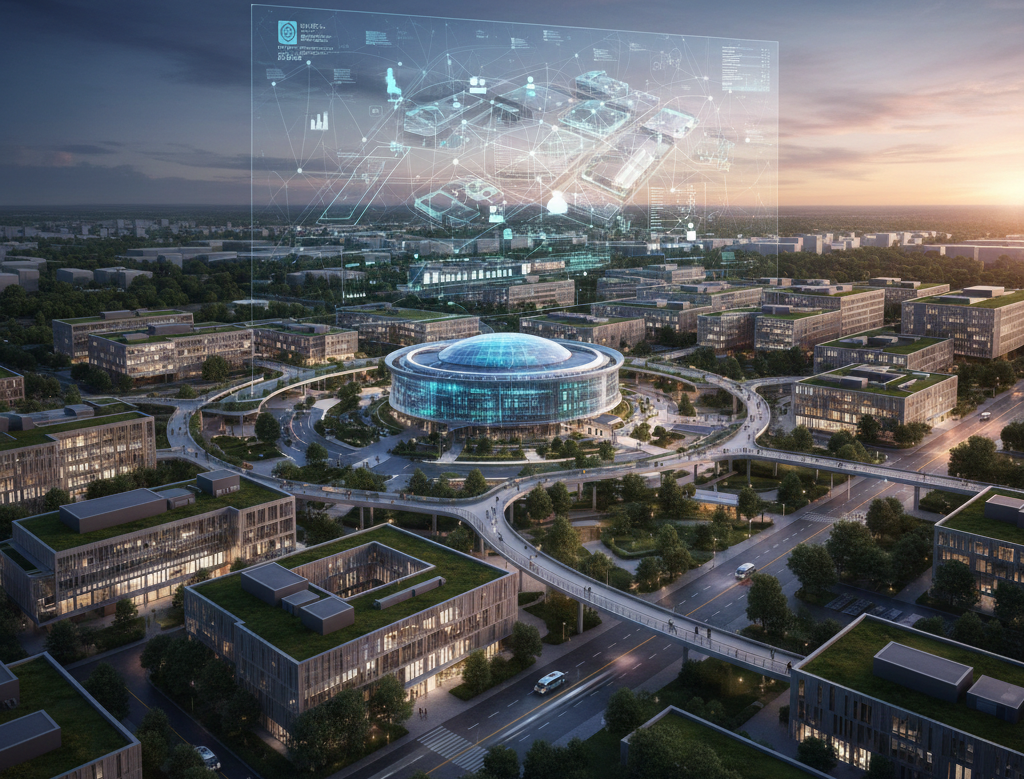
Tech campus future vision