
Digital Twin for City Planning: Capturing the $2.3 Trillion Smart City Opportunity
Digital twins are transforming city planning by enabling data-driven simulations across mobility, energy, land use, and climate. As cities face urbanization and climate risks, digital twins help cut costs, improve ROI, boost resilience, and unlock the $2.3 trillion smart city opportunity through predictive, transparent decision-making for municipal leaders worldwide today. · January 1, 2026

Cities worldwide confront mounting challenges due to rapid population growth, climate change, and increased strain on infrastructure. Amidst such rising complexities, municipal leaders are expected to deliver faster, cleaner, and more efficient infrastructure with limited budgets and outdated tools. The rise of digital twins for city planning bridges this gap, poised to shape the $2.3 trillion smart city market in the coming decade.
For municipal authorities, engineers and urban planners alike, digital twins offer them a solution that the previous planning cycles never could. Digital Twins let municipal authorities simulate decisions and designs before making them and quantify outcomes with accuracy.
This article outlines what the concept of digital twins is, how it has become essential for infrastructure development and how urban engineers and leaders can use it to unlock better opportunities.
The Infrastructure Planning Gap: Why Cities Need a New Operating Model
By 2050, 68% of the world’s population will reside in urban areas. This will put unprecedented demand on housing, energy, transport, water, waste management and mobility infrastructure.
This can be seen in the strain that municipal departments across the world are facing.
- According to global benchmarking studies, infrastructure projects regularly overshoot their budgets by 20 to 45%.
- The transportation congestion in major cities costs up to 3 to 5% of GDP annually.
- Climate change induced disruptions are spiking municipal recovery spending. This can be seen in the way floods alone are causing $65 billion in average losses worldwide, annually.
Municipal leaders bear the responsibility to make long-term decisions, keeping these uncertainties in mind. Yet, with yesteryear’s technologies, most plans undertake a reactive response over a predictive one. This is where ‘Digital Twins’ are bridging the gap.
What a Digital Twin Really Means for City Planning
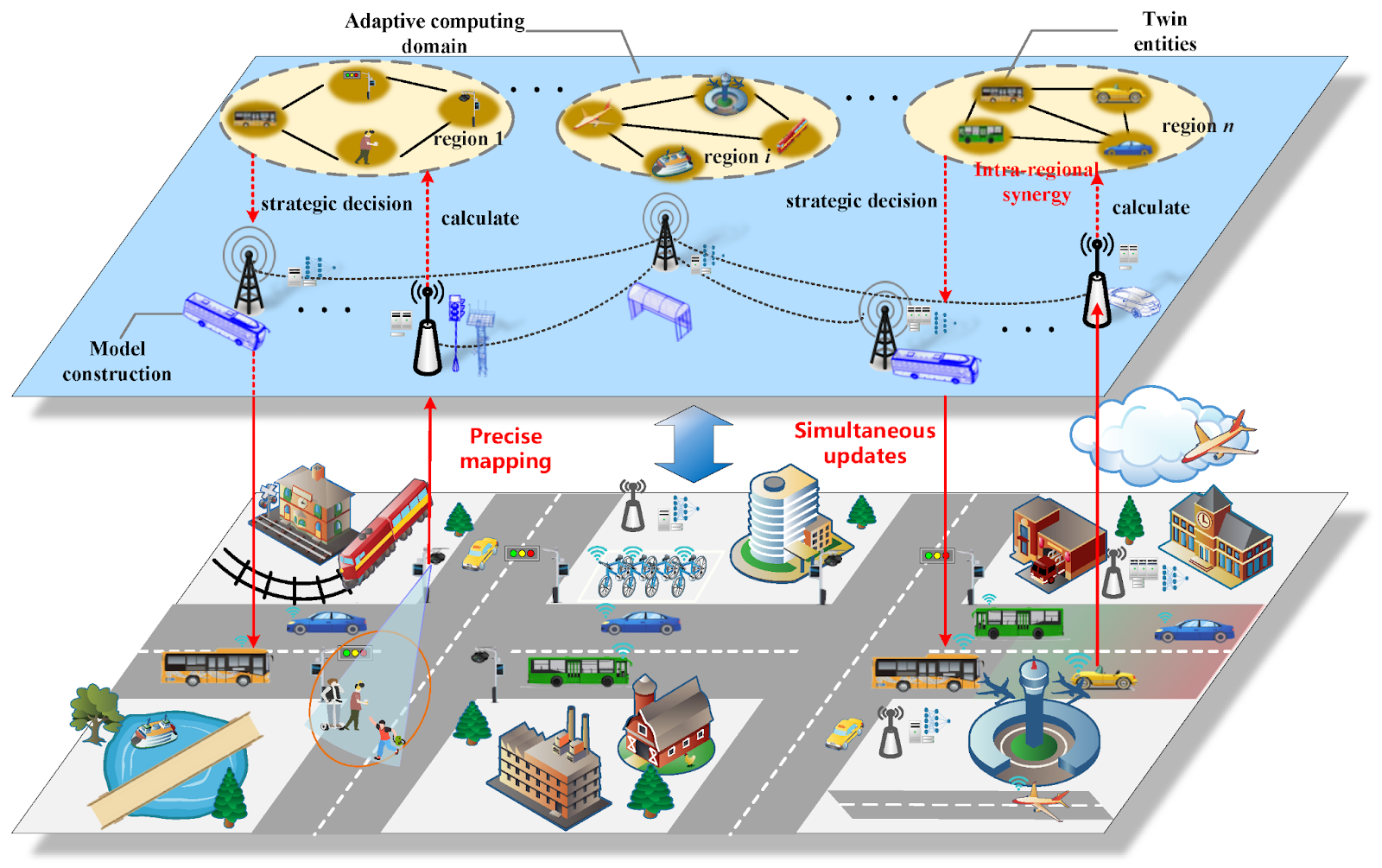
A digital twin for city planning is a virtual model that is interconnected and dynamic. It combines mobility patterns, land-use information, geospatial data, utility networks, building performance, demographic needs and much more.
It is an operational platform that municipal leaders can use to:
- Test different infrastructural scenarios.
- Analyse the economic, social and environmental impact of every decision.
- Reduce ambiguity and capital risk.
- Transform planning into an iterative process that is backed with data and logic.
At the core of it, a digital twin brings together:
- AI-backed simulations for different land, energy, traffic and climate scenarios.
- Real-time data that is gathered from different mobility systems, sensors and utilities.
- Predictive financial modelling to quantify lifecycle costs, carbon emissions and ROI.
- GIS and BIM integration to understand various impacts.
For urban planners and municipal governments, a digital twin provides the opportunity to balance development with capital responsibility while pursuing long-term sustainable goals.
Smart Cities as a $2.3 Trillion Economic Opportunity
The global smart city market is expected to touch $2.3 trillion. This can be attributed to the growing investments from cities in tech-based infrastructure, energy and waste management, water, housing and public safety. Thanks to this, the idea of digital twins is increasingly being recognised as the underlying base that can enable development at scale.
It is also ever-growing in its pertinence with the need for different transit-oriented developments, EV charging rollouts, climate change resilient housing systems and much more. With such requirements, there is a need for an ability to test different scenarios and quantify their impact. In short, digital twins serve as the investment engine for this market. They help cities:
- Optimise CAPEX by 10 to 20% through design decisions.
- Reduce OPEX by 15 to 20% through predictive system and maintenance optimization.
- Improve planning cycles by 30 to 50% helping cities embrace emerging trends better.
Smart Cities as a $2.3 Trillion Economic Opportunity
The global smart city market is expected to touch $2.3 trillion. This can be attributed to the growing investments from cities in tech-based infrastructure, energy and waste management, water, housing and public safety. Thanks to this, the idea of digital twins is increasingly being recognised as the underlying base that can enable development at scale.
It is also ever-growing in its pertinence with the need for different transit-oriented developments, EV charging rollouts, climate change resilient housing systems and much more. With such requirements, there is a need for an ability to test different scenarios and quantify their impact. In short, digital twins serve as the investment engine for this market. They help cities:
- Optimise CAPEX by 10 to 20% through design decisions.
- Reduce OPEX by 15 to 20% through predictive system and maintenance optimisation.
- Improve planning cycles by 30 to 50% helping cities embrace emerging trends better.
How Digital Twins Transform the Municipal Planning Workflow
Digital Twin is bound to transform the entire planning, design and execution lifecycle. Here are the biggest areas where the solution will have an impact.
- Mobility Modelling
Traffic planning, congestion, transit inefficiencies, and road safety issues pose high costs to cities. A digital twin will allow municipal authorities to:
- Test new routes, optimise capacity and plan new corridors.
- Model different mobility adoptions and plan integration of EV infrastructure.
- Understand emission reduction across different mobility segments.
Cities across the world that have integrated mobility twins have observed congestion reduced by up to 15% through model-driven planning.
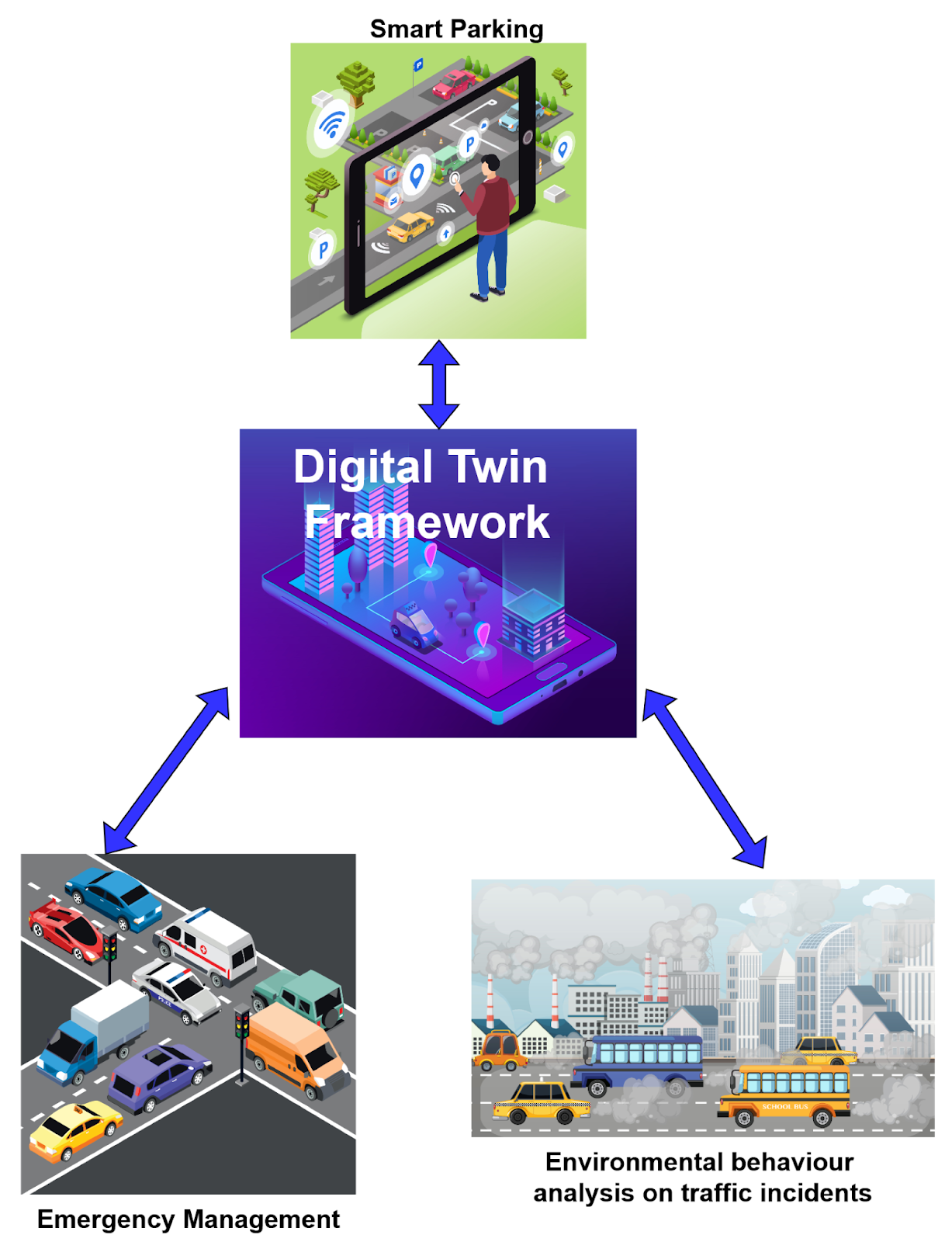
- Energy Network Optimization
Vital utilities form the base for modern urban neighbourhoods. Digital twins can help simulate:
- Water distribution losses and pressure fluctuations.
- Energy demand peaks and the impact of rooftop solar adoption.
- District cooling or energy-efficiency retrofits at the city scale.
This helps build better energy networks through efficient financial planning with potential for necessary upgrades.
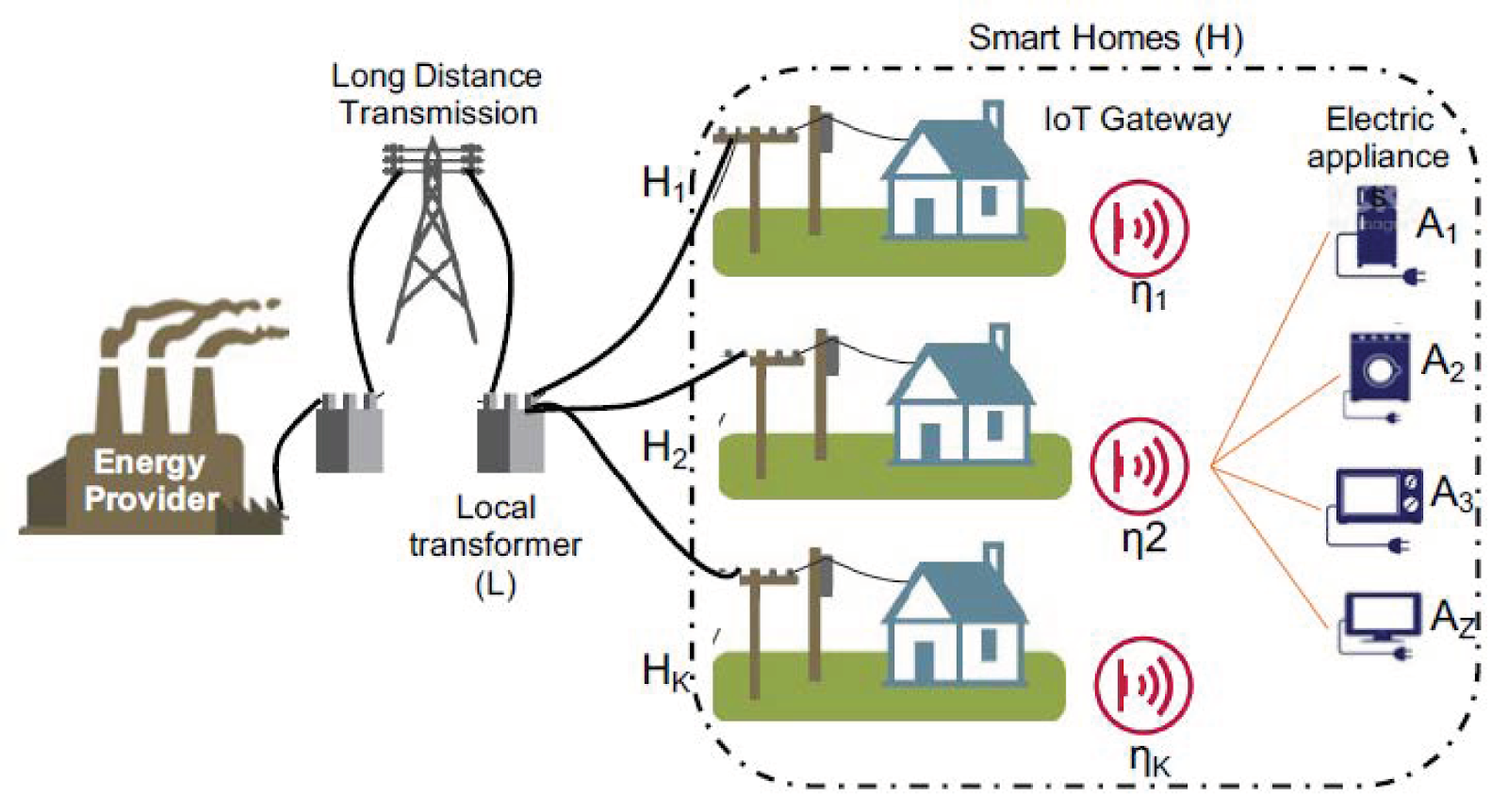
3. Disaster Preparedness
With climate change and its resulting events growing in frequency, cities must drive higher investments towards infrastructure resilience.
Digital twins facilitate the simulation of:
- Flooding patterns under different rainfall intensities.
- Heat-stress zones in a neighbourhood.
- Drought and flood scenarios, along with the underlying benefits of sustainable infrastructure.
Cities can monitor damage that was averted and strengthen the investment case for resilience projects.
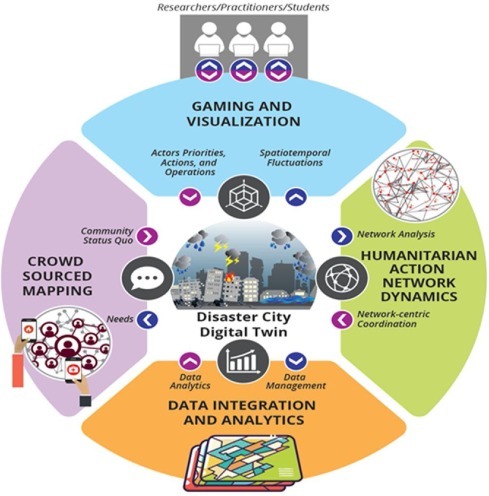
3Land-Use, and Development Control
Urban planners can check:
- Locality-specific density scenarios with impact on mobility and environment.
- Tax revenue implications with respect to zoning changes.
- Socio-economic distribution impact at the local scale.
- This helps zoning policy be more transparent and predictable.
5. Public Transparency
A digital twin enables citizens to see how decisions are taken and the plausible outcomes they can produce. This has resulted in a smoother approval process, increased trust and a decrease in opposition for development projects.
Why Digital Twins Are Essential Infrastructure
Digital twins are no longer mere project tools. They are long-term municipal systems. This shift can be attributed to:
- Rise of Generative & Predictive AI
Urban planners can now compute multiple future scenarios and quantify potential trade-offs. With AI, planners can now have a larger viewpoint.
- GIS–BIM–IoT Integration
Data that was earlier available with select teams can now be used to work together in a unified ecosystem. This helps remove one of the biggest roadblocks to city planning.
- Policy and Funding Incentives
Governments now require carbon emissions, climate risk assessment, and evidence-based decision-making. Digital twins help with all this, thereby helping compliance become easier and faster.
Municipal corporations and cities that adopt digital twins have a strategic advantage in today’s day and age.
Challenges Cities Face in Capturing the Opportunity
Municipal teams often face numerous barriers when it comes to embracing the full potential of digital twins. This includes high perceived cost, data challenges, skill gaps among the authorities and coordination challenges. However, there are numerous global studies that highlight how these challenges can be solved. The shift can be embraced when cities:
- Start with a small but high-potential pilot. This could be a floodplain, a district redevelopment plan or a mobility corridor.
- Have cross-functional teams where the engineering, planning and finance teams own and work with the twin.
- Use cloud-first solutions that offer easy deployment and can be scaled affordably.
How DBF Supports Municipal Urban Engineering Teams
DBF, being at the forefront of AI-powered urban planning innovation, developed its solution with multiple data points, all collated from different municipal planners across the world. The solution takes into account different realities, including but not limited to paucity of time, resources and high-pressure decision-making capabilities. For urban planners and municipal authorities, DBF offers:
- Real city-scale digital twin creation without the need for heavy or complicated IT infrastructure.
- Integrated datasets that combine GIS, BIM, climate, mobility, and financial inputs.
- Investment-grade simulations that quantify ROI, carbon impact, and lifecycle costs for the project.
- Automated BIM generation that reduces model production time by more than 75%.
- Cross-department collaboration tools help teams to work together and not in silos. This includes planners, engineers, and financiers to work in one unified system.
Municipal authorities who have used DBF have seen:
- Overall project cost reduced by 15%
- Improve planning timelines by more than 50%
- Undertake complex decisions with evidence-based outputs.
For municipal leaders, DBF is not merely a modelling tool. It is a decision system that uses intelligence and data to reduce risk, strengthen policy-making decisions and justify investments.
Preparing Your City for the Future
Municipal authorities who act today will be able to develop cities that hold the potential to lead tomorrow. The path to a $2.3 trillion global market is clear. Cities need to be reinvented to meet newer standards, pushing authorities to integrate digital twins into their infrastructural planning. Digital twins help municipal leaders to build more resilient infrastructure, prioritise investments, meet climate and sustainability mandates, and strengthen public trust.
As urban challenges grow more and more complicated in nature, there is a growing demand for using cutting-edge tools like digital twins to simplify these challenges. It is only then that we can go on to build economically, socially and environmentally thriving cities for the future.
If you are an urban planner exploring ways to integrate digital twins in your workflow, you can reach out to the product team at Digital Blue Foam. The team can work on a customized solution that is tailored to your needs and requirements. Just fill out the form and have the team reach out to you in no time.
FAQs
What is a digital twin in city planning, in simple terms?
A digital twin is a virtual representation of a city or a particular urban system. This showcases transport, utilities, land use, or other physical spaces. The digital model uses a combination of GIS, BIM, IoT sensor data, climate models, and location information into a single, continuously updated simulation. This virtual model enables municipal leaders to test various decisions virtually before executing them physically.
Why are digital twins becoming essential for municipal governments now?
Digital twins help cities equip themselves from challenges like urbanisation, climate volatility, infrastructure lapses and funding constraints. It enables municipal authorities to take data-driven decisions, model risk with predictive analysis and measure ROI. With its impact on the future of cities and urban infrastructure, it is imperative for municipal governments to employ digital twins.
How do digital twins improve infrastructure investment ROI?
Digital twins can help improve ROI by:
- Helping planners to compare different design and policy scenarios before implementation.
- Predicting lifecycle costs rather than just construction costs.
- Cut rework and remove design conflicts that could inflate budgets.
Cities that have used predictive infrastructure modelling save 10 to 20% CAPEX and reduce their operational costs by 15 to 25% on major infrastructure programs.
What types of municipal projects benefit the most from digital twins?
Digital twins offer maximum value and impact on projects that have high capital costs and long-term complexities. This includes transport and public transit systems, stormwater networks, power distribution, and cooling systems. These systems come with interdependencies that traditional planning tools will not be able to model effectively.