
Aerospace Systems Design Laboratory: Best Practices for On-Time Delivery
Aerospace Systems Design Laboratories demand precise planning to avoid delays, cost overruns, and missed research milestones. This blog explores best practices for on-time delivery using modular design, workflow simulation, digital twins, and AI-driven planning. It highlights how tools like Digital Blue Foam reduce risk, streamline collaboration, and accelerate complex aerospace lab projects. · January 12, 2026


Aerospace research is fast evolving. Programs, technologies, funding cycles, and the need for optimal spaces.
The Aerospace Systems Design Laboratory is not just a facility. It is an environment that helps with simulation, prototyping, testing, and cross-disciplinary research.
These spaces are mission-critical environments that are some of the most complex projects to plan and deliver.
A delay in this results in missed research milestones, stalled testing programs, budget overruns, and loss of commercial or institutional opportunities.
With its critical nature, aerospace organizations, architecture firms, and engineering teams are moving towards a new system. One that employs modular design, simulation-driven planning, and digital platforms to streamline delivery.
This article sheds light on some of the best practices for on-time aerospace lab delivery. It also highlights how cutting-edge tools like Digital Blue Foam help in predicting risks, eliminating bottlenecks, and streamlining delivery.
Why On-Time Delivery Matters for Aerospace Labs?
Aerospace labs are high-stakes environments. Here, every square inch supports a research workflow that is worth millions, and any misalignment in design could trigger Every square meter supports research workflows worth millions, and any design misalignment can trigger delays.
Here’s why timing is everything:
Delays disrupt national and commercial R&D cycles
Aerospace programs are always under very strict funding and regulatory timelines. When the lab space is delayed, everything from subsystem testing to flight validation gets pushed back.
Cost overruns can escalate quickly
Environmental controls, specialized equipment, vibration isolation, and advanced MEP systems mean a small late-stage change can domino the cost into thousands or even millions.
Research partners depend on synchronized delivery
Private companies, government agencies, and universities all work together towards a mission. If one partner’s environment, in the form of a testing zone or subsystem lab, is delayed, the entire collaborative process is impacted.
Talent readiness depends on physical lab access
Researchers, system engineers, program managers, and aerospace engineering students all rely on labs for real-world learning. Any delay could jeopardize the workflow continuity.
Investor and stakeholder confidence is tied to schedule performance.
While aerospace programs attract a lot of attention, they also bring in high scrutiny. Delivering on time signals a positive sentiment towards operational maturity and strategic leadership.
Core Challenges Delaying Aerospace Lab Projects
While the incentives for delivering labs and aerospace projects are clear, delays are still persistent. The main causes for these delays are:
Fragmented Planning and Siloed Teams
With multiple stakeholders involved, each department operates on a different priority. Architects focus on the efficiency of the layout, while system engineers focus on test workflows. Program managers focus on timelines, and contractors focus on constructability. Misalignment amidst these groups early on cascades into late revisions and rework.
Unclear Space Allocation + Modular Needs
Aerospace labs are expected to support a multi-faceted system. Simulation zones, prototyping spaces, hardware-in-loop testing, VR/AR modelling rooms, high-bay structures, subsystem integration bays, and much more. With such a complex set of systems, all working together, modularity has to be planned right in the beginning, upfront. If not, expansion or reconfiguration becomes slow, expensive, and disruptive to the entire process.
Overlapping Simulation and Physical Testing Requirements
Aerospace labs need to ensure both physical and digital workflows are accommodated. Each with their own needs. Be it structural, spatial, or acoustic. A setup that does not take this into consideration again results in delays.
Late-Stage Design Changes
Aerospace labs and spaces comprise a string of complicated arrangements. Any change late in the process, something as small as vibration rating, or power-load increase, or equipment footprint change, can result in an entire redesign. This could be structural bays, MEP routing, or circulation paths.
Misalignment Between Engineering, Architecture, and Construction
Lack of real-time data sharing can result in decisions that are made without visibility of:
- MEP conflicts,
- load-bearing constraints,
- equipment clearances,
- future scalability requirements.
These lapses can slow down the delivery and hike up the cost.
Best Practices for On-Time Aerospace Lab Delivery
The best aerospace systems in the world, like the NASA integration labs, Georgia Tech’s ASDL, and university-industry innovation hubs, all share a few common principles.
Below are a few of the best practices that must be employed for rapid delivery:
Plan Modular, Flexible Lab Layouts
Modularity must be addressed early to reduce rework and future-proof the lab. Key modular layout features include: plug-and-play testing stations, moveable partitions, flexible MEP routing, scalable high-bay clearances, and adaptable simulation areas.
- moveable partitions
- flexible MEP routing
- scalable high-bay clearances
- adaptable simulation areas
By having a system that is modular, authorities can ensure that the evolving program will never be stalled or delayed due to changes in construction.
Simulate Workflows Before Construction Begins
Aerospace labs are an environment where people, robotics, equipment, digital processing, autonomous systems, thermal chambers, server clusters, and more interact with each other. With such complicated systems working together, simulation can help planners test out:
- placement layout of equipment
- safety checks and clearances
- different circulation patterns
- adjacency logic
- vibration and acoustic impacts
Simulating workflows early avoids later redesigns and enables more efficient construction.
Use Digital Twins for Predictive Risk Analysis
Digital twins can help the teams have visibility of
- environmental performance
- structural behaviours
- energy loads
- equipment interactions
- other safety and compliance scenarios
These insights help planners and architects anticipate risks well before the construction phase.
Cross-Disciplinary Collaboration
When the engineering, architecture, systems integration, and construction teams work together, they can ensure
- Reduced decision-making time,
- reduced loss of information,
- fewer RFIs,
- fewer conflicts at a late-stage.
A collaborative approach is now the standard in the delivery of every high-tech facility.
Use Scenario Testing to Adapt to Program Shifts
Aerospace technologies and programs evolve very quickly. By testing out different scenarios, teams can evaluate:
- alternative layouts
- upgraded equipment zones
- parallel testing environments
- future expansion areas
This once again reduces redesign cycles while accelerating approvals.
Technologies Accelerating Aerospace Lab Delivery
Today’s aerospace requirements are governed by the complexity of different modern-day systems. The most effective delivery teams today use:
Digital Twin Modelling With Real-Time Feedback
Digital twins are very useful in helping leaders make decisions with:
- real-world performance predictions
- equipment behaviour simulations
- environmental load modelling
- clash detection and MEP analysis
All of these working together greatly help in reducing the risk.
AI-Driven Spatial Optimization
With the help of AI layouts, architects and planners can:
- identify bottlenecks,
- optimize adjacencies,
- improve human and equipment flow,
- reduce space that may be wasted.
When all these factors are taken into consideration together, this leads to faster construction timelines.
Cloud-Based Collaboration Tools
Aerospace labs work with different teams across the globe. With global collaborators, cloud platforms are very helpful in removing geographic barriers and in providing real-time drawing updates, instant revision tracking, integrated communication, and lower RFI volumes.
Integrated BIM + Simulation Tools
Having tools that integrate conceptual design with construction-level detailing is very beneficial for on-time documentation.
How DBF Ensures On-Time Aerospace Lab Projects
DBF (Digital Blue Foam) helps in combining all the best practices through its simulation-driven, data-rich planning. This helps in accelerating decision-making while cutting down rework. Here’s a list of all the ways DBF aids in aerospace engineering lab design and delivery:
Workflow Simulation for Early Validation
DBF helps planners test numerous lab configurations early in the process. This helps planners in
- addressing equipment adjacency needs,
- defining safe circulation paths,
- testing layouts against program-driven workflows.
Visualize Energy, Light, and Safety Standards in Advance
DBF enables early visibility throughout the system, which greatly reduces any compliance-related delays. It also helps teams check pivotal aspects like daylight access, lighting performance, ventilation needs, thermal comfort, egress, and safety logic, among other aspects.
Scenario Testing for Lab Zoning and Equipment Needs
With the help of DBF, teams can quickly rearrange prototyping zones, integration bays, simulation labs, high-bay testing areas, server and computer rooms. This process helps eliminate expensive and time-consuming redesigns.
Single Platform for Collaboration and Reduced Rework
DBF helps teams by consolidating massing, zoning, program logic, spatial constraints, and other environmental factors in one medium. This can help teams work from the same data-rich system, helping reduce coordination delays.
Spatial Intelligence That Saves Time, Cost, and Risk
DBF also integrates engineering workflows, architectural design, and early-stage design analysis. This can help ensure that labs are delivered faster, safer, and with fewer design changes.
Case Studies and Trends in On-Time Lab Delivery
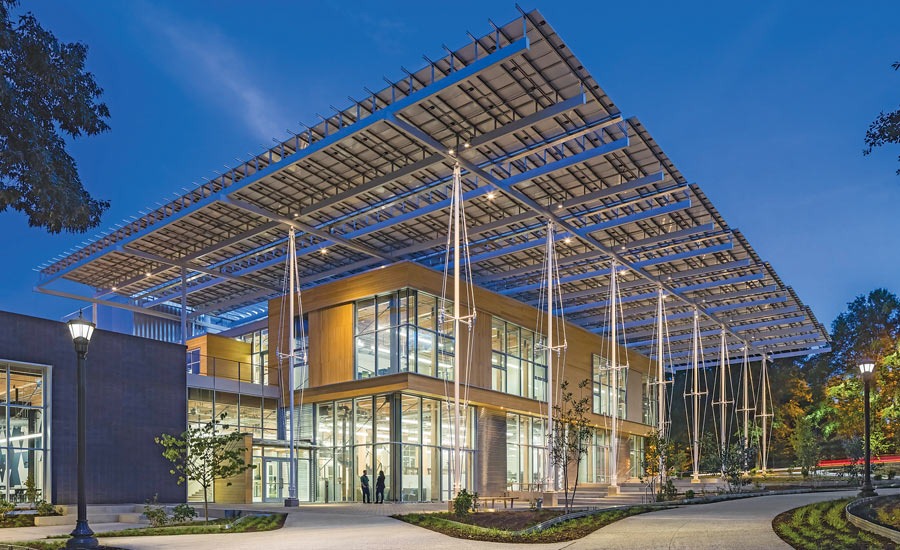
Georgia Tech’s ASDL
Georgia Tech’s ASDL was designed using an agile lab planning framework that uses rapid layout iteration. This helps it adapt and modulate itself to the evolving aerospace research programs.
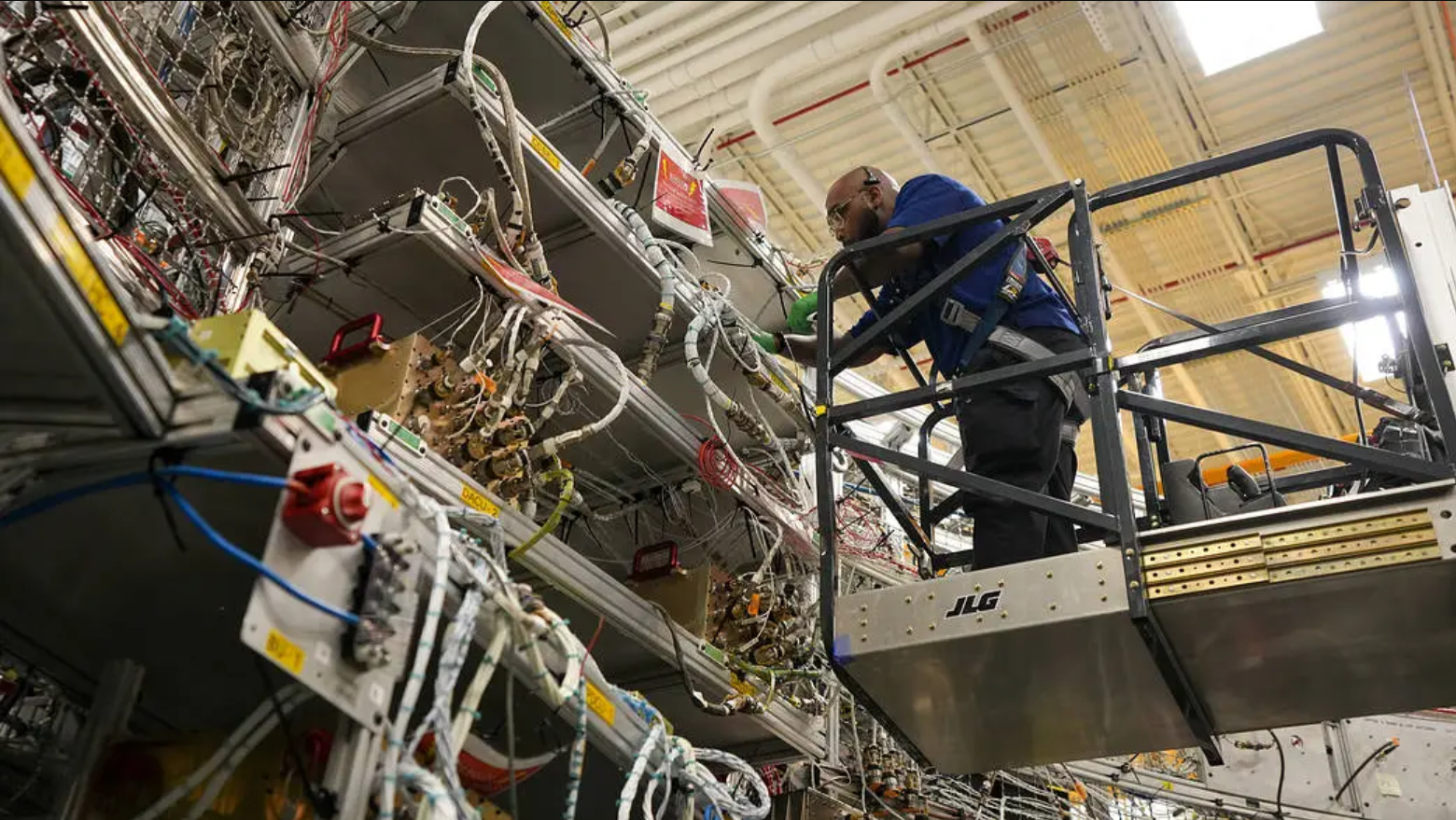
NASA Systems Integration Labs
NASA’s labs are at the forefront of innovation thanks to their reliance on different scenario planning and simulation environments. This helps them avoid downtime and maintain mission schedules.
Conclusion
Having on-time delivery in aerospace systems design laboratories requires more than just technical expertise. It requires predictive planning, modular thinking, and simulation-driven workflows.
With labs and their functionalities becoming more complex and interdisciplinary, traditional planning methods simply cannot keep up.
Technological solutions like Digital Blue Foam help teams in simulating workflows, visualizing constraints, testing multiple scenarios early, and reducing rework, all of which help in delivering projects faster and better.
If you’re responsible for planning or delivering an aerospace systems design laboratory, using intelligent digital tools like DBF is no longer optional. It is the strategic and optimal way to reduce risk and stay on schedule.
FAQs
1. What causes delays in aerospace lab projects?
Most of the delays in aerospace lab projects are caused by unclear program needs, late-stage changes, individual planning, and insufficient simulation early in the design process.
2. What best practices ensure on-time lab delivery?
To help on-time delivery of aerospace systems design laboratories, using modular layouts, workflow simulation, digital twins, and early collaboration across teams can be very helpful.
3. How can DBF optimize aerospace lab planning timelines?
DBF helps in simulating different layouts, which helps planners and architects test out different scenarios. DBF also helps in visualizing constraints and in providing a collaborative solution for all the teams to work together. This helps in reducing reworks and speeding up the approval process.
4. What technologies accelerate aerospace lab delivery?
To help accelerate aerospace lab delivery, authorities can use tools like AI spatial optimization, BIM, digital twins and other simulation-driven platforms. Solutions like DBF aids in this process by helping planners in on-time delivery.