
Urban Housing Solutions: Proven Strategies for Affordable Housing Mandates
Affordable housing mandates demand a balance between policy, design, and financial viability. This blog explores proven urban housing solutions including mixed-income models, density bonuses, TOD, and modular construction. It highlights how scenario testing and tools like Digital Blue Foam help cities deliver equitable, resilient, and compliant housing without compromising performance or feasibility. · January 19, 2026

Affordable housing mandates are now core instruments for urban growth. Municipalities worldwide are incorporating inclusionary zoning and affordability thresholds into development frameworks. Urban planners and leaders focus not on whether affordable housing is needed, but on delivering it without sacrificing financial feasibility, resilience, or quality.
Urban housing solutions today will function around the intersection of land economics, design efficiency, policy compliance and social equity.
Against this backdrop, it is essential to explore practical mechanisms and new data-driven tools transforming how cities deliver on affordable housing mandates.
The Structural Challenge Behind Affordable Housing Mandates
More often than not, the narrative around the affordable housing shortage is around a demand-supply mismatch. But in reality, the constraint is structural.
All urban housing mandates operate in a complex system of:
- land scarcity in high-opportunity urban cores
- zoning controls that limit height, FAR, or use
- infrastructure capacity constraints
- political pressure to preserve neighbourhood character
- developer risk exposure tied to long project timelines
For municipalities, these mandates are in place to correct market failure. For developers, this brings in additional cost layers and regulatory complexities. For planners, the task is bringing these aspects together without impacting the delivery.
The three aspects that define this challenge are:
- Affordability vs. Financial Viability
Due to the mandates set forth by authorities, a fixed percentage of units have to be priced below market rates. This makes the project even less viable, especially considering there are no compensatory mechanisms, density bonuses, subsidies, or land value adjustments.
- Policy Intent vs. Spatial Reality
Zoning regulations that are brought forth may mandate affordability. But this may simultaneously restrict building topology, mixed-use integration, or density. With so many limitations, it becomes increasingly difficult to deliver compliant housing.
- Speed vs. Coordination
Affordable urban housing projects usually involve more stakeholders. Public agencies, community groups, and financiers are all adding friction to an already complicated development cycle.
Effective urban housing solutions acknowledge these constraints and work around them systematically.
Proven Strategies for Delivering Affordable Urban Housing
Cities that are able to consistently meet urban housing requirements do not depend on one-off incentives. They work on policy-design alignment. The following strategies have shown consistent results across different urban contexts.
Mixed-Income Housing as a Financial Stabiliser
Planners use mixed-income developments where they integrate affordable units with market-rate housing within the same project. This approach, when designed correctly:
- mitigates risk across different income bands
- helps maintain overall project revenue
- avoids spatial segregation of affordability
- supports the long-term stability of the neighbourhood
When mixed-income housing is integrated from a planning perspective, affordability becomes the bedrock across the massing, unity mix and circulation strategy.
This also helps municipalities as it reduces dependence on standalone social housing while still meeting affordability targets.
Public–Private Housing Models That Share Risk
Public–private partnerships, or PPPs, help municipal authorities to intervene strategically without the burden of full responsibility. This mechanism can typically look like:
- public land leases at reduced cost
- infrastructural support in exchange for affordable units
- co-investment structures that are tied to long-term affordability covenants
A good PPP is less about subsidy and more about risk reallocation. It reduces the uncertainty for developers while helping public outcomes.
A good example is Singapore, which has institutionalised this approach by embedding affordability directly into national development frameworks.
Density Bonuses as a Policy Lever
One of the most effective ways for aligning developer interests with housing mandates is density bonuses. This could be in the form of an additional floor area or height in exchange for more affordable units. This will:
- Help preserve developer ROI
- increase total housing supply
- Optimise land use near different infrastructure corridors.
However, it is noteworthy to mention that density bonuses only work when they are paired with design feasibility testing. This needs to be carried out with early scenario analysis, failure of which may disqualify buildings at the design or construction stage.
Transit-Oriented Development (TOD) for Housing Access
Transit-oriented development brings together affordable housing with high-access mobility corridors. This reduces transport costs for different households while increasing land-use efficiency.
From a municipal standpoint, transit-oriented development-linked affordability:
- leverages public transport investment
- reduces dependency on private vehicles
- supports higher residential densities while reducing congestion
- improves access to jobs and services
Cities that align TOD frameworks with housing mandates consistently achieve higher compliance rates with fewer community objections.
- Modular and Prefabricated Housing Systems
Rising construction costs are one of the biggest barriers to affordable housing. Modular and prefabricated systems address this by:
- Reducing dependency on on-site labour
- Reducing construction timelines
- improving cost predictability
- enabling repeatable housing typologies
Though the solution is not universal, modular strategies are very effective for mid-rise, high-density affordable residential projects. More so when they are paired with standardised planning approvals.

Designing for Equity Without Compromising Performance
Affordable housing does not equal housing with lower design standards. More so, the opposite. Affordable housing rests on the principle of long-term affordability without compromising on operational efficiency, climate resilience and spatial quality.
The key design principles that shape future-ready urban housing solutions include:
- Compact but Liveable Units
Optimised layouts, shared amenities, and flexible interiors all equate to one thing – efficient unit planning. This reduces per-unit costs dramatically without sacrificing the liveability.
- Climate-Responsive Housing Models
Climate-responsive strategies do not just help in making the structure resilient against climate change, but also help in lowering operational costs. Passive ventilation strategies, energy-efficient envelopes, and climate-optimised materials are all ways to lower costs for both municipalities and residents.
- Efficient Land Use in Constrained Contexts
The fundamental idea for affordable housing is to ensure the best possible yield on a given area. This is often carried out using courtyard configurations, stacked housing typologies, and hybrid residential-use models.
- Community-Centric Layouts
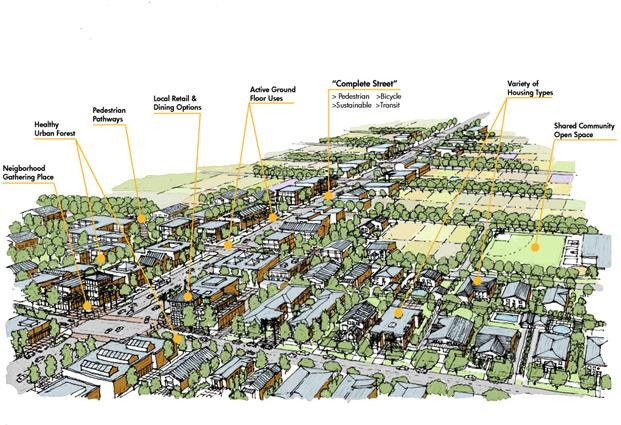
Affordable housing works best when it becomes a part of a broader neighbourhood. One where open spaces, services and mobility infrastructure are shared rather than being isolated.
Why Scenario Testing Is Now Central to Housing Policy Compliance
One of the biggest voids in affordable housing delivery is the disconnect between spatial feasibility and policy language. This void can be filled using scenario testing.
Scenario testing helps planners model numerous development outcomes with varying affordability ratios, density, unit mix, and different zoning interpretations. This helps planners and developers:
- Identify compliance restrictions early.
- Check for trade-offs between yield and affordability.
- Anticipate challenges with respect to approvals.
- Align policy intent with real-world outcomes.
This is very important, especially in cities where housing mandates could evolve faster than different zoning frameworks.
How DBF Supports Affordable Housing Mandates in Practice
Digital Blue Foam (DBF) helps planners and authorities shift from traditional static compliance checks to dynamic housing scenario planning.
With respect to affordable urban housing solutions, DBF helps teams to:
- Visualise Zoning and Policy Constraints
DBF helps in overlays of different FAR limits, setback roles, and zoning controls onto early-stage housing layouts. This helps the entire team be aware of all the constraints right from the start.
- Model Affordability Outcomes Alongside Design Feasibility
Planners can test different affordability ratios and immediately see the impact on density, unit count, and spatial configuration.
- Run Climate and Performance Simulations
DBF brings forth climate responsiveness metrics early into housing planning. This enables authorities to look at compliance with sustainability-linked housing policies.
- Enable Cross-Stakeholder Collaboration
Municipal authorities, architects, and developers can work on a single platform, reducing interpretation gaps and approval timelines.
- Accelerate Approvals Through Data-Backed Scenarios
When housing plans and proposals are backed by clear simulations and policy-aligned outcomes, review cycles become faster and more predictable.
Global Examples of Policy-Led Urban Housing Solutions
Vienna
Vienna is a great example of having a social housing system that combines public land ownership, cost controls, and architectural quality. All of this while delivering affordability at scale without any stigmatisation.

Singapore
Public-private integration in Singapore ensures that affordability, density, and liveability are never compromised. Here, these three are treated as a part of a single system rather than competing objectives.
Medellín
In Medellin, inclusive housing frameworks prioritise access, connectivity, and social infrastructure. The city demonstrates how equity-driven planning can help reshape urban form.
Each of these cases stresses the same lesson: housing mandates are successful when policy, planning, and design work together.
Conclusion: Affordable Housing Mandates Without Compromise
Affordable housing mandates should not be looked at as obstacles to urban development. They are planning and designing challenges that need to be addressed with better tools and stronger coordination between the public and private sectors.
With platforms like DBF, cities, authorities and developers can look at proactive housing strategies. Strategies that bring together climate performance, financial viability, and affordability.
Meeting housing mandates does not require compromise. It requires clarity.
If you are a part of the municipal team that is looking at developing affordable urban housing solutions, the team at DBF can help. The product team can help develop customized solutions that are designed for compliance, adaptability, and long-term urban success.
FAQs
What are affordable housing mandates?
Affordable housing mandates are the regulatory requirements that property developers must follow to deliver a section of the housing at below-market rates.
How can developers meet housing requirements efficiently?
Developers can meet housing requirements efficiently by using mixed-income models, scenario testing and by using density incentives. All this can help with design feasibility and with policy compliance.
What role does DBF play in affordable housing planning?
DBF helps developers and planners simulate different scenarios for housing density, affordability ratios, climate performance and more in one unified solution.
What are examples of successful affordable housing strategies?
Some of the best examples of successful affordable housing strategies are those of Vienna, Singapore, and New York. Vienna’s social housing system, Singapore’s public-private integration, and TOD-linked inclusionary zoning in New York pave the way for the rest of the world to adopt and execute this.