
Urban Heat Island Mitigation Strategies for Enterprise Development Projects
Cities across the world are warming at a rate significantly higher than their surrounding rural environments. This phenomenon is known as the urban heat island effect, and it is no longer a theoretical environmental concern but a pertinent operational risk for enterprise development projects. · June 2, 2026

Cities across the world are warming at a rate significantly higher than their surrounding rural environments. This phenomenon is known as the urban heat island effect, and it is no longer a theoretical environmental concern but a pertinent operational risk for enterprise development projects. With global temperatures rising and urban densities increasing, the accumulation of heat within these built environments is intensifying infrastructure strain, increasing energy demand, and elevating public health vulnerabilities.
Recent data indicate that dense urban cores can be 2°C to 8°C warmer than adjacent rural zones with even more significant differential once peak summer conditions are registered. For enterprise developers, this means higher cooling loads, fewer outdoor usable areas, higher maintenance outlays, and policy pressures as municipalities adopt stricter climatic resilience standards.
The urgency around urban heat island mitigation solutions stems from factors like extreme heat events, ESG performance correlated with investments, and climate adaptation mandates adopted by cities that have direct implications on building design and masterplanning frameworks.
Before assessing mitigation frameworks, there is a need to first understand the driving mechanisms and dynamics of the heat accumulation process within a multidimensional urban environment.
What is an Urban Heat Island?
The urban heat island effect refers to the measurable temperature difference between urbanized areas and their surrounding rural landscapes. This temperature difference comes mainly from changes humans make to land surfaces, material properties, and how energy is used. At its core, the urban heat island effect is a thermodynamic imbalance. Natural landscapes made up of vegetation, soil, and water bodies absorb solar radiation and lose heat through evapotranspiration and shading. Urban environments replace permeable and reflective surfaces with dense concentrations of asphalt, concrete, steel, and glass. These materials have high thermal mass and low albedo, which means they absorb heat during the day and release it slowly at night.

Mechanism of the Urban Heat Island Effect
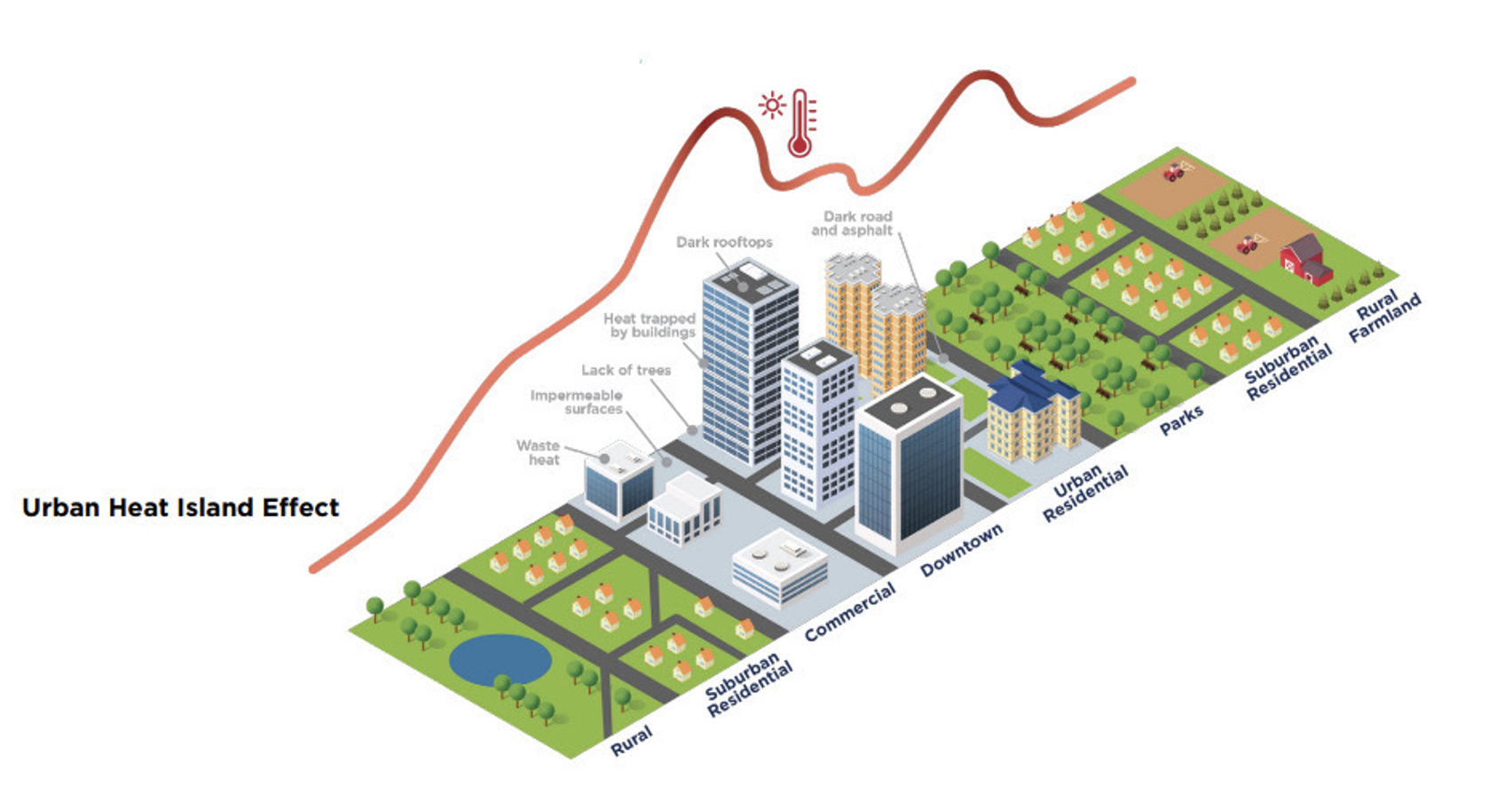
The mechanism of the Urban Heat Island effect involves the increase in temperature in urban areas compared to their rural surroundings. This happens because city surfaces like asphalt and concrete absorb and retain more heat. The lack of vegetation and increased waste heat from buildings, vehicles, and industries also contribute to higher temperatures in cities. This effect changes the local climate and can affect energy use, air quality, and health in urban environments. The process unfolds through several interrelated mechanisms.
- Surface Absorption refers to how dark urban materials absorb solar radiation during daylight hours.
- Heat Storage means that dense construction materials store heat within their mass.
- Reduced evapotranspiration occurs when vegetation is removed, limiting the natural cooling processes in the environment.
- Anthropogenic Heat Generation occurs when vehicles, HVAC systems, industrial equipment, and human activity release extra heat into the urban microclimate.
- Restricted airflow in high-rise urban geometry can trap warm air, which reduces convective heat dissipation.
These combined processes lead to higher surface temperatures during the day and keep the heat longer at night. Nighttime heat retention causes urban areas to stay warmer, which makes it harder for these places to cool down. This leads to higher energy use and increased health risks.
Urban Heat Island Causes
Urban heat island causes include the concentration of buildings, roads, and other heat-absorbing surfaces in cities. These materials retain heat during the day and release it slowly at night, raising local temperatures. The lack of vegetation and green spaces reduces natural cooling, while human activities such as transportation and industry add extra heat. Together, these factors create higher temperatures in urban areas compared to surrounding rural locations. The primary drivers of the urban heat island effect can be categorized into three structural factors.
1. Surface Changes
Urbanization replaces natural land cover with impermeable surfaces. Asphalt pavements can reach surface temperatures exceeding 60°C during peak summer conditions, while vegetated areas stay much cooler. Concrete and roofing materials store solar heat, which contributes to higher ambient temperatures.
2. Heat Generation
Anthropogenic heat emissions add to the baseline warming. Air conditioning systems, industrial operations, vehicular engines, and data centers all release waste heat into the surrounding environment. In high-density commercial districts, mechanical cooling systems can collectively raise local temperatures by several degrees.
3. Reduced Vegetation
Vegetation cools the air through evapotranspiration, which is when water evaporates from plant surfaces and lowers the temperature of the surrounding air. Urban tree canopy loss directly reduces this natural cooling function. Tree cover can lower localized temperatures by 2–5°C, depending on canopy density and spatial distribution. Removing vegetation disrupts this cooling cycle.
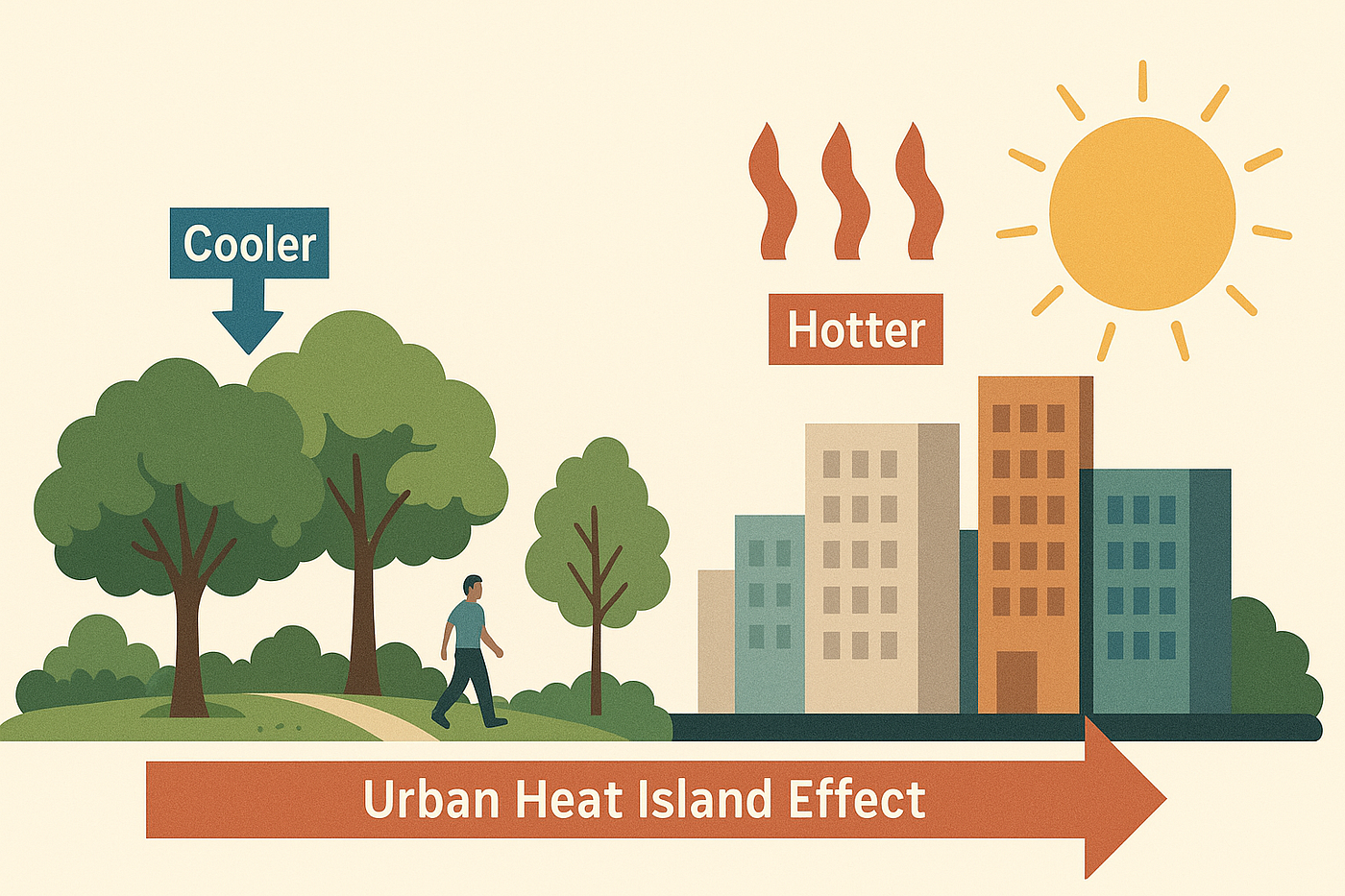
Urban Heat Island Effect: Heat Distribution Patterns and Variations
Heat Distribution Patterns
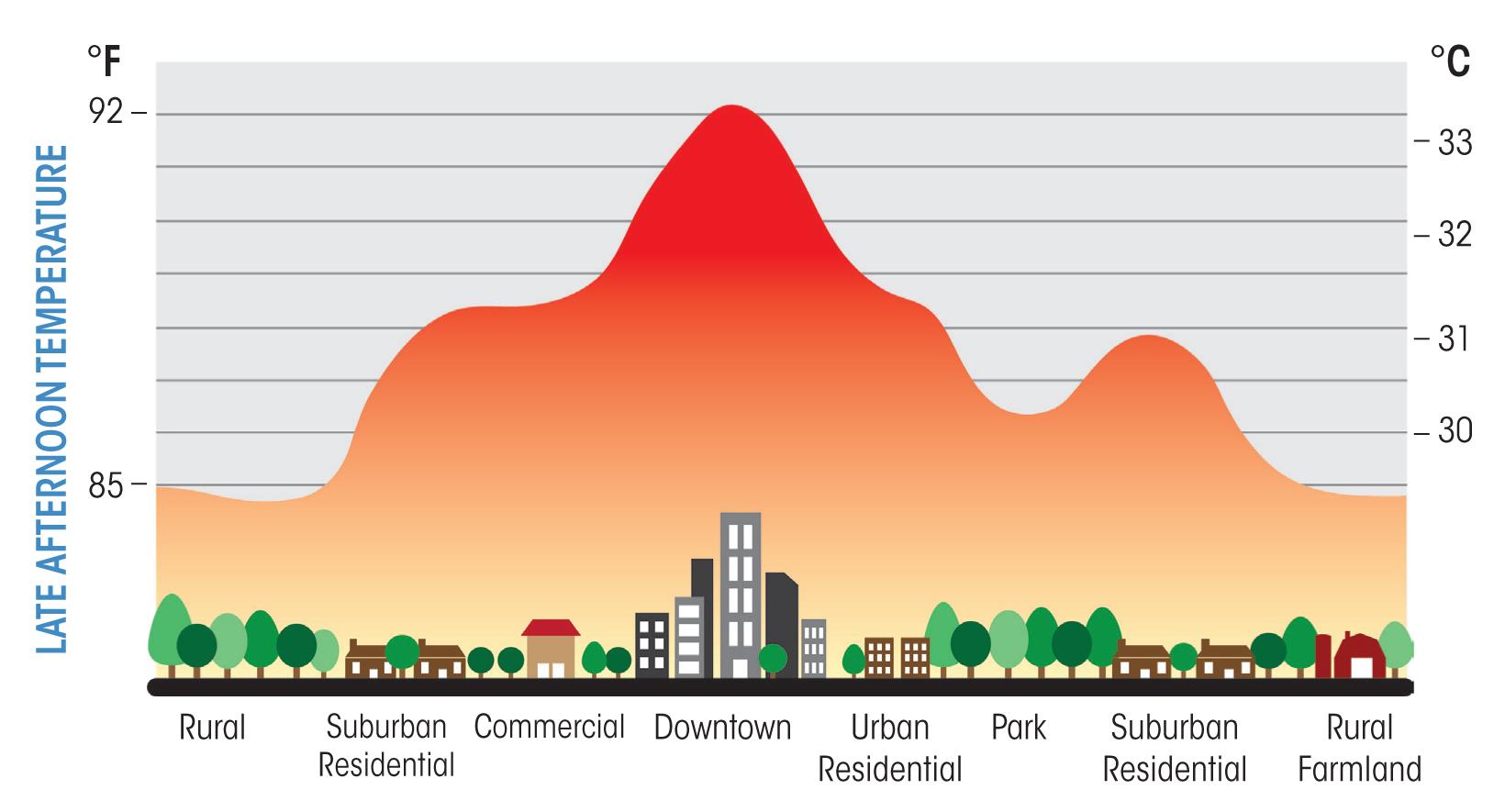
In a basic cross-sectional diagram showing the transition from rural to urban zones:
- Rural areas have lower surface temperatures because of vegetation cover and open land.
- Suburban areas experience moderate temperature increases because of partial surface modification.
- Dense urban cores exhibit the highest temperature concentrations, particularly where high-rise buildings and asphalt coverage dominate.
This gradient often resembles a heat dome centered over the urban core.
Temperature Differentials
Measured temperature differentials vary by climate and city form. On average:
- Daytime differentials range from 1°C to 4°C above surrounding rural zones.
- Nighttime temperatures are 2°C to 8°C higher in dense urban areas.
- Surface temperature differences can exceed 10–20°C between asphalt and shaded vegetated areas.
Surface temperature is usually higher than ambient air temperature, so pavement and roofing materials play a large role in urban warming.
Temporal Variations
Temporal variations refer to changes that occur over time, reflecting shifts in patterns, conditions, or behaviors within a specific period.
- During the daytime, solar absorption causes the surface temperature to reach its peak.
- At nighttime, stored heat is released slowly, which helps prevent rapid cooling.
- Seasonal Variation: Effects intensify during summer months and heatwaves.
- Weather conditions with low wind speeds and clear skies cause more heat to build up.
During prolonged heat events, cumulative heat retention causes daily temperature spikes to build up, leading to sustained thermal stress in dense development areas. Understanding the physical and environmental mechanisms driving the urban heat island effect provides the analytical foundation necessary for designing effective urban heat island mitigation strategies. For enterprise development projects, mitigation must be included in masterplanning, building materials selection, landscape design, and infrastructure engineering from the very beginning of the planning stages.
Impact Analysis
The urban heat island effect impacts more than just the weather. It affects public health systems, how infrastructure performs, energy use, and economic productivity. For enterprise development projects, these impacts result in operational risk, higher capital expenditure, and long-term asset vulnerability.
Public Health Effects
Elevated urban temperatures increase heat-related illness and death, especially during extreme heat events. Dense urban cores that retain heat overnight prevent physiological recovery and increase stress on vulnerable populations such as the elderly, outdoor workers, and individuals with pre-existing health conditions. The urban heat island effect intensifies heat stroke, cardiovascular strain, respiratory complications caused by interaction with air pollutants, and sleep disruption caused by sustained nighttime heat.
Public health systems see a rise in emergency admissions during peak heat waves. In enterprise districts with high pedestrian density, inadequate heat mitigation can reduce outdoor activity, lower commercial foot traffic, and impact overall urban livability.
Increase in Energy Consumption
One clear consequence of the urban heat island effect is increased cooling demand. As ambient temperatures rise, building HVAC systems run longer and work harder. Studies show that for every 1°C increase in temperature, electricity demand for cooling goes up by 2–4%. In commercial districts with many glass façades and high internal loads, this impact is amplified. Higher cooling demand results in increased energy consumption and greater operational costs, increased operational expenditure, strain on power grids, greater peak load instability, and increased carbon emissions. Increased cooling demand releases additional anthropogenic heat, which adds to local warming and creates a feedback loop.
Environmental Consequences
Urban heat islands reduce environmental performance in several ways: higher temperatures lead to increased formation of ground-level ozone, reduced air quality, accelerated material degradation, and increased stormwater runoff temperature impacting aquatic ecosystems. High surface temperatures also reduce soil moisture and stress urban vegetation, which in turn lowers natural cooling capacity.
Economic Costs
The economic burden of unmanaged urban heat islands goes beyond energy bills. Direct economic impacts include higher infrastructure maintenance costs caused by thermal expansion, reduced pavement lifespan, increased public health expenditure, and lower workforce productivity during extreme heat. Indirect impacts may include reduced tourism appeal, lower outdoor commercial performance, and declining property desirability in poorly mitigated districts. For enterprise development projects, ignoring urban heat island mitigation strategies can lower long-term asset value and raise lifecycle operational costs.
Climate Change Amplification
As baseline temperatures rise because of global warming, urban heat amplification makes heatwaves more severe. This compounding effect results in more frequent extreme heat events, higher peak temperature thresholds, increased cooling infrastructure demand, and accelerated infrastructure stress. Urban heat islands act as climate multipliers. Enterprise projects must treat heat mitigation as climate resilience planning rather than an optional environmental enhancement.
Mitigation Strategies Framework
Urban heat island mitigation strategies must address different spatial scales, ranging from building materials to district-level planning frameworks. No single intervention is sufficient; effective mitigation requires integrated, layered solutions embedded within enterprise masterplanning processes.
Strategies to Reduce Urban Heat Island
This focuses on lowering temperatures in densely built areas by increasing green spaces, improving building materials, and enhancing urban planning. Planting more trees and creating parks helps cool the environment by providing shade and releasing moisture. Using reflective or lighter-colored surfaces for roofs and pavements can reduce heat absorption. Designing cities with open spaces and proper ventilation allows for better airflow, which can lessen heat buildup. These efforts work together to create a more comfortable and sustainable urban environment.
Cool Roofing
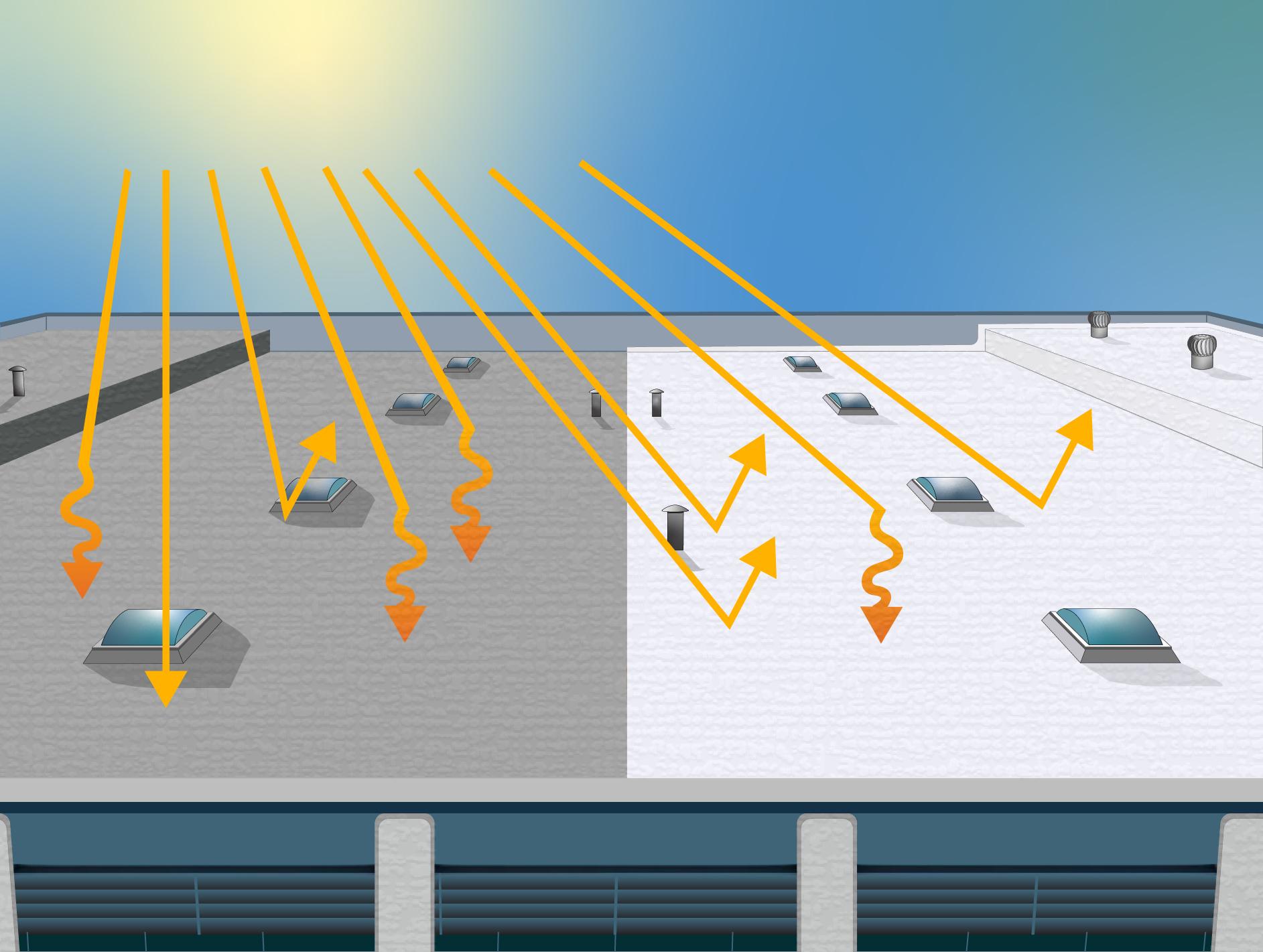
Cool roofing materials are designed to reflect more sunlight and absorb less heat than traditional roofing options. Cool roofs are made with high-albedo materials that reflect solar radiation instead of absorbing it. White membranes, reflective coatings, and advanced polymer surfaces can lower roof surface temperatures by 20–40°C compared to conventional dark roofing materials. Benefits include lower building cooling loads, reduced indoor heat gain, and extended roofing material lifespan. Cool roofs are especially useful for commercial and industrial buildings that have large roof footprints. Their impact is mostly at the building level rather than district-wide unless they are widely adopted.
Green Infrastructure
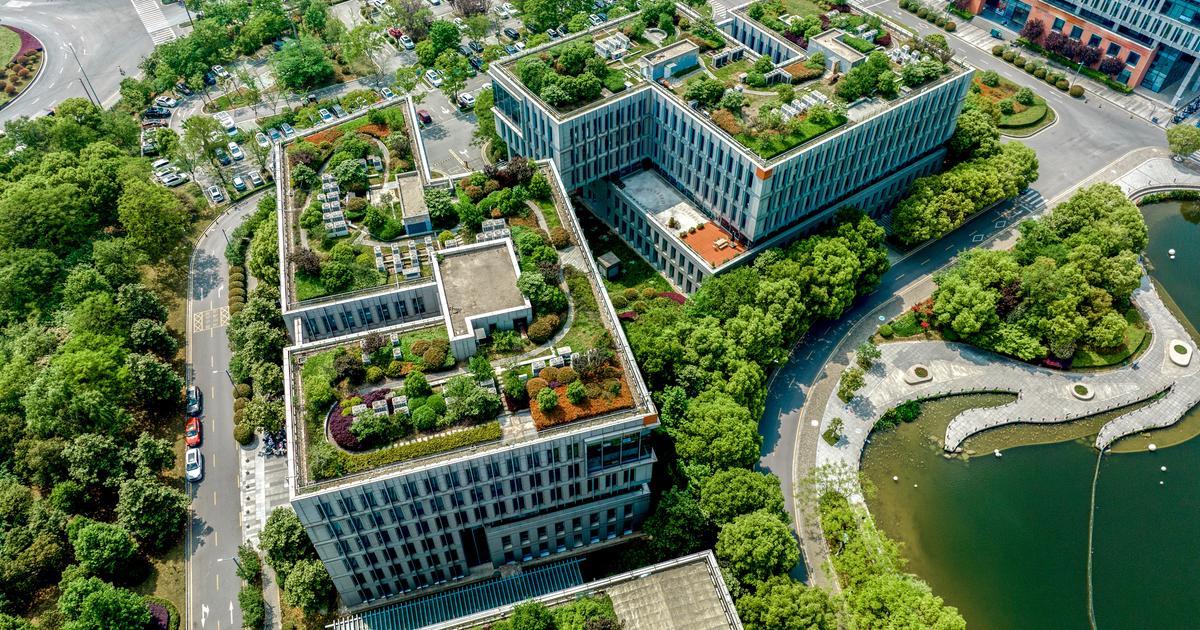
Green infrastructure refers to a network of natural and semi-natural areas designed to manage water, reduce urban heat, and improve air quality by using vegetation, soils, and natural processes. It includes parks, green roofs, rain gardens, and wetlands that help reduce flooding and support biodiversity. Green infrastructure includes vegetated roofs, green walls, bioswales, and planted corridors. Vegetated surfaces lower surface temperatures by providing shading and through evapotranspiration. Green roofs can reduce rooftop temperatures by 15–30°C and help with managing stormwater. At the district scale, interconnected green corridors help lower ambient air temperature and improve biodiversity and pedestrian comfort. Green infrastructure supports ESG objectives and sustainability certification frameworks.
Urban Forestry
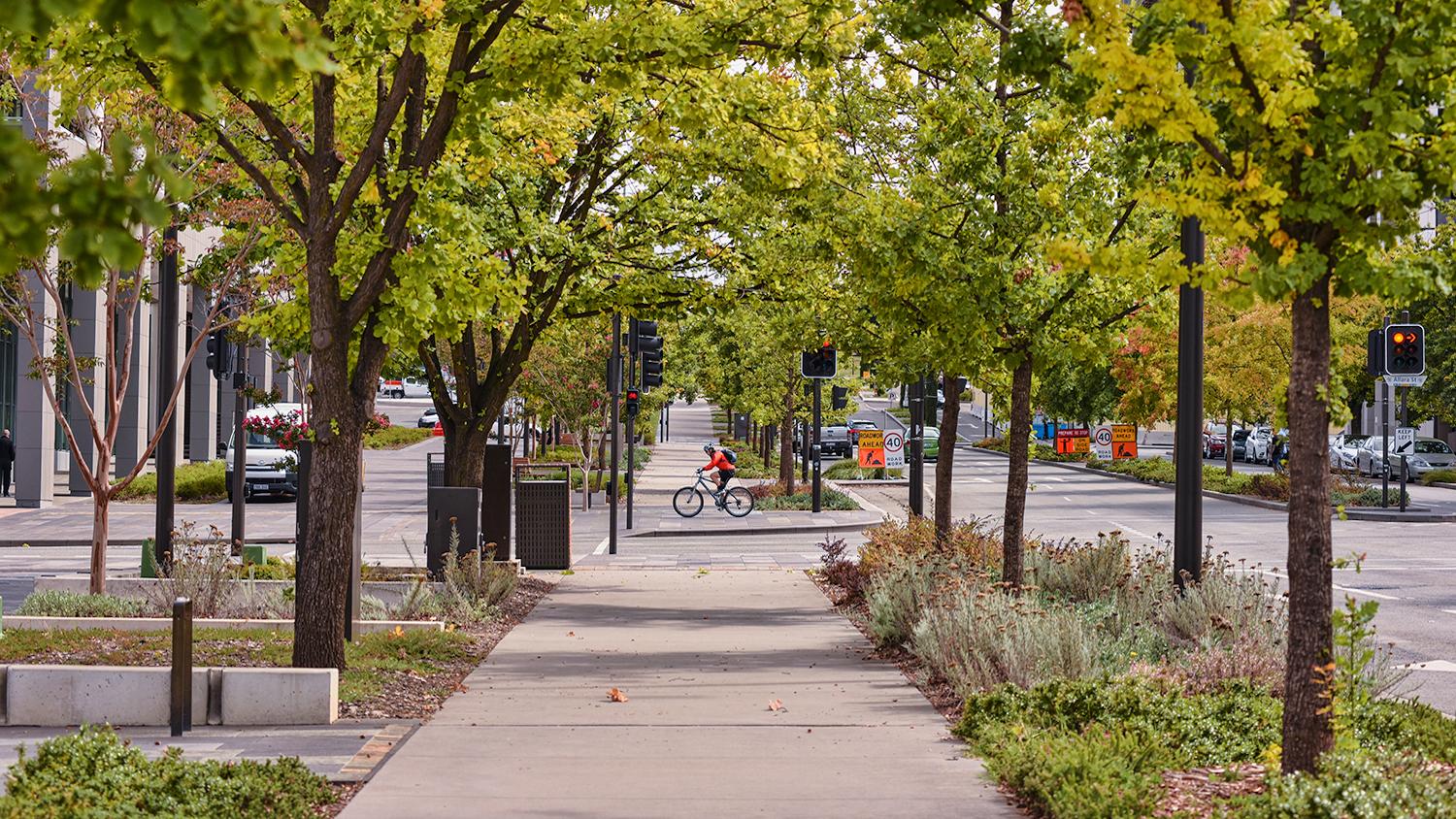
Urban forestry refers to the management and care of trees and green spaces in cities and towns. Tree canopy expansion is one of the most effective strategies to reduce urban heat islands within neighborhoods. Mature trees provide shade and cool the surrounding air through evapotranspiration. Studies show that increasing tree canopy coverage by 10% can lower local temperatures by about 1–2°C. Street tree alignment along pedestrian corridors plays a key role in creating a comfortable and safe environment for walking. Best practices include consistent tree alignment, high-canopy species selection, and long-term maintenance planning. Implementation requires space allocation and irrigation planning.
Permeable Surfaces
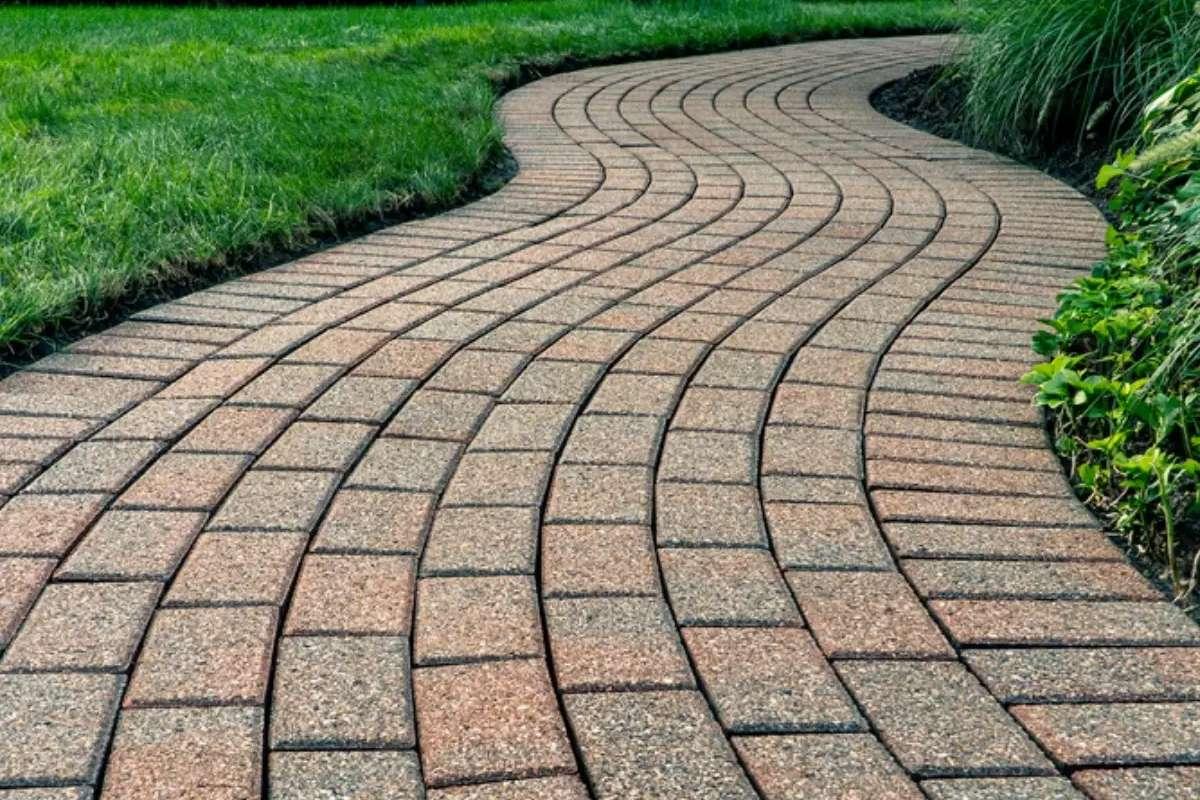
Permeable surfaces are materials that allow water to pass through them, reducing runoff and helping manage stormwater. Permeable pavements reduce surface heat accumulation by allowing moisture retention and evaporative cooling. They have lower peak temperatures and better stormwater infiltration compared to conventional asphalt. These surfaces are especially useful in parking areas, plazas, and pedestrian streets.
Water Features
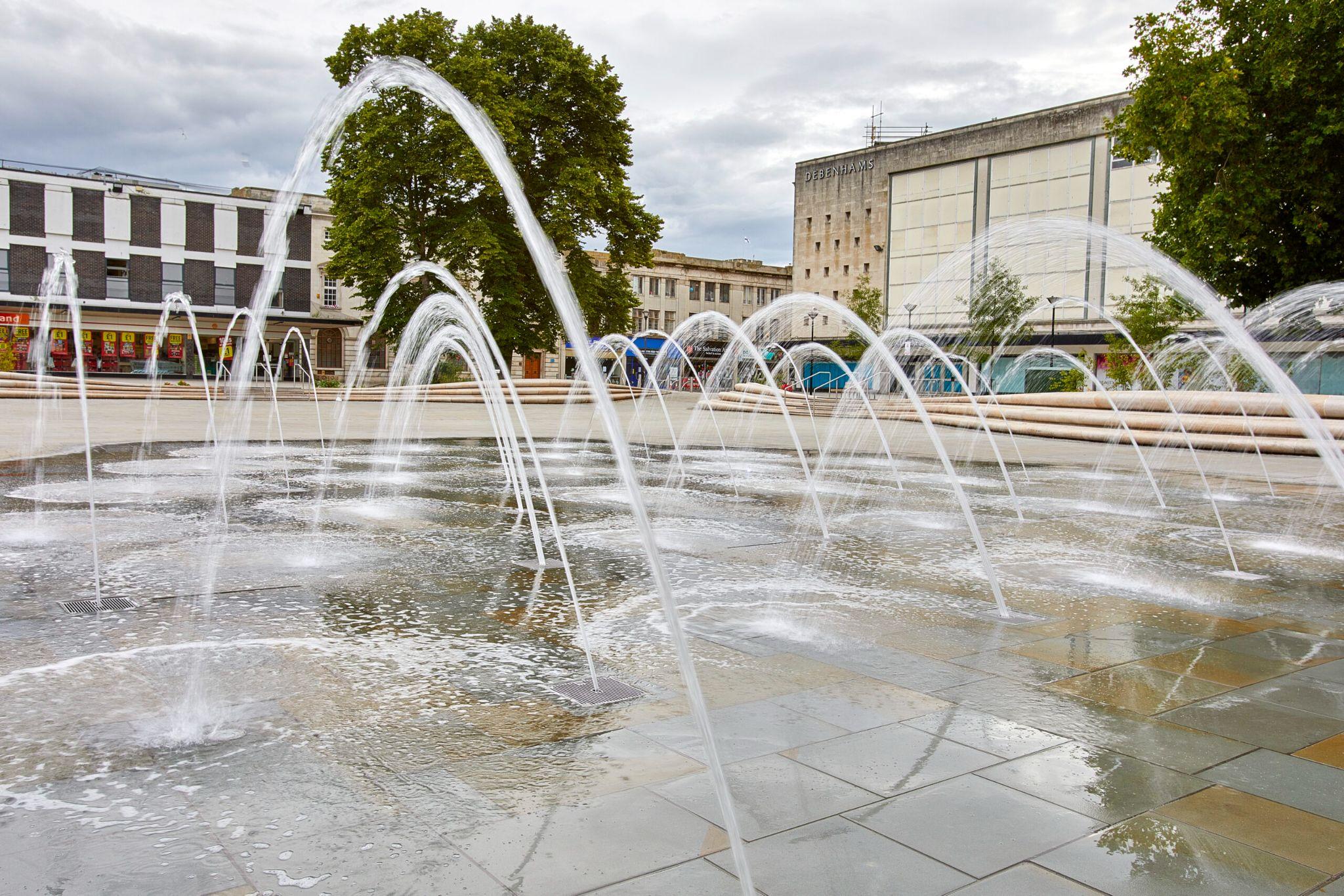
Urban water bodies and fountains offer evaporative cooling benefits and help improve microclimate comfort. Water features placed in public spaces with high footfall can help reduce the surrounding temperatures by several degrees. Water usage efficiency and maintenance costs must be considered, especially in water-scarce regions.
Urban Form and Design
Urban geometry plays an important role in how much heat is retained in an area. Design strategies include: adjusting the building height-to-street width ratios to improve airflow, reducing excessive heat-trapping canyon effects, orienting streets to maximize shading, and reducing excessive paved surface area. High-density development should include ventilation corridors to avoid stagnant heat buildup. Urban form mitigation strategies work at a masterplanning scale and often produce the most durable long-term results.
No single solution consistently outperforms all others. The success of urban heat island mitigation strategies depends on climate, density, water availability, budget constraints, and development typology.
| Strategy | Temperature Reduction Potential | Scale of Impact | Capital Cost | Maintenance Complexity |
|---|---|---|---|---|
| Cool Roofs | High (building-level) | Individual structures | Moderate | Low |
| Urban Forestry | High (localized) | Neighborhood | Moderate | High |
| Green Infrastructure | Moderate-High | District | Moderate-High | Moderate |
| Permeable Surfaces | Moderate | Site-level | Moderate | Moderate |
| Water Features | Localized | Public spaces | High | High |
| Urban Form Optimization | High (long-term) | Masterplan-scale | Design-driven | Low |
Urban form and tree canopy expansion often produce the most sustained district-wide impact when combined.
Context-specific Recommendations
In arid climates, the focus may be on using cool materials and shading instead of water features. Dense CBDs should include green roofs and vertical greening systems. Transit-oriented developments benefit from shaded pedestrian corridors. Industrial districts may prioritize cool pavements and reflective roofing.
Cost-benefit Considerations
Enterprise developers must evaluate lifecycle energy savings, maintenance costs, land allocation trade-offs, and regulatory incentives. Many mitigation measures offer long-term operational savings that balance out the initial capital expenditure.
Implementation Priorities
A phased mitigation strategy may include:
- Immediate adoption of cool roofing standards to reduce heat absorption and improve energy efficiency in buildings.
- Medium-term expansion of urban forestry, planting trees and maintaining natural areas to improve the environment and quality of life.
- Long-term urban form planning improved by making zoning adjustments.
Mitigation strategies should be part of early-stage masterplanning instead of added after construction. Urban heat island mitigation strategies should be layered, context-sensitive, and financially evaluated. For enterprise development projects, combining material selection, vegetation systems, and urban design principles helps build districts that can resist rising temperature extremes and perform well over time.
Implementation for Enterprise Projects
Urban heat island mitigation strategies deliver meaningful results only when they are embedded into enterprise development processes from pre-design through post-occupancy monitoring. For large-scale commercial, mixed-use, and master-planned districts, mitigation needs to work across multiple spatial scales and be part of procurement, engineering, and governance frameworks.
Site-Level Interventions
At the individual building or parcel scale, mitigation strategies focus on material selection, shading systems, and microclimate optimization. Key interventions include:
- High-albedo roofing and façade materials designed to reflect a large amount of sunlight
- Vegetated roofs and vertical greening systems
- Shaded pedestrian walkways and arcades
- Permeable paving for plazas and parking zones
- Solar shading devices integrated into façade design
- Building envelope performance choices with low solar absorptance and high emissivity
For enterprise campuses or commercial developments with expansive roof areas, cool roofing standards can reduce district-wide cooling demand. Site-level strategies are usually the easiest to put into action right away because they are directly controlled by developers and need minimal regulatory negotiation.
Neighborhood-Scale Strategies
Urban heat island mitigation is more effective at the neighborhood scale, where coordinated interventions produce cumulative cooling effects. Neighborhood-level measures include:
- Continuous tree canopy corridors along streets
- Integrated green infrastructure networks connecting parks, green roofs, wetlands, and tree-lined streets
- Shaded transit stops and mobility hubs
- Distributed pocket parks and shaded public spaces
Tree canopy coverage targets, often set at 30–40% in temperate climates, are commonly included in municipal development guidelines. Fragmented green patches offer limited benefit compared to continuous shaded networks that reduce pedestrian heat exposure and lower ambient temperatures across multiple blocks.
Master Plan Integration
Enterprise-scale projects need to include urban heat island mitigation strategies during the masterplanning stage instead of adding them after the design is completed. Key masterplan-level considerations include:
- Adjusting building orientation to reduce excessive solar gain
- Preserving ventilation corridors to maintain proper airflow
- Limiting large contiguous paved areas
- Structuring block geometry to reduce heat-trapping urban canyon effects
- Embedding blue-green infrastructure within primary circulation corridors
Urban form decisions have long-term thermal consequences. Zoning overlays, sustainability design guidelines, and development control regulations should include heat mitigation performance metrics. Enterprise developers can go beyond the minimum compliance thresholds to improve ESG positioning and support long-term asset resilience.
Technology Tools for Heat Modeling
Effective implementation requires predictive modeling rather than reactive measurement. Heat modeling tools allow planners and developers to simulate surface temperature variations, solar radiation exposure across façades, shadow casting patterns, wind flow patterns, and vegetation cooling impact.
Geospatial heat mapping helps identify thermal hotspots within development parcels. Digital Blue Foam (DBF) supports early-stage masterplanning by bringing together zoning data, building massing simulations, and environmental performance metrics. While DBF is not a standalone climate simulation engine, it supports spatial optimization, which can help reduce excessive paved coverage and improve density distribution. These factors are important inputs for urban heat island mitigation strategies. Coupling spatial planning tools with environmental simulation platforms allows for better integration of data and analysis in project development.
Measurement and Monitoring
Mitigation effectiveness must be validated post-implementation. Monitoring frameworks typically include surface temperature measurements, air temperature sensors at the pedestrian level, remote sensing and satellite-based heat mapping, energy consumption tracking for cooling loads, and tree canopy health and evapotranspiration assessment.
Enterprise developments are using IoT-enabled environmental sensors across campuses and districts to track microclimate performance in real time. Data collected supports ESG reporting, regulatory compliance documentation, and continuous design improvement. Urban heat island mitigation should be addressed as a measurable performance objective, not just a conceptual sustainability statement.
Case Studies and Best Practices
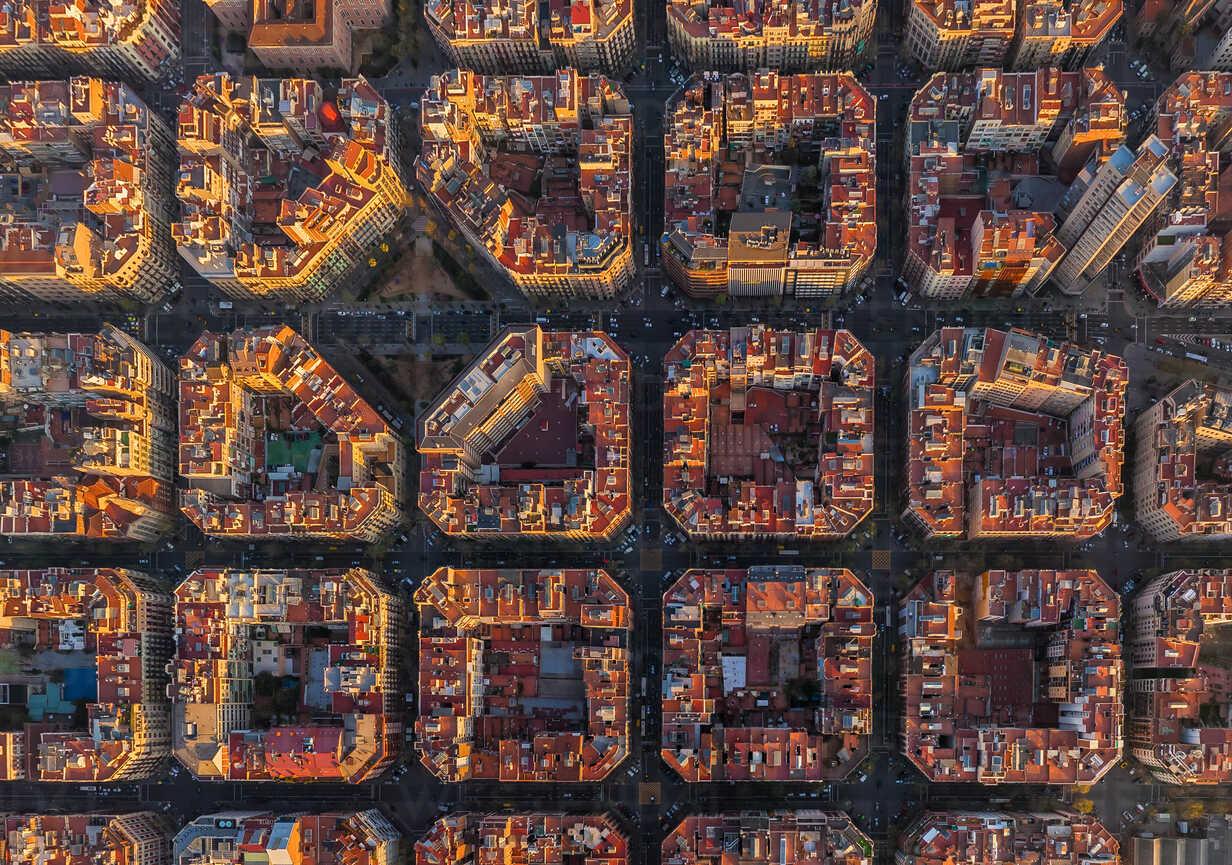
Barcelona Superblocks
Reducing asphalt coverage and increasing tree canopy helped surface temperatures within pilot districts drop noticeably during peak summer periods. Barcelona Superblocks are urban areas designed to reduce traffic and create more space for pedestrians and cyclists. By prioritizing walking and cycling, Barcelona Superblocks help reshape urban life and encourage more sustainable transportation options.
Singapore's Urban Greening Framework
Singapore includes vertical greening, green roofs, and a wide tree canopy coverage in its dense urban districts. The city requires that new developments follow landscaping replacement ratios so that any vegetation removed at ground level is replaced with plants grown vertically. Singapore's Urban Greening Framework aims to create more green spaces within the city to improve the environment and quality of life, involving planting more trees, developing parks, and integrating greenery into buildings and infrastructure.
New York Cool Roof Program
New York City's large-scale cool roof initiative applied reflective coatings to thousands of buildings. Lower building-level cooling energy demand can reduce overall energy expenses and improve comfort during warmer months.
Future Considerations
Climate Adaptation Planning
Urban heat island mitigation strategies must keep pace with climate change, technological innovation, and regulatory transformation. Future-ready enterprise developments must treat urban heat island mitigation as a core resilience strategy rather than a sustainability add-on. Municipal climate adaptation plans often include heat vulnerability mapping, cooling corridor integration, and resilience-based zoning overlays.
Enterprise developers should anticipate mandatory cool roof and reflective surface codes, tree canopy coverage targets, heat resilience impact assessments, and ESG-driven reporting requirements. Heat mitigation will increasingly be embedded within environmental permitting processes and funding approvals.
Emerging Technologies
Technological advancements are expanding mitigation potential. Emerging innovations include:
- Phase-change materials for absorbing and releasing heat efficiently
- Advanced reflective coatings with dynamic albedo properties
- Smart irrigation systems that manage evapotranspiration
- IoT-enabled microclimate monitoring networks
Integrated digital platforms are allowing scenario testing at masterplanning scale, so developers can simulate solar exposure, wind flow, and surface temperature distribution before construction starts. As computational modeling becomes more accessible, heat resilience planning is set to rely more on data and focus on performance-based approaches.
Policy Trends
Policy frameworks are evolving quickly in response to extreme heat events. Cities are introducing urban cooling masterplans, heat action plans, incentives for green infrastructure, and penalties for excessive impervious surface coverage. Carbon neutrality commitments and public health mandates are increasing the focus on heat mitigation as a priority in both environmental and social policy. Enterprise developers who proactively integrate mitigation strategies will face fewer regulatory delays and have stronger ESG positioning.
Conclusion
The urban heat island effect is a key climate challenge that enterprise development projects must address. Rising temperatures increase operational costs, raise public health risks, put pressure on infrastructure systems, and worsen climate change impacts. Addressing this challenge requires layered urban heat island mitigation strategies built into site design, neighborhood planning, and masterplan integration.
For developers, the path forward is structured and actionable:
- Standardize high-performance materials by making cool roofing and reflective surfaces part of the basic design specifications.
- Expand green infrastructure networks by focusing on tree canopy, green corridors, and vertical greening systems.
- Integrate heat modeling tools early and use spatial analytics and digital planning platforms to assess microclimate performance before construction.
- Include mitigation in zoning and design codes to maintain long-term consistency throughout phased development.
- Measure and monitor performance by setting heat-related KPIs and using IoT monitoring systems.
Urban heat mitigation is not just about lowering temperatures. It improves energy efficiency, public comfort, asset durability, and long-term economic resilience. Enterprise projects that treat heat resilience as core infrastructure rather than aesthetic enhancement will be better positioned to withstand regulatory shifts, climate volatility, and evolving ESG expectations. Proactive planning today helps keep future urban districts livable, efficient, and competitive as the world warms.