
How Planning Directors Compare 100+ Sustainability Scenarios to Reduce Urbanization Impact on Climate Change
The impact of urbanization on climate change is quantifiable. It is also accelerating, and concentrated in decisions that planning directors make before a single foundation is poured. Urban areas consume roughly 78% of the world's energy and produce more than 60% of global carbon emissions. The most consequential variable in those figures is not materials technology or energy tariffs — it is the configuration of development. · June 2, 2026

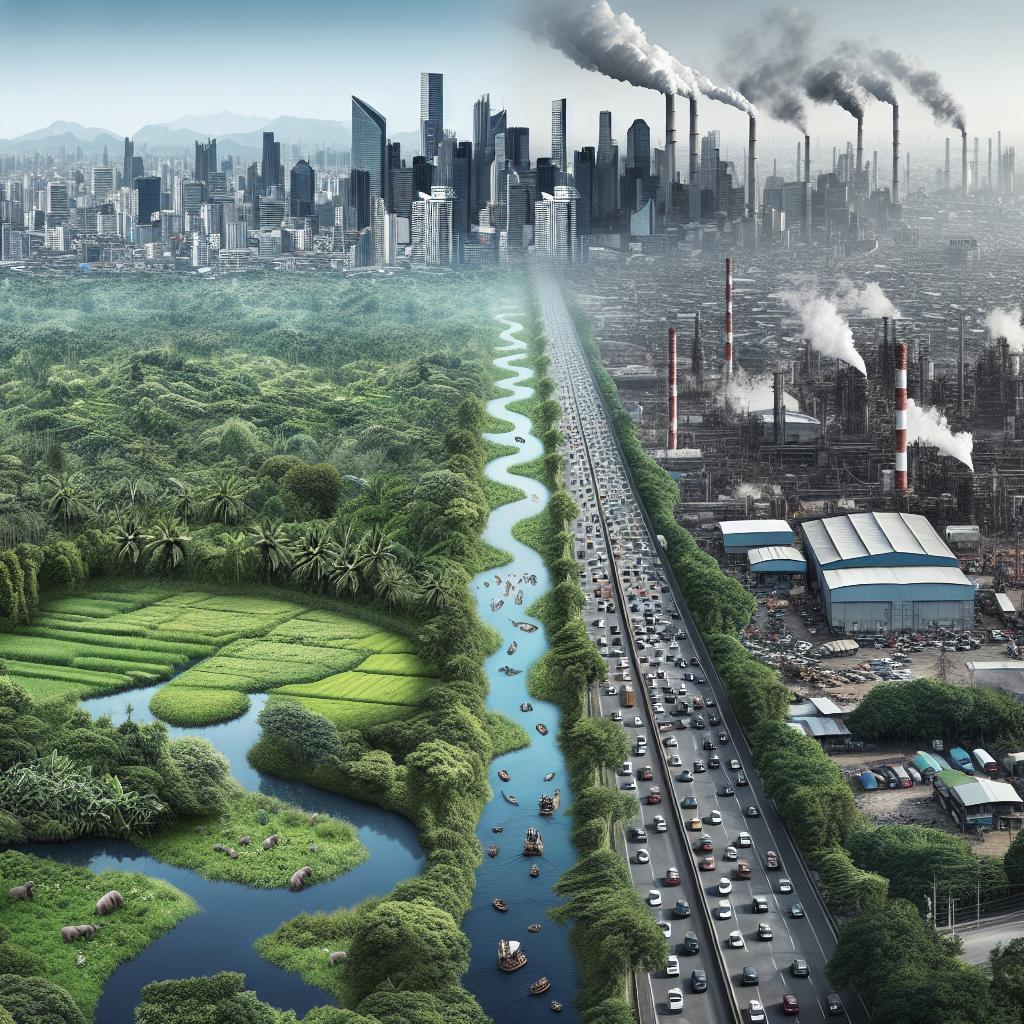

The challenge that enterprise planning teams face is not a shortage of sustainability frameworks. It is the structural inability to compare enough design configurations against enough climate performance criteria at the speed and scale that modern development programmes demand. This article examines how the most analytically rigorous planning organisations are now using AI-powered scenario comparison tools to evaluate 100 or more sustainability scenarios per project, and what that capability means for reducing the urbanization impact on climate change across complex development portfolios.
What Is Climate Impact in the Urban Development Context?
Urban climate impact, in planning terms, refers to the measurable effect that development decisions have on local and global climate systems. At the global scale, this is primarily expressed through carbon — operational and embodied emissions generated by buildings, infrastructure, and the transport behaviours that urban form drives. At the local scale, climate impact shows up as urban heat island intensity, surface water runoff patterns, biodiversity loss, air quality degradation, and the microclimate conditions that affect pedestrian comfort, building energy loads, and public health outcomes.
The urban climate impact factor of a given development is therefore not a single number. It is a composite of decisions that span site selection, building orientation, massing configuration, material specification, green infrastructure provision, and the connectivity patterns that determine whether residents drive or walk to reach daily destinations. Changing any one of these variables changes the climate impact profile. Changing them in combination produces non-linear effects that manual analysis cannot reliably predict.
For planning directors, the operational definition is more precise. Urban climate impact is the gap between what a development's environmental performance could be — given its site conditions and brief — and what it actually delivers as designed. That gap is routinely wider than it needs to be. Not because of technical ignorance, but because the design process does not provide the analytical bandwidth to close it.
Why Urbanization Impact on Climate Change Demands a Scenario-First Approach
The fundamental problem with sustainability analysis in most AEC organisations is sequencing. Environmental performance is assessed after design decisions are made, not before. An energy consultant is commissioned at RIBA Stage 3. A sustainability report is prepared for the planning submission. These are compliance exercises. They tell you how the design performs. They do not tell you how to improve it without starting again.
A scenario-first approach inverts this sequence. Before any design direction is fixed, the planning team generates a structured range of massing and configuration options and evaluates each against climate performance metrics — solar access, daylight autonomy, energy use intensity, surface temperature projections, stormwater runoff, carbon intensity. The design direction that emerges from this process is already the one with the strongest climate performance profile. Not because sustainability has been bolted on, but because it was the selection criterion from the start.
The barrier to this approach has historically been capacity. Running a meaningful sustainability analysis on a single design takes time. Running the same analysis on 100 variants requires either a large specialist team or computational tools capable of parallelising the analysis. Neither has been accessible to most planning organisations at the concept design stage. That is what the current generation of AI platforms is changing.
Key Challenges in Traditional Climate Impact Assessment
Traditional approaches to assessing the urbanization impact on climate change carry three structural weaknesses that limit their influence on design outcomes.
- Specialist Bottleneck. Climate performance analysis — energy modelling, solar radiation mapping, computational fluid dynamics for wind, urban heat island simulation — requires specialist software and trained operators. In most enterprise AEC firms, this expertise sits with a small number of sustainability engineers or is bought in project-by-project from external consultants. The result is that sustainability analysis happens infrequently, at defined project milestones, rather than continuously as design develops. By the time the analysis is delivered, the design team has moved on.
- Metric Fragmentation. Different aspects of climate impact are typically assessed using different tools by different specialists — energy modelling in EnergyPlus or IES-VE, daylighting in Radiance or DIVA, wind in CFD software, urban heat island through separate GIS analysis. These tools do not share a common environment, do not update simultaneously when the design changes, and produce outputs in different formats that must be manually assembled into a coherent sustainability picture. The composite urban climate impact factor of a development is rarely visible to the planning director as a single, integrated view.
- Absence of Comparative Infrastructure. Even when sustainability analysis is performed on a design, it typically produces a single assessment of that design, not a comparative ranking against alternative configurations. Without the ability to see how the chosen design performs relative to the options not taken, there is no mechanism for identifying whether the performance gap could be closed by a different design decision.
How AI and Spatial Analytics Are Transforming Sustainability Scenario Comparison
AI-native platforms address these weaknesses by embedding climate performance analysis directly into the design generation process, rather than treating it as a downstream assessment of a completed design. When AI generative design tools produce a range of massing options, each option can be simultaneously evaluated against a defined set of climate performance metrics without requiring manual export to specialist analysis tools.
The implication is significant. Rather than analysing one design, planning teams can now evaluate the climate performance of every configuration the AI generates. A planning director who asks the platform to produce 200 massing scenarios constrained by planning parameters receives 200 scenarios each with solar access scores, estimated energy use intensity, urban heat island contribution, and surface runoff coefficients. The scenarios can then be filtered and ranked by any combination of these metrics, revealing the configurations that perform best on climate criteria alongside commercial feasibility indicators.
Spatial analytics extends this by grounding the climate impact assessment in the specific site context. The urbanization climate impact of a development is not independent of its surroundings — it is shaped by adjacent building heights, street orientation, tree canopy, surface material types, and the prevailing wind and solar patterns of the local climate zone. AI platforms that integrate real-world spatial data with design generation ensure that the climate performance metrics generated for each scenario reflect actual site conditions rather than generic assumptions. This distinction matters most in dense urban environments where microclimate conditions vary significantly at block scale.
Sustainability Scenario Comparison Use Cases With Real-World Examples
Use Case 1: High-Rise Residential Cluster — Solar Access and Heat Island Optimisation
A developer planning a cluster of five residential towers on a 4-hectare urban site in a subtropical climate needs to evaluate the microclimate implications of different tower spacing and orientation configurations. At high density, tower placement determines whether lower floors receive adequate solar access for daylighting, whether wind channelling between towers creates uncomfortable pedestrian conditions, and whether the overall heat island contribution of the development exceeds the planning authority's environmental impact thresholds.
Using an AI sustainability scenario platform, the planning team generates 150 tower cluster configurations varying spacing, height, orientation, and podium coverage, and evaluates each against solar access at ground and podium level, estimated surface temperature uplift, and wind pedestrian comfort levels. The analysis identifies a configuration family — towers rotated 22 degrees from the street grid, with a recessed podium and maximum 30-metre inter-tower spacing — that achieves a 40% improvement in ground-level solar access and a 1.8°C reduction in projected surface temperature compared to the default orthogonal grid arrangement, at equivalent GFA yield.
Use Case 2: Mixed-Use Masterplan — Portfolio Carbon Baseline
An enterprise development firm managing a pipeline of 12 mixed-use projects across three climate zones needs to establish a portfolio-wide carbon baseline and identify which projects carry the highest urbanization impact on climate change risk. Traditional project-by-project sustainability reporting does not produce this view — it provides individual project snapshots assembled into a portfolio only through manual aggregation.
Using an AI platform with portfolio-level sustainability scenario management, the planning team establishes a consistent set of climate performance metrics across all 12 projects — energy use intensity targets, maximum heat island contribution thresholds, minimum solar access scores — and runs scenario comparisons at each project against this common framework. Projects that cannot meet the portfolio targets under any feasible design configuration are identified early, allowing the development programme to prioritise design effort where the performance gap is largest and most addressable.
How Digital Blue Foam Supports Sustainability Scenario Comparison
Digital Blue Foam's Sustainability First module is the practical infrastructure for the scenario-comparison workflow described above. The platform generates real-time AI models for daylighting analysis, energy modelling, solar exposure simulation, and environmental performance scoring, directly within the design environment where massing decisions are being made, without requiring specialist software or design export.
The critical differentiator for planning directors managing complex portfolios is the scale of comparison the platform enables. DBF's AI generative engine does not require a fully detailed design to produce climate performance projections — it works from massing geometry, applying climate data, urban context, and orientation parameters to generate directionally accurate performance scores for each configuration. This makes it practical to evaluate hundreds of scenarios per project at concept stage, when design decisions still have the leverage to improve outcomes materially.
Enterprise clients including Jacobs, Takenaka, Emaar, and Dubai Municipality have used DBF's Sustainability First tools to embed climate performance as a design selection criterion from the earliest project stages, producing developments whose sustainability outcomes are the result of evidence-based design choices rather than post-rationalised compliance exercises.
Explore Digital Blue Foam's full platform and sustainability tools to understand how scenario comparison integrates with enterprise design workflows.
Best Practices for Climate Impact Scenario Comparison at Enterprise Scale
Organisations that are consistently reducing the urbanization impact on climate change through scenario comparison share three operational practices that distinguish them from firms treating sustainability as a compliance function.
- Define climate performance criteria before generating scenarios. The metrics against which sustainability scenarios will be ranked — solar access threshold, maximum energy use intensity, heat island contribution limit, minimum daylight autonomy score — should be agreed and documented before scenario generation begins. Without defined criteria, scenario comparison becomes subjective. Each stakeholder favours the configuration that performs best on the metric they personally care about, and the decision reverts to intuition rather than evidence.
- Require a minimum scenario breadth before selecting a design direction. Enterprise development organisations that have institutionalised this practice typically specify a minimum of 50 to 100 distinct scenarios at concept stage before any design direction is shortlisted. This is not about finding the perfect design through exhaustive search. It is about ensuring that the design direction chosen is not simply the first one drawn, which is statistically unlikely to be optimal across multiple criteria.
- Track the delta between the selected design and the best-performing scenario. If the design team selects a configuration that performs at the 75th percentile on climate metrics rather than the top performer, the planning director should understand what commercial or practical constraint drove that choice — and whether it is genuinely fixed or potentially negotiable. This discipline makes the trade-off between climate performance and other objectives explicit and auditable rather than invisible.
Conclusion
The urbanization impact on climate change is not an external force that development organisations respond to. It is the cumulative result of design decisions that planning directors make at project after project, year after year. The gap between the climate performance that development could achieve and what it actually delivers is a function of analytical capacity — how many configurations can be evaluated, against how many criteria, at the design stage where those evaluations can still change outcomes.
AI-powered sustainability scenario comparison tools have moved the answer to that question from single digits to hundreds. For planning directors who understand the leverage this represents, the operational priority is clear: build the scenario comparison workflow into the concept design process as a standard deliverable, not as an optional sustainability exercise. The climate performance gains compound across a portfolio. The cost of not doing it accumulates in the same way.
To see how Digital Blue Foam's Sustainability First module enables 100+ scenario comparisons at enterprise scale, book a demo or explore the platform.
FAQs
What is the urbanization impact on climate change?
Urbanization impact on climate change refers to the measurable effect that urban development has on local and global climate systems. This includes carbon emissions from building operations and embodied construction, urban heat island intensification caused by dense built form and heat-absorbing surfaces, increased surface runoff from impermeable paving, biodiversity loss, and air quality degradation. In planning terms, it encompasses both the global carbon contribution of a development and the local microclimate effects that influence the comfort, health, and energy performance of the built environment.
How many sustainability scenarios should a planning team evaluate?
The answer depends on project complexity and the number of design variables in play. For a single building massing exercise with three or four key variables, 50 to 100 scenarios will typically reveal the performance landscape sufficiently. For a multi-plot masterplan with land-use mix, building height distribution, and orientation as simultaneous variables, 200 or more configurations may be needed to identify the strongest performers across all criteria. AI-native platforms make this volume of analysis practical at concept stage without specialist engineering engagement for each scenario.
Can sustainability scenario comparison tools integrate with BIM workflows?
Yes, leading AI sustainability platforms generate geometry and performance data that can feed into BIM workflows at the point of handoff from concept to detailed design. The shortlisted scenarios from the concept comparison process inform the BIM model's baseline geometry and performance targets, ensuring that the detailed design team is working from a configuration already validated for climate performance rather than starting from a blank slate. Most AI platforms export in formats compatible with Revit, ArchiCAD, and Rhino environments.
What climate metrics should be prioritised in sustainability scenario comparison?
The priority metrics depend on project location, building type, and regulatory context. For developments in high solar gain climates, solar access, surface temperature, and cooling energy load are typically the most consequential. In temperate climates, heating energy intensity, daylight autonomy, and wind pedestrian comfort take precedence. For masterplan-scale projects, urban heat island contribution and stormwater runoff coefficient are important at the site level. Planning directors should establish a weighted scorecard that reflects the regulatory requirements and climate risk profile of each specific project.
How do AI platforms generate sustainability scenarios without a complete design?
AI sustainability platforms work from massing geometry — basic building volumes and footprints — rather than requiring a complete detailed design. By integrating climate data, site orientation, and urban context with parametric massing models, they generate directionally accurate performance projections at concept stage. These projections are sufficient for comparative ranking and design direction decisions, though not for regulatory compliance submissions, which require more detailed modelling at later design stages.