
Rail Transport Modeling Framework for Enterprise Infrastructure Projects
Rail infrastructure projects are some of the most expensive and technically difficult investments that governments and enterprise development groups take on. Rail transport modeling is a key decision-making tool that helps with planning capacity, designing services, phasing infrastructure, and determining if a project will be profitable. · June 2, 2026

Rail infrastructure projects are some of the most expensive and technically difficult investments that governments and enterprise development groups take on. Rail projects, like high-speed lines, city subway systems, expansions of freight lines, or transit that combines different modes of transportation, need a lot of time to plan, coordination between many parties, and large amounts of public and private money. Therefore, rail transport modeling is a key decision-making tool that helps with planning capacity, designing services, phasing infrastructure, and determining if a project will be profitable.
Unlike road systems, rail lines are fixed, making it very important to have accurate models early on. The choice of alignment, how far apart to space stations, buying trains, signaling, and setting timetables all need to be checked against expected travel patterns and how much the system can handle. Mistakes in early modeling can cause infrastructure to be used less, lines to be too crowded, operations to be inefficient, or expensive to rectify mistakes made after construction.
Enterprise infrastructure projects are using more transportation modeling systems that incorporate demand forecasting, network simulation, capacity estimates, and testing different scenarios. Modern rail modeling includes cargo flow, how land use affects things, environmental analysis, and financial data to help make good investment decisions. As funding for infrastructure becomes more about how well it performs and the risks involved, accurate modeling has a direct impact on how money is allocated, whether regulations are approved, and how well the assets perform long-term.
Transportation Modeling Fundamentals
What is Transportation Modeling?
Transportation modeling is a structured way to simulate, predict, and evaluate travel behavior, how well a network performs, and the impact on infrastructure in a specific area or route. It helps planners, engineers, and investors decide how transportation systems will react to changes in demand, land use, service, and policies.
Transportation modeling tries to answer three main questions: How many trips will there be? Where will these trips start and end? How will these trips be spread across different transportation options and routes?
Transportation models are usually divided into three types:
1. Strategic Models
These models work on a regional or city level and focus on predicting long-term demand. They consider things like population growth, where people work, changes in land use, and economic factors to estimate how much travel there will be in the future. This is used for overall planning, route studies, and high-level policy evaluations.
2. Tactical Models
These models focus on a specific route or part of a network and are used to improve service, evaluate capacity, and test different scenarios. They help with medium-term decisions like changing schedules, upgrading stations, and planning infrastructure expansions.
3. Operational Models
These models work at a detailed level and simulate how the system performs in real time. They analyze train dispatching, how well signals work, how long trains stop at platforms, how often trains run, and how well trains are being used. These models are important for making sure schedules are realistic and for testing how well the system performs during rush hour.
Transport Demand Modeling Basics
Accurate rail planning needs reliable forecasts of travel demand. Transport demand modeling estimates how people and goods move across networks based on things like population, the economy, and how people behave.
The Four-Step Model
The four-step travel demand model is still a common way to forecast transportation. It includes: Trip Generation (estimating how many trips start and end in each area based on population, jobs, and land use), Trip Distribution (figuring out how trips are spread between different starting and ending points), Mode Choice (predicting which transportation option people will pick), and Route Assignment (spreading trips across network routes to simulate congestion and how full each route will be).
Activity-Based Models (ABM)
Activity-based models are an improvement because they simulate individual travel behavior based on what people do each day. Instead of modeling trips separately, ABMs look at the order of activities and the travel needed for them. ABMs are more realistic and especially useful in urban rail planning, where combining trips and using different transportation methods greatly affect ridership.
Agent-Based Approaches
Agent-based models simulate independent entities (agents) that make decisions and interact with each other and the constraints of the network. These models can capture how people react to congestion, service changes, and pricing.
Rail Transport Modeling Specifics
Capacity Modeling
Rail capacity modeling evaluates how many trains and passengers can travel on a specific route, considering signaling and how close trains can run together. Important factors include how close trains can get to each other, how long trains stop at platforms, the type of signaling system, and how many people the train can hold. Capacity modeling makes sure that projected ridership is actually possible.
Service Planning
Service planning models figure out the best train frequency, stopping patterns, express versus local service, and train usage. Planners balance how often trains run with operating costs while keeping trains as full as they should be.
Network Design
Rail network modeling looks at route options, station locations, interchange design, and how well routes connect. Network design models often include land-use predictions to evaluate how development will affect areas around stations.
Integration with Broader Transport Systems
Rail systems usually do not operate alone. Integrated modeling systems evaluate how rail interacts with bus networks, road congestion, cycling, and pedestrian access. Modeling multimodal integration makes sure that connections support ridership growth and network efficiency.
Rail Modeling Methods
Common Ways to Forecast
Four-step models are still used to estimate demand in a specific area. These models use estimations about population, jobs, and how land will be used to deduce how many trips there will be and how people will choose to travel over a 20–30 year horizon.
Activity-based models (ABMs) emulate how people travel each day. They are useful for city rail systems, where travel habits and changing between types of transport affect how many people ride. These models also help to see how people react to fare changes and test how flexible the system is under different conditions.
Demand estimation often uses surveys to see if people will switch how they travel based on time saved, fares, reliability, and how often the service runs. Using real travel data with surveys makes the ridership guesses more believable.
Ways to Look at Capacity
Rail systems are limited by how much the tracks can handle, not by how many lanes there are. Capacity studies need to look at both the physical and working limits.
Track Capacity
Track capacity studies see how many trains can run based on the signals. Important things to consider are how close trains can follow each other, how long the signal blocks are, how fast trains speed up and slow down, and where tracks cross. Simulation tools show how different headways change the flow and cause delays.
Station Capacity
Station capacity is often the biggest limit in busy areas. Models need to take into account how long trains stop at platforms, how passengers get on and off, how many people can use stairs and escalators, and how fast people can go through ticket gates. Microsimulation tools are often used to see how crowded stations get and how well people can evacuate.
Models to Make Service Better
Service improvement focuses on getting the right number of trains, putting them where they are needed, and keeping costs down.
Schedule models look at best times to operate, whether to have fast or local service, and how to time transfers. Math is used to cut down on how long people wait while controlling costs.
Fleet models make sure trains are used well on different routes, considering when they need maintenance and how demand changes. These models often use math to lower the time trains sit unused and get the most out of the equipment.
Modeling the Financial Impact
Rail projects need to show wider financial gains, not just ticket sales.
Cost-Benefit Study (CBA)
Cost-benefit models look at time saved traveling, less money spent on vehicles, fewer accidents, less pollution, and more productivity. Measurements like net present value (NPV) and internal rate of return (IRR) help decide if the project is worth the investment.
Land Value
Rail lines often make real estate near stations more valuable. Models look at how much prices might go up and how that can be captured, including more value from transit-oriented building, tax money from the increased value, and deals with developers.
Environmental Assessment
Rail modeling should include environmental impact studies to meet rules and be sustainable. Important aspects include modeling greenhouse gas release, studying noise, modeling air quality, and looking at land use and wildlife. Environmental modeling is starting to use lifecycle carbon studies to measure both the carbon used to build and run the system.
Rail modeling methods need to work together. Demand estimation can help capacity studies, which affect service planning, which then shapes financial and environmental studies. Integrated frameworks give the base needed for big rail projects.
Implementation Framework
Phase 1: Gather Data and Set a Baseline
This phase sets the current performance, travel, and limits of the system. Key things to look at include existing ridership volumes, peak hour load factors, network congestion zones, station crowding levels, and service reliability indicators. This analysis shows where the system is weak and inefficient.
Rail modeling needs data from many sources, including where people start and end their trips, ticket and fare data, smart card records, mobile device tracking, census and employment numbers, and land use datasets. High-quality data helps the model's reliability.
Stakeholder consultation helps with modeling. Inputs from operators, regulators, freight carriers, and municipal authorities help refine operational assumptions. Public consultation may also help provide qualitative insights into service gaps and accessibility constraints.
Phase 2: Build the Model
The software should match the project size and the analytical requirements. Options may include macroscopic demand forecasting tools, mesoscopic network simulation platforms, and microsimulation tools for station flow modeling. Enterprise projects often need software that connects demand forecasting to operations simulation.
Calibration makes sure the model outputs match what is seen in the real world. The parameters may include travel time, how people choose to travel, ridership, and how full trains are at busy times. Iterative calibration can help improve accuracy.
Validation tests map robustness against datasets or historical scenarios. Sensitivity testing checks how outputs respond to variable adjustments. Validation documentation is necessary for regulatory approval and investment due diligence.
Phase 3: Test Situations
Scenario modeling looks at alternative alignments, station placement options, service frequency adjustments, and rolling stock configurations. Comparing these shows the best plans for the infrastructure.
Sensitivity testing sees how demand changes with population changes, fare changes, changes in the economy, and policy changes. Good models should work well under different assumptions.
Risk modeling identifies risk of low demand, cost increases and their impact, construction delays, and operation problems. Quantitative risk analysis helps contingency planning and financial structuring.
Phase 4: Help Decide and Give Advice
The last phase turns analytical outputs into strategic advice. This advice includes preferred alignment and station configuration, optimal service frequency strategy, capacity expansion triggers, phased infrastructure investment roadmap, and financial performance metrics. Dashboards and scenario-testing tools help leaders and stakeholders make decisions.
Planning platforms that use AI are starting to show demand, land use, and service in a unified interface. Enterprise rail modeling cannot be static. They should be iterative in nature. Continuous updates and performance monitoring can refine long-term infrastructure strategies and operational planning.
Technology and Tools
Commercial Modeling Platforms
Big rail projects usually rely on well-known commercial platforms that are reliable and can be scalable with increasing data demands.
VISUM
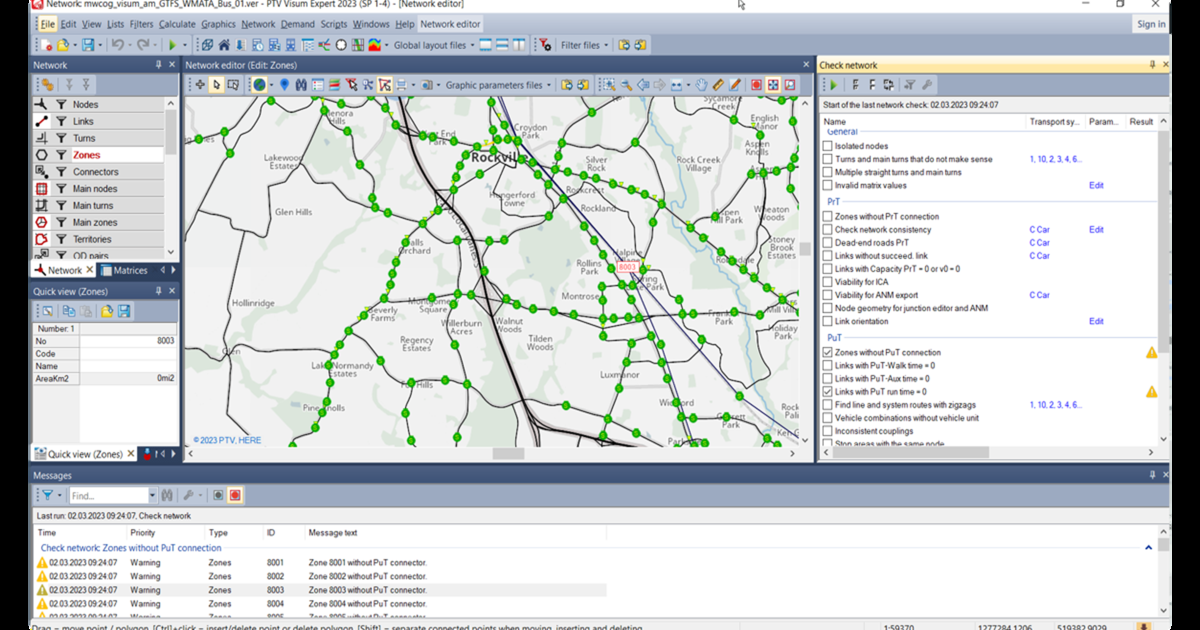
PTV VISUM is a popular choice for planning transportation strategies and modeling demand across different modes of transport. It handles large-scale modeling, compares different scenarios, and predicts long-term trends. VISUM is good at modeling regional networks, testing policies, and working with GIS systems.

EMME
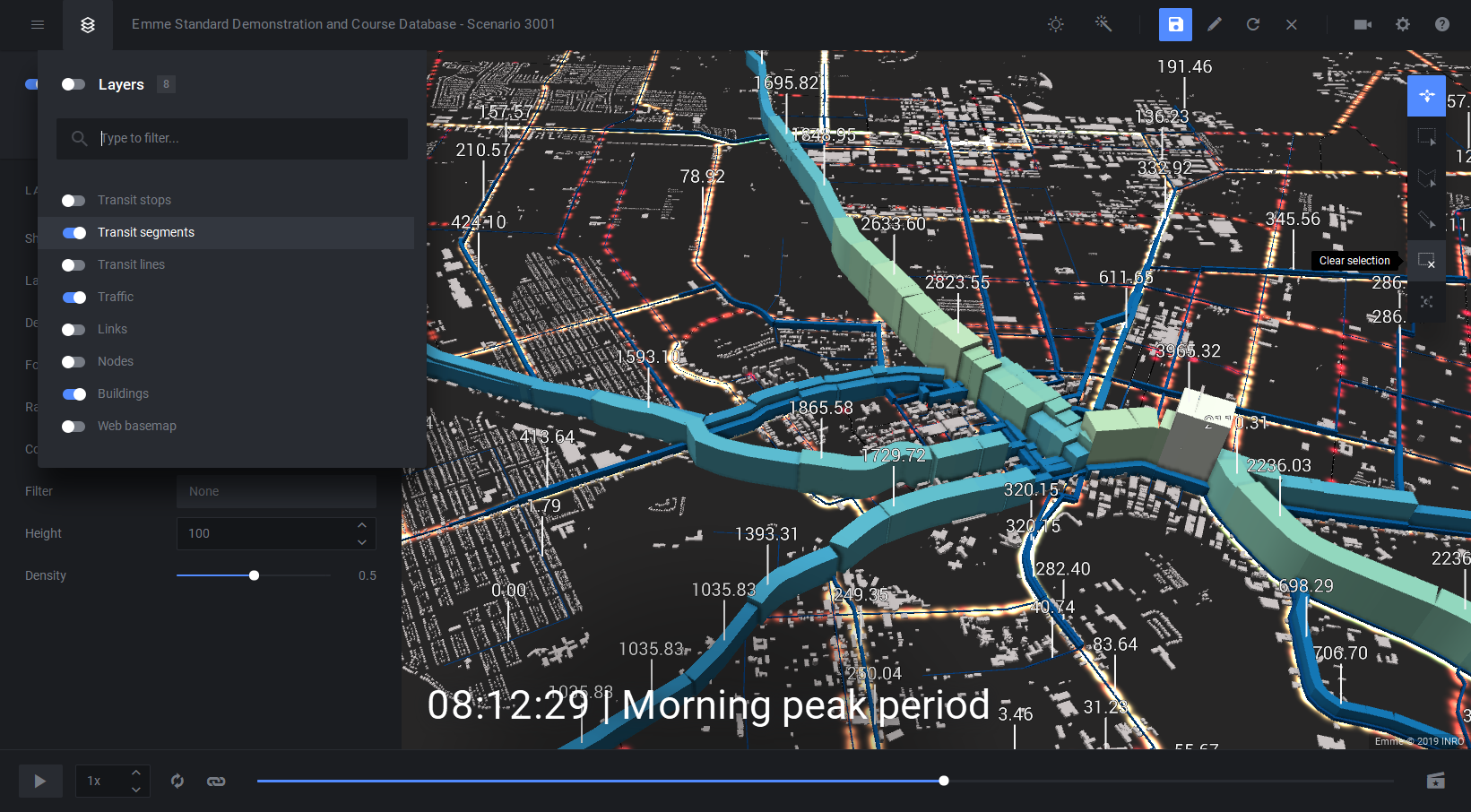
EMME is often used for projects focused on cities and specific corridors. It helps model demand, assign transit routes, and test different scenarios, with good support for adding economic assessment tools.
TransCAD
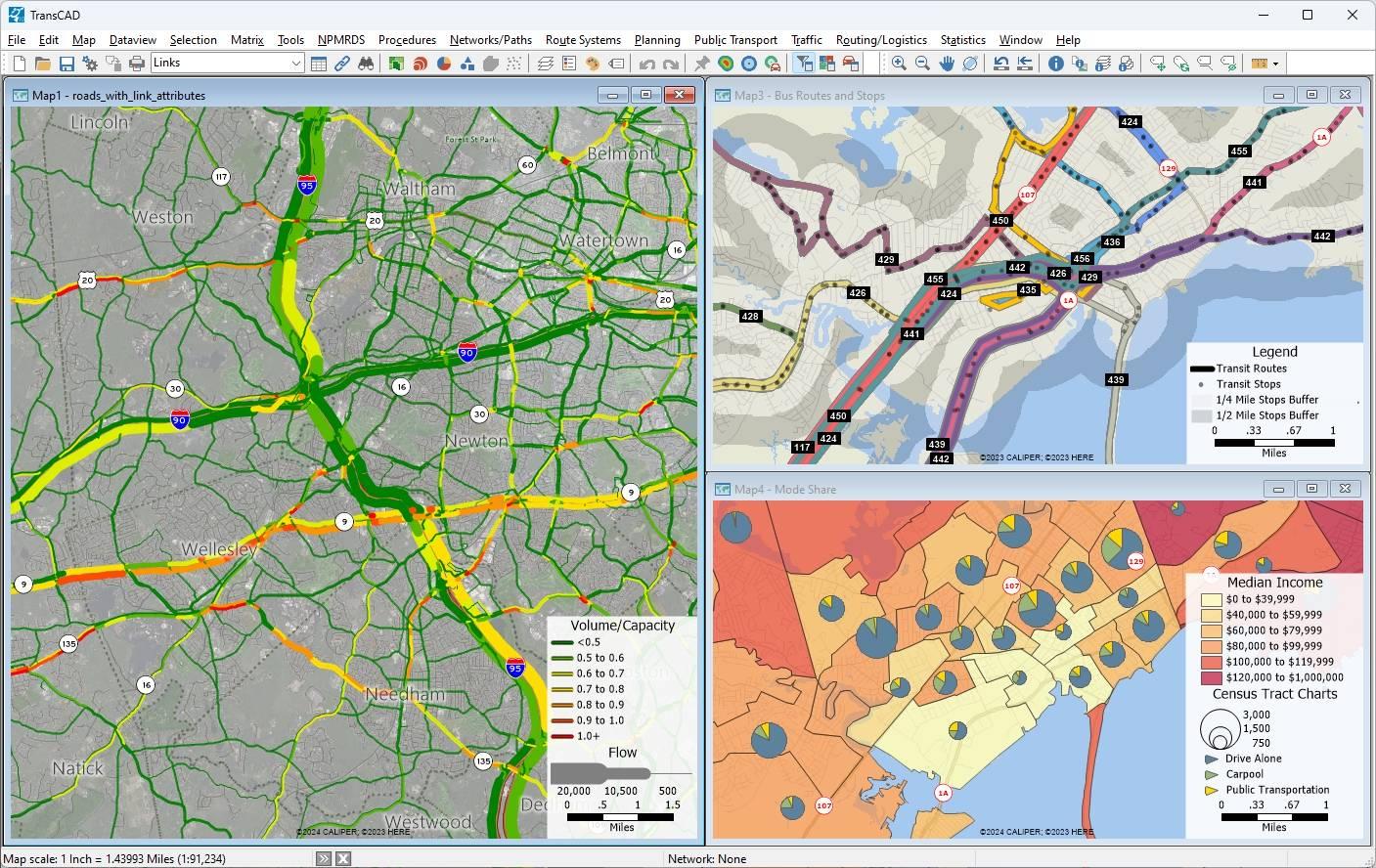
TransCAD combines GIS features with transportation modeling. It is often used for freight modeling, analyzing transit routes, and predicting regional demand. Its ability to analyze spatial data makes it useful for planning rail lines.
These platforms offer proven modeling methods, are accepted by regulators, and perform well for big projects. However, they often require significant computational resources and skilled modelers.
Open-Source Solutions
Open-source modeling tools are becoming more common in universities and government agencies. Tools like MATSim (Multi-Agent Transport Simulation) and SUMO (Simulation of Urban Mobility) give you the flexibility to create agent-based and detailed simulations. Open-source options provide transparency, customizability, and lower licensing costs. However, they require more technical skills and may not have the same level of structured validation as commercial platforms. Some projects use a mix of both, using commercial tools for high-level modeling and open-source tools for specific simulations.
AI and Machine Learning
Artificial intelligence and machine learning are changing transportation modeling by making predictions more precise and allowing models to respond to changes more quickly. Machine learning models can make better predictions about how many people will ride based on past and current data, spot unusual demand patterns, improve timetable adjustments, predict where congestion will occur, and better analyze how fares affect ridership. AI-driven algorithms can also reduce the need to manually adjust parameters and speed up model improvement. Reinforcement learning is also being applied to rail scheduling, allowing for quickly changing schedules based on demand and disruptions.
Spatial Analytics Tools
Rail modeling needs to consider land use. Spatial analytics platforms allow you to combine urban development data with transportation forecasts. GIS-based modeling helps with station catchment analysis, pedestrian accessibility mapping, transit-oriented development (TOD) evaluation, and land-value uplift estimation.
Digital Blue Foam (DBF) makes urban integration better by letting planners assess density, zoning rules, and infrastructure placement in master plans. While not a rail simulation tool itself, DBF helps with early-stage spatial adjustments that guide rail alignment, station placement, and urban integration plans. Spatial analytics makes the link between infrastructure investment and long-term land use stronger.
Cloud Computing for Large-Scale Models
Large rail modeling systems need a lot of computing power, especially for agent-based simulations and testing different scenarios. Cloud-based modeling environments offer scalable computing power, parallel processing for scenario comparisons, distributed data storage, and real-time collaboration among stakeholders. Cloud deployment also improves version control and makes things clear, supporting enterprise governance and regulatory requirements. As infrastructure modeling relies more on big data and dynamic simulation, cloud-native modeling environments are becoming standard for big rail projects.
Large-Scale Project Applications
New Rail Corridor Planning
For new rail lines, modeling assesses alignment alternatives, station spacing, demand distribution across nodes, and capacity requirements over 20–40 year horizons. Corridor modeling often starts with predicting demand, followed by detailed simulations to ensure appropriate headways and service frequency. High-speed rail projects, metro expansions, and freight lines all rely on matching demand with capacity to ensure long-term success.
Station Area Development
Stations act as both transportation hubs and economic drivers. Modeling tools help with passenger flow analysis, platform sizing, vertical circulation capacity, retail placement optimization, and peak congestion management. Station area modeling often connects with spatial planning tools to assess land-use intensification and mixed-use development.
Multi-Modal Integration
Rail systems usually need to connect with other modes of transportation. Modeling effectively assesses integration with bus networks, road traffic, cycling paths, and pedestrian access. Multimodal assignment models simulate how passengers switch between modes and find bottlenecks. Integration modeling ensures that first-mile and last-mile connections support projected ridership growth.
Transit-Oriented Development (TOD)
Transit-oriented development relies heavily on integrated modeling. Rail accessibility increases land value, but density must be in line to avoid overwhelming system capacity. Modeling informs density limits near stations, parking optimization, balance of business with residential projects, and phasing of infrastructure. Spatial analytics platforms support rail demand models by aligning land-use decisions with transportation capacity.
Best Practices and Common Challenges
Data Quality Management
Model accuracy depends on good data. Missing origin-destination data, outdated census numbers, or inaccurate ridership info can compromise estimation reliability. Establishing data quality rules and checking data regularly helps maintain model integrity.
Model Uncertainty
All models have uncertainty. Demand forecasts can be affected by economic changes, new behaviors, or tech changes. Sensitivity analysis and probability modeling can help define uncertainty.
Stakeholder Communication
Technical modeling results must be translated into understandable insights for decision-makers, investors, and the community. Visual dashboards and tools for comparing scenarios make things more transparent and encourage consensus.
Validation and Calibration
Regular validation against real-world data ensures the model is relevant. Calibration should be an ongoing process and not be restricted to a one-time activity.
Long-Term Forecasting Limitations
Rail projects last for decades. Forecasting things beyond 30–40 years introduces significant behavioral and technological uncertainty. Flexible phasing and adaptive capacity strategies can reduce long-term forecasting risks.
Conclusion
Rail transport modeling is more than just a technical task; it is the bedrock for multi-million dollar infrastructure investments. From demand and capacity analysis to service choices and economic studies, modeling systems shape funding, approvals, and operations.
A good rail modeling system must bring together forecasting, simulation, spatial analytics, environmental assessment, and financial evaluation. Technology platforms, from commercial tools to AI and cloud computing, strengthen predictive accuracy.
But modeling success depends not just on following rules, but on keeping data accurate, aligning stakeholders, and iterative validation. As rail projects get bigger, using structured, tech-supported modeling systems will ensure that investments are strong and efficient.