
Net Zero Site Planning Strategies for Enterprise Development Portfolios
Building a credible net-zero plan is no longer a sustainability department aspiration; it is a commercial prerequisite for enterprise development organisations operating in regulated markets. Institutional investors, planning authorities, and corporate occupiers are all demanding verified pathways to zero-carbon performance from the projects they fund, approve, and occupy. · June 2, 2026

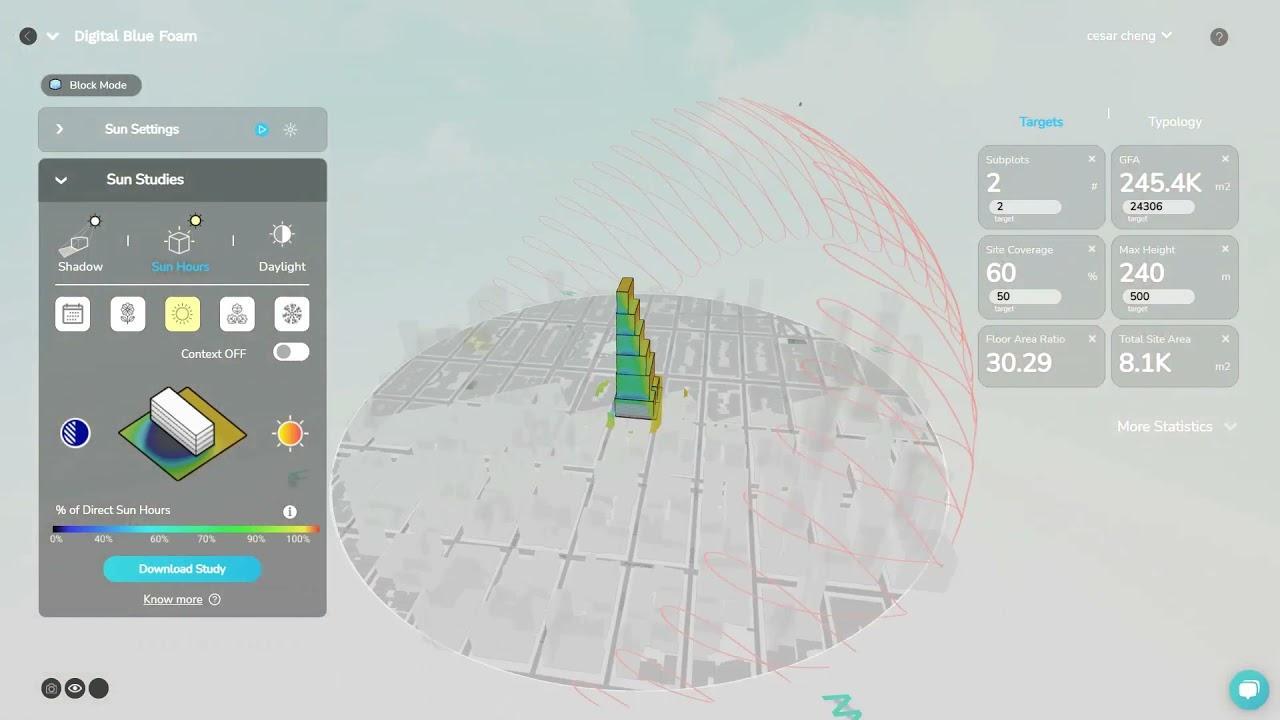
Building a credible net-zero plan is no longer a sustainability department aspiration; it is a commercial prerequisite for enterprise development organisations operating in regulated markets. Institutional investors, planning authorities, and corporate occupiers are all demanding verified pathways to zero-carbon performance from the projects they fund, approve, and occupy. The question facing planning directors and development executives is not whether to commit to net zero site design but how to embed the strategies, data, and decision frameworks that make those commitments deliverable across a complex, multi-site portfolio.
This article sets out what net zero planning means at the enterprise development scale, where current approaches are falling short, and how AI-enabled site planning tools are giving forward-looking teams the analytical capacity to pursue zero-carbon development not as a single-project exception but as a portfolio-wide operating standard.
What Is Net Zero Planning?
Net zero planning, in the built environment context, refers to the design and development process through which a building or site achieves a balance between the carbon it emits and the carbon it removes or offsets across its lifecycle. The most rigorous interpretation, endorsed by frameworks including the UK Green Building Council's Net Zero Carbon Buildings Framework and the World Green Building Council's definition, requires addressing both operational carbon, the emissions from energy use in heating, cooling, lighting, and power, and embodied carbon, the emissions generated in the manufacture, transport, and installation of materials.
A net zero site plan is therefore not a single calculation but a structured programme spanning site selection, building orientation, fabric specification, system design, renewable energy integration, and residual carbon offsetting. According to the UN Environment Programme's 2023 Global Status Report for Buildings and Construction, the buildings sector accounts for 37% of global CO₂ emissions. For enterprise developers, this figure is not abstract: it represents the regulatory risk, stranded asset risk, and reputational risk carried by every project in their portfolio that does not have a credible zero-carbon pathway.
Net zero site planning at portfolio scale adds a further layer: it requires planning teams to aggregate carbon commitments across multiple concurrent projects, track performance against targets as design develops, and reallocate carbon budget between projects where development economics create trade-offs. This is a fundamentally different operation from managing net zero compliance on a single building.
Why a Net Zero Plan Matters for Modern Planning Teams
The regulatory case is already settled in most advanced markets. The EU's European Green Deal mandates net zero emissions from new buildings by 2030. The UK's Future Homes Standard requires a 75-80% reduction in operational carbon for new homes from 2025. The UAE's Net Zero 2050 Strategic Initiative sets national decarbonisation targets that flow directly into building regulations and Estidama requirements. In these environments, a development organisation without a structured net-zero plan is not just leaving value on the table; it is accumulating compliance risk.
The commercial case is equally compelling. Green-certified buildings command rental premiums of 5-15% in major global markets, according to JLL's 2024 Sustainability Research report. Net zero-aligned assets attract lower-cost debt through green finance instruments: the European Investment Bank, HSBC, and Lloyds Bank have all published commercial terms for green mortgages and sustainability-linked loans that offer rate advantages to verified low-carbon assets. For development organisations managing multi-billion-pound portfolios, the financing cost differential across a portfolio of net-zero aligned assets is material.
For planning directors specifically, the operational imperative is the ability to demonstrate a net zero commitment to planning authorities at the pre-application stage. Planning decisions in London, Amsterdam, Singapore, and Dubai are increasingly conditioned on energy performance evidence and carbon reduction plans. Organisations that can produce these quickly and credibly, because they have the tools and processes to model performance at the concept stage, move through the planning system faster than those relying on consultant-produced reports assembled case by case.
Key Challenges in Traditional Net Zero Planning Approaches
The structural problem with most enterprise organisations' approach to net-zero site planning is that it is reactive rather than generative. Carbon targets are set at the portfolio level by sustainability teams, communicated to project leads as targets to be met, and then assessed against compliance benchmarks at gate reviews. What is missing is the mechanism that translates portfolio-level targets into project-level design decisions at the point where those decisions are still malleable.
The first challenge is timing. Carbon analysis in most AEC firms happens late. By the time an energy model or embodied carbon assessment is commissioned, the project's fundamental design parameters, building form, orientation, floor-to-ceiling height, structural system, and facade specification have been fixed. Changing them at this stage costs money and time that most project programmes cannot absorb. The net zero plan becomes a post-rationalisation exercise rather than a design driver.
The second challenge is carbon accounting fragmentation. Operational carbon sits with the mechanical engineer. Embodied carbon sits with the structural engineer and materials specifier. Renewable energy sits with the sustainability consultant. Site landscaping and green infrastructure, which affect the site's carbon sequestration potential, sit with the landscape architect. Assembling a coherent net-zero plan from these fragmented contributions requires coordination effort that most project teams do not have the bandwidth to sustain.
The third challenge is portfolio invisibility. Project-level carbon data is typically held in disconnected reports, consultant deliverables, and BIM model outputs. Planning directors who need a portfolio-wide view of carbon exposure, to understand which projects are on track and which represent stranded asset risk, must compile this information manually. By the time a portfolio carbon report is assembled, the data it contains is already out of date.
How AI and Spatial Analytics Are Transforming Net Zero Site Planning
The structural shift that AI-native platforms bring to net zero planning is the ability to make carbon visible at the point of decision, in the same environment where design decisions are being made. Rather than requiring a separate carbon analysis workflow that runs in parallel to design development, AI-integrated platforms embed sustainability metrics, daylighting performance, solar access, energy use intensity projections, and passive ventilation potential directly into the conceptual design environment.
Spatial analytics adds the geographic context that makes carbon analysis site-specific rather than generic. A net zero plan for a dense urban infill site in Manchester is structurally different from one for a greenfield development on the urban fringe of Abu Dhabi: the climate baseline, the passive design opportunities, the grid carbon intensity, and the available renewable energy options are all different. AI platforms that integrate climate data, solar radiation mapping, and urban microclimate modelling give planning teams site-accurate baselines rather than notional averages.
Unlike traditional energy consultants who deliver a static report at a defined project milestone, AI-integrated net zero planning tools provide continuous analysis as the design evolves. When a design team changes the facade specification, the predicted energy use intensity updates. When the site masterplan reconfigures, the solar access analysis reruns. This continuous feedback loop makes net zero plan compliance a real-time design constraint rather than a periodic compliance check.
Net Zero Planning Use Cases With Real-World Examples
Use Case 1: Net Zero Portfolio Carbon Dashboard
An enterprise residential developer with a pipeline of 2,000 units across eight sites needs to demonstrate a credible portfolio-level net zero plan to its institutional equity partner ahead of a refinancing round. The sustainability team must aggregate operational energy targets, embodied carbon estimates, and renewable energy provisions across all eight projects, which are at different design stages and managed by three different architecture firms. Using an AI-enabled site planning platform with portfolio carbon management capability, the team assembles a live dashboard showing per-project EUI projections, embodied carbon exposure by material category, and renewable energy contribution by site. The dashboard updates as design development progresses, giving the equity partner a real-time view of carbon risk rather than a static report.
Use Case 2: Zero-Carbon Site Feasibility Study
A commercial property developer is evaluating four potential sites for a net-zero office development of approximately 20,000m². The sites differ in orientation, shading context, grid connection capacity, and rooftop area available for photovoltaic installation. Using AI-integrated site planning tools, the team models the passive design potential and renewable energy generation capacity of each site before committing to acquisition. The analysis reveals that one site's north-facing orientation and neighbouring tall building shadow create a passive solar deficit that cannot be offset by rooftop PV alone, making it structurally harder to achieve net zero without significant active systems cost. This finding, produced in two days rather than the four weeks a traditional energy consultant study would have required, shapes the acquisition decision.
How Digital Blue Foam Supports Net Zero Site Planning Workflows
Digital Blue Foam's Sustainability First module provides planning teams with the analytical tools to build and stress-test a net-zero plan from the concept stage. The platform generates real-time AI models for daylighting analysis, energy modelling, solar exposure simulation, and environmental performance scoring, directly within the design environment, without requiring geometry export to specialist simulation tools.

For enterprise development portfolios, DBF's platform provides a consistent analytical framework that applies across all projects in the pipeline, regardless of which architecture firm is delivering them. Performance targets are embedded in the platform, and design options are evaluated against them automatically, giving planning directors a live view of portfolio carbon risk that does not depend on individual project teams remembering to commission energy reports at the right moment.
Clients, including Emaar and Dubai Municipality, have used DBF's Sustainability First capabilities to embed net zero planning requirements into the master development brief, ensuring that sustainability performance is evaluated at the massing stage rather than discovered as a compliance gap at the planning submission stage.
Best Practices for Net Zero Site Planning Implementation
Building a credible net-zero plan requires process discipline as much as technical capability. The organisations that are consistently delivering zero-carbon outcomes share three operational characteristics.
First, they set carbon targets at the brief stage, not the design review stage. This means specifying operational energy intensity targets (in kWh/m²/year), embodied carbon limits (in kgCO₂e/m²), and renewable energy fractions as project brief requirements, with the same contractual standing as GFA targets and cost budgets. When carbon targets have the same status as financial targets, design teams treat them as constraints rather than aspirations.
Second, they integrate sustainability analysis into the design workflow rather than running it in parallel. This means selecting design platforms that provide carbon feedback in the same environment where design decisions are made, not commissioning consultant reports after design milestones have passed. The goal is to make carbon data available to the architect or urban designer at the point where they still have the freedom to act on it.
Third, they maintain a portfolio carbon ledger that tracks commitments and actuals across the development pipeline. This means treating the carbon budget with the same rigour applied to a financial budget, tracking variance, identifying projects at risk, and making portfolio-level reallocation decisions when individual project performance deviates from target.
Conclusion
A net-zero plan is no longer a differentiator in enterprise development; it is a baseline expectation set by regulators, investors, and occupiers simultaneously. The question is not whether to pursue zero-carbon development but whether the tools, processes, and data frameworks are in place to make that commitment credible and deliverable at portfolio scale.
The organisations that will navigate this transition successfully are those that have moved net zero planning upstream, embedding carbon analysis into the earliest design decisions, where it has the most leverage and the lowest cost to act on. AI-native platforms that make real-time sustainability feedback available at the concept stage are the operational infrastructure that makes this possible.
To explore how Digital Blue Foam's Sustainability First module supports net-zero site planning across enterprise development portfolios, book a demo or explore the platform.
FAQs
What does a net-zero plan include for a development project?
A comprehensive net zero plan for a development project covers operational carbon reduction (through energy-efficient building design, passive strategies, and renewable energy), embodied carbon reduction (through low-carbon material specification and construction methods), and any residual carbon offsetting required to reach net zero balance. For enterprise development portfolios, it also includes portfolio-level carbon accounting, tracking mechanisms, and governance frameworks that ensure individual project commitments aggregate to the portfolio target.
What is the difference between net zero and carbon neutral?
Net zero and carbon neutral are related but distinct terms. Carbon neutral typically allows for carbon offsetting as the primary mechanism for achieving balance, meaning high-emitting buildings can qualify by purchasing credits. Net zero, particularly under rigorous frameworks like the UK GBC Net Zero Carbon Buildings Framework, requires a priority sequence: reduce first, then offset only residual emissions that cannot be eliminated through design. Enterprise developers should clarify which definition applies to their regulatory obligations, investor reporting requirements, and occupier agreements.
How early in the design process should net zero planning begin?
Net zero planning should begin at the site selection and concept design stage, before building orientation, massing, and envelope specification are fixed. The decisions made in the first 10% of a project's design process determine 80% of its energy performance potential. Late-stage energy analysis can identify compliance gaps but has a limited ability to close them without costly redesign. AI-native platforms that provide real-time carbon analysis at the concept stage make early-stage net-zero planning operationally practical for enterprise development teams.
Can AI tools accurately predict net zero performance at the concept stage?
AI-native site planning platforms produce directionally accurate energy and carbon performance estimates at the concept stage that are sufficient for design decision-making, though not for regulatory compliance submissions. The estimates improve in accuracy as design detail increases. The value of AI-driven analysis at the concept stage is not precision; it is speed: the ability to compare multiple design options against net zero performance criteria within hours, identifying the strongest performers for further development, rather than waiting weeks for detailed consultant studies on a single design option.
How does embodied carbon factor into a net-zero site plan?
Embodied carbon, the emissions generated in the production, transport, and installation of building materials, typically accounts for 30-50% of a new building's whole-life carbon footprint, according to the World Green Building Council. A net-zero plan that addresses only operational carbon is, therefore, incomplete. Enterprise development teams need to specify low-carbon material alternatives (timber over concrete where structurally viable, recycled steel, bio-based insulation), require Environmental Product Declarations (EPDs) from supply chains, and track embodied carbon through lifecycle assessment tools integrated with BIM data.