
Enterprise Daylighting Analysis Tools for Multi-Building Development Projects
Daylighting analysis software has become a non-negotiable instrument in the toolkit of any planning team operating under modern building codes, sustainability certification schemes, or institutional client briefs that include occupant well-being requirements. For enterprise teams managing multi-building development projects, the challenge is not whether to conduct daylight analysis but how to integrate it into the design process at a scale and speed that keeps pace with project decision-making. · June 2, 2026

What Is Daylight Analysis?
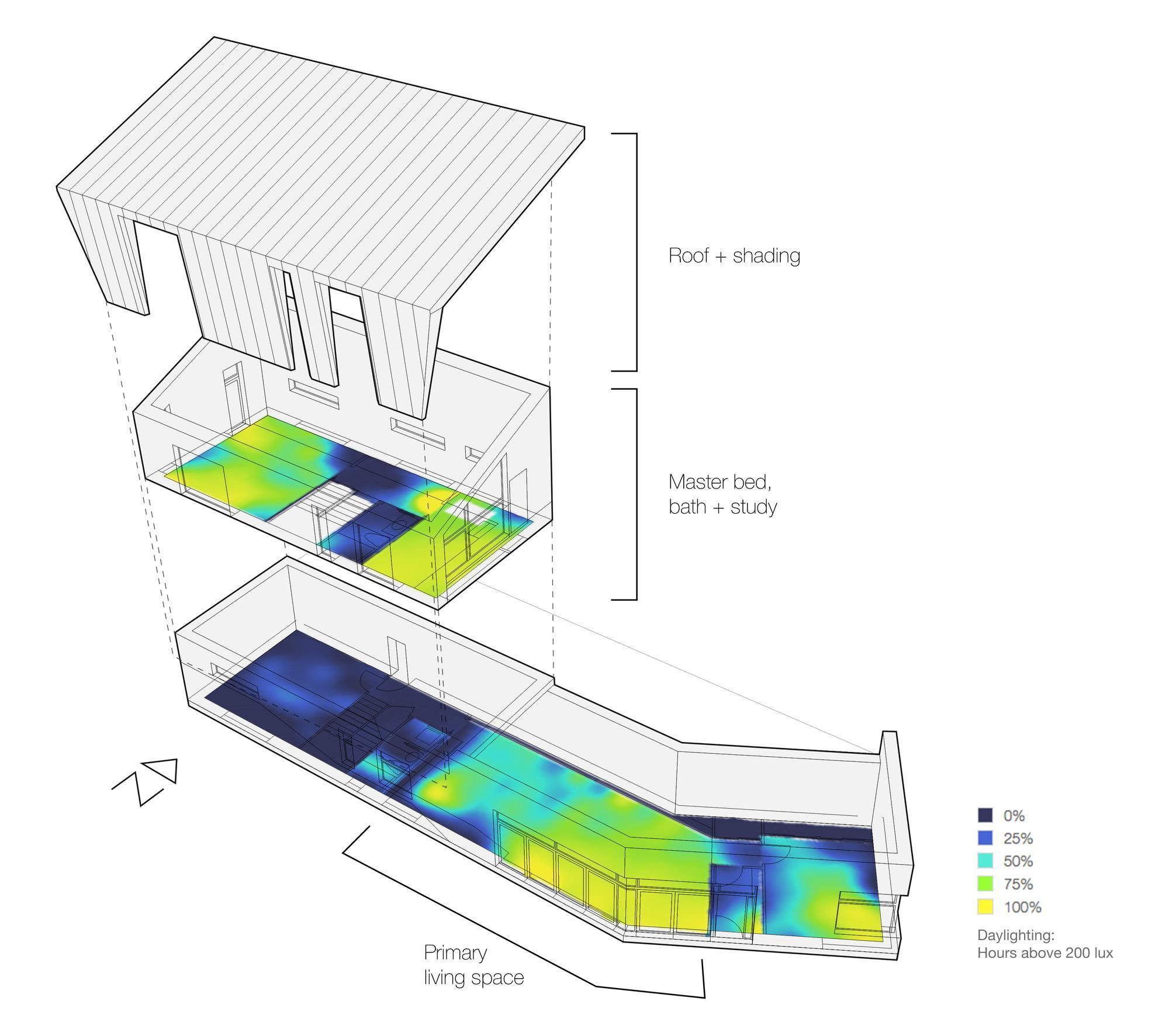
Daylight analysis is the computational process of modelling and quantifying the amount, distribution, and quality of natural light within and around a building under defined sky conditions and across defined time periods. The primary metrics used in professional practice are:
- Spatial Daylight Autonomy (sDA)
- Annual Sunlight Exposure (ASE)
- Useful Daylight Illuminance (UDI)
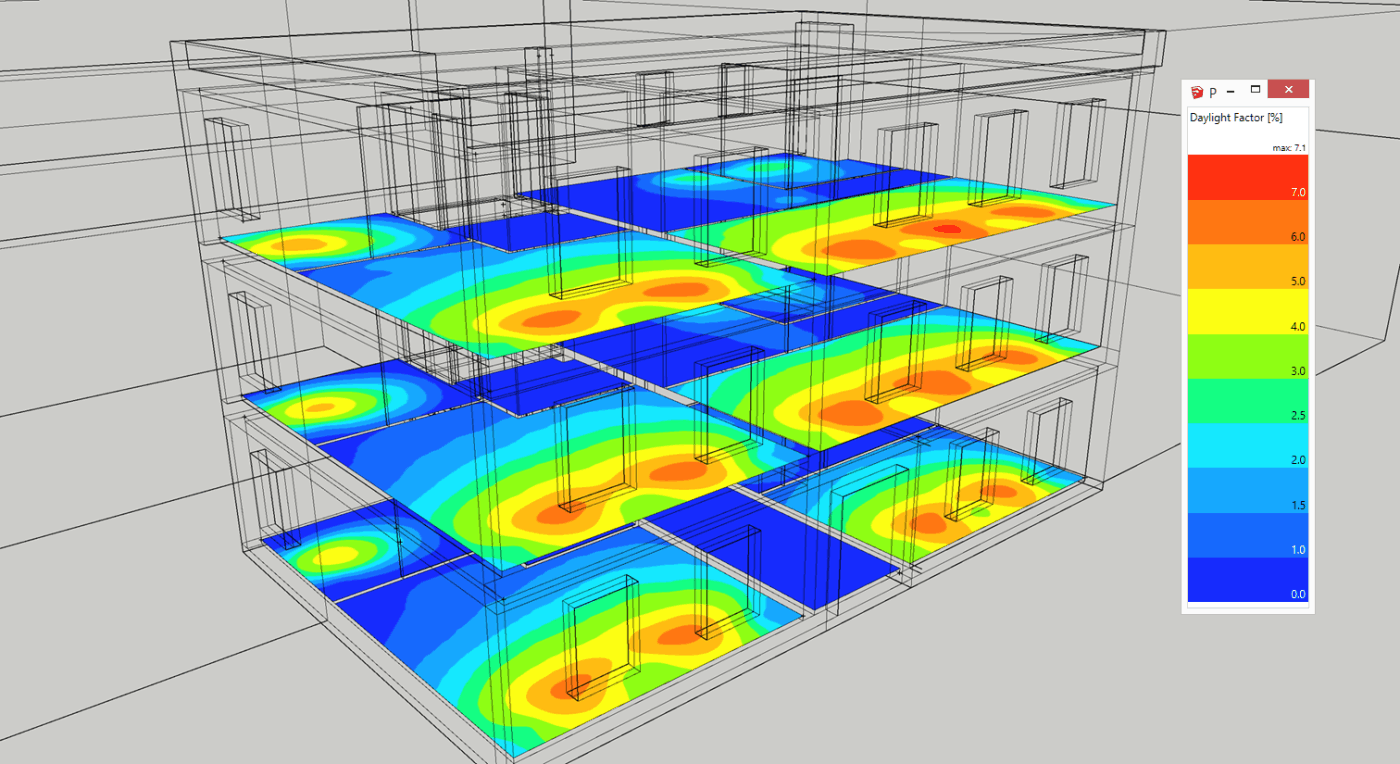
- Daylight Factor (DF)
Each of these measures a different aspect of how effectively a building's geometry and envelope admits natural light to occupied spaces.
Spatial Daylight Autonomy (sDA) measures the percentage of floor area that receives at least 300 lux for at least 50% of occupied hours annually. This is the primary metric used by LEED v4 Daylight credit. Annual Sunlight Exposure (ASE) measures the percentage of floor area receiving more than 1,000 lux for more than 250 hours per year — a metric for excessive solar gain that causes glare and overheating rather than useful daylight.
The distinction between adequate daylight and excessive solar exposure is critical for planning teams. A building that maximises glazing to improve sDA scores may simultaneously create an ASE problem — bright enough to require occupants to close blinds, defeating the daylighting objective and increasing cooling loads. Good daylighting analysis software models both simultaneously, revealing the design configurations that optimise the balance rather than maximising one metric at the expense of the other.

Why Daylight Analysis Matters for Modern Planning Teams
The case for rigorous daylight analysis sits at the intersection of regulatory obligation, commercial performance, and occupant health evidence.
On the regulatory side, LEED v4 and BREEAM both include mandatory or credit-bearing daylight requirements. The UK's Building Regulations Part O (Overheating) requires solar exposure calculations as part of compliance for new residential buildings. Planning authorities in London require daylight and sunlight assessments based on the BRE's Site Layout Planning for Daylight and Sunlight guidelines for developments that could affect neighbouring properties. In the UAE, Estidama Pearl Rating requires daylight analysis for Pearl 2 certification and above. Regulatory compliance is no longer achievable without formal daylight assessment.
The commercial case is equally clear. A 2022 study published in the Journal of Clinical Sleep Medicine found that workers in offices with optimised daylight exposure slept 46 minutes more per night on average than those in windowless environments. The World Green Building Council's Health, Wellbeing and Productivity in Offices report identifies daylight access as one of the top three factors influencing office worker productivity and occupant satisfaction scores. For commercial developers negotiating leases with major occupiers, demonstrable daylight performance has become a due diligence question.
For residential developers, daylight rights carry legal as well as commercial weight. In the UK, infringement of a neighbour's right to daylight — a well-established common law right — can halt construction or require costly design modifications after planning consent has been granted. Early daylight analysis that models the impact on existing neighbouring properties is risk management, not optional sophistication.
Key Challenges in Traditional Daylighting Analysis Approaches
The standard tools for professional daylight analysis — Radiance, DIVA for Rhino, ClimateStudio, and cove.tools — are rigorous simulation engines that produce highly accurate results. They are also structurally problematic in enterprise multi-building contexts.
- The first challenge is workflow separation. Radiance and its derivatives are standalone simulation environments that receive building geometry as an input and return illuminance data as an output. This input-output relationship means that every time the design changes, the geometry must be re-exported, the model reconfigured, and the simulation rerun — a process that ranges from hours to days, depending on model complexity. In a multi-building project where the masterplan geometry evolves continuously through design development, this cycle makes iterative daylight-informed design practically impossible.
- The second challenge is the multi-building aggregation problem. Most daylight analysis tools are configured to model a single building interior. Modelling the mutual shading impact of multiple buildings in a development cluster — where Tower A shadows the lower floors of Tower B depending on the hour and season — requires significant model setup, careful geometry management, and simulation times that scale with model complexity. For a development with eight or ten buildings, full-development daylight modelling under traditional tools is a substantial consultant engagement, not a routine design check.
- The third challenge is the gap between performance metrics and design guidance. A daylight analysis report that shows 52% of floor area meeting sDA 300,1/50% tells the planning team that the project marginally misses the LEED target. It does not tell them which design changes would bring it into compliance, what the trade-off between sDA improvement and ASE deterioration would be, or whether the underperforming zones are critical occupied spaces or low-priority circulation areas. Translating compliance data into design action requires analytical judgement that most simulation reports do not provide.
How AI and Spatial Analytics Are Transforming Daylight Analysis
AI-integrated daylighting analysis software addresses the workflow separation problem by embedding daylight performance calculation directly into the design environment. Rather than requiring geometry export and separate simulation runs, AI platforms generate real-time daylight performance estimates from massing geometry as it is being developed, providing continuous feedback rather than periodic compliance checks.
The performance of these real-time estimates is not equivalent to a full Radiance simulation at the detailed design stage. But it is directionally accurate enough to make consequential concept-stage decisions — which building orientation maximises sDA, which inter-building spacing avoids the most significant mutual shading, and which floor-to-ceiling height achieves adequate daylight depth in a given facade orientation. These are the decisions that determine a building's daylighting potential ceiling. Making them well at the concept stage means the detailed simulation at Stage 3 confirms performance rather than reveals a deficit that is expensive to fix.
For multi-building development projects, AI platforms provide the mutual shading analysis that traditional tools make operationally difficult. Because AI platforms maintain a connected model of the full development, the impact of each building's geometry on neighbouring buildings' daylight access is computed continuously. This gives planning teams a live view of daylight performance across the development cluster rather than a project-by-project analysis that misses inter-building interactions.
How Digital Blue Foam Supports Daylight Analysis Workflows
Digital Blue Foam's Sustainability First module includes daylighting analysis as a core real-time capability integrated with the AI massing environment rather than positioned as a downstream export process. Planning teams working in DBF can see daylight performance implications of massing decisions as they make them — changing a building's floor-to-ceiling height, adjusting its orientation, or reconfiguring the spacing between buildings in a cluster produces an immediate update to the projected daylight performance scores.
For enterprise multi-building projects, DBF's platform provides the mutual shading analysis across a full development cluster that traditional single-building daylight tools do not support natively. This makes it practical to optimise daylight performance at the masterplan level, ensuring that each building's massing is informed by its impact on adjacent buildings, rather than optimising each building in isolation and discovering inter-building shading conflicts only when detailed simulation is run at Stage 3.
Clients — including Takenaka, Jacobs, and Dubai Municipality — have used DBF's daylighting analysis tools to validate design directions against compliance thresholds early, reducing the risk of costly late-stage modifications and providing planning authorities with preliminary performance evidence at pre-application discussions.
Explore Digital Blue Foam's platform and Sustainability First tools to see how daylighting analysis integrates with the enterprise design workflow.
Best Practices for Daylight Analysis in Enterprise Multi-Building Programmes
Embedding daylighting analysis software effectively into an enterprise development programme requires process decisions as much as tool selection.
The first practice is running daylight analysis at the massing stage, not the detailed design stage. The decisions that most influence a building's daylighting performance — orientation, floor-to-ceiling height, glazing ratio, and inter-building spacing — are all made during concept and schematic design. Running a compliance-level simulation at Stage 3 can confirm performance, but cannot recover it if the fundamental massing has been fixed sub-optimally. The goal is to use real-time AI analysis at Stages 1 and 2 to ensure the massing is daylight-informed before it is frozen.
The second practice is modelling mutual shading across the full development at the masterplan stage, not building by building. The daylight performance of any building in a multi-building cluster is partly determined by the height and massing of its neighbours. Planning teams that model each building individually, then aggregate the results, miss the inter-building interactions that can cause significant daylight deficits on affected facades. AI platforms that maintain a connected multi-building model eliminate this blind spot.
The third practice is evaluating sDA and ASE simultaneously from the first iteration. A design that optimises sDA without tracking ASE risks producing bright, glare-prone environments that occupants manage by closing blinds, nullifying the daylighting investment. The two metrics need to be evaluated together so that the design team can identify the glazing and shading configurations that optimise the balance, not just maximise one at the expense of the other.
Conclusion
Daylighting analysis software is no longer a specialist tool for sustainability consultants. It is a core design instrument for any planning team working under modern building codes, sustainability certification schemes, or institutional occupier requirements. The enterprise planning organisations that are getting the most value from it are those that have integrated it upstream — using real-time AI analysis to inform massing decisions at the concept stage, modelling mutual shading across full development clusters, and evaluating compliance metrics against regulatory thresholds before detailed design begins.
This upstream integration eliminates the most costly pattern in traditional sustainability practice: discovering compliance deficits at Stage 3, when the design decisions that caused them are expensive to reverse. For planning directors managing multi-building programmes, the compounding value of early daylight analysis across a portfolio of projects is significant — in reduced consultant rework, fewer planning condition challenges, and demonstrably better occupant environments.
To explore how Digital Blue Foam's Sustainability First module delivers real-time daylighting analysis for enterprise multi-building development projects, book a demo or explore the platform.
FAQs
What is daylighting analysis software used for?
Daylighting analysis software is used to model and quantify how much natural light reaches occupied spaces within and around a building under defined sky conditions across a full year. It produces metrics including Spatial Daylight Autonomy (sDA), Annual Sunlight Exposure (ASE), Useful Daylight Illuminance (UDI), and Daylight Factor. Each measures a different dimension of daylight quality and quantity.
What is the difference between sDA and ASE in daylight analysis?
Spatial Daylight Autonomy (sDA) measures how much of a floor area receives at least 300 lux for at least 50% of occupied hours annually — a measure of adequate daylight provision. Annual Sunlight Exposure (ASE) measures how much of a floor area receives more than 1,000 lux for more than 250 hours per year — a measure of excessive solar gain that creates glare and overheating.
How early in the design process should daylight analysis begin?
Daylight analysis should begin at the concept massing stage, typically RIBA Stage 1 or equivalent, when building orientation, floor-to-ceiling heights, inter-building spacing, and glazing ratios are still being determined. These variables are the primary determinants of daylighting performance, and they become progressively harder and more expensive to change as the design develops. Using AI-integrated daylighting tools at the concept stage ensures that the massing is daylight-informed before it is fixed, rather than using detailed simulation at Stage 3 only to confirm a design that has already locked in its performance ceiling.
Can daylighting analysis software model the impact on neighbouring buildings?
Yes, professional daylight analysis tools can model the impact of a proposed development on existing neighbouring buildings. The analysis compares the daylight factor and vertical sky component at affected windows in existing buildings against BRE benchmarks, identifying whether the proposed development causes a material reduction in daylight access. AI-integrated platforms can perform this analysis in real time as massing changes, enabling design teams to understand the impact on neighbours throughout the design process.